 1 month ago
Ray Dalio warns at the World Government Summit in Dubai that rising geopolitical tensions could trigger a capital war, urging investors to diversify with gold amid market volatility.
By CNBCTV18.com February 4, 2026, 11:08:40 AM IST (Published)
Legendary investor Ray Dalio warned that the world is “on the brink” of a capital war, as geopolitical tensions rise and capital markets remain volatile.
Speaking to CNBC ’s Dan Murphy at the World Government Summit in Dubai on Tuesday, February 3, Dalio said the global economy is nearing a point where money could be increasingly weaponised through tools such as trade embargoes, restrictions on access to capital markets, or the strategic use of debt holdings.
“We are on the brink,” Dalio said, adding that while the world is not yet in a capital war, “it would be very easy to go over the brink," as mutual fears exist.
He pointed to recent escalations linked to the Trump administration’s push to bring Greenland, a Danish territory, under US control, warning that such developments are feeding uncertainty among global investors.
Dalio said there is growing concern among European holders of US-denominated assets that they could face sanctions, while at the same time, the US could fear losing access to European capital and markets.
According to a Citi research cited by Reuters, between April and November, European investors made up 80% of foreign purchases of US Treasurys.
“Capital, money, matters,” he told CNBC, noting that capital controls are already being implemented in different parts of the world.
Read more: India-US Trade Deal: Industry leaders welcome Modi-Trump trade agreement
While stressing that a capital war has not yet materialised, Dalio said the risk is a “logical concern,” particularly given the policy uncertainty created by US tariffs imposed, and later rolled back, on several trading partners, which have added to market volatility.
Drawing on historical parallels, Dalio said capital wars have typically emerged during periods of major geopolitical conflict, citing US sanctions on Japan ahead of the Second World War. He added that similar dynamics could play out today between the United States and China, or even between the US and Europe, where trade imbalances are mirrored by capital imbalances that could be leveraged as a tool of conflict.
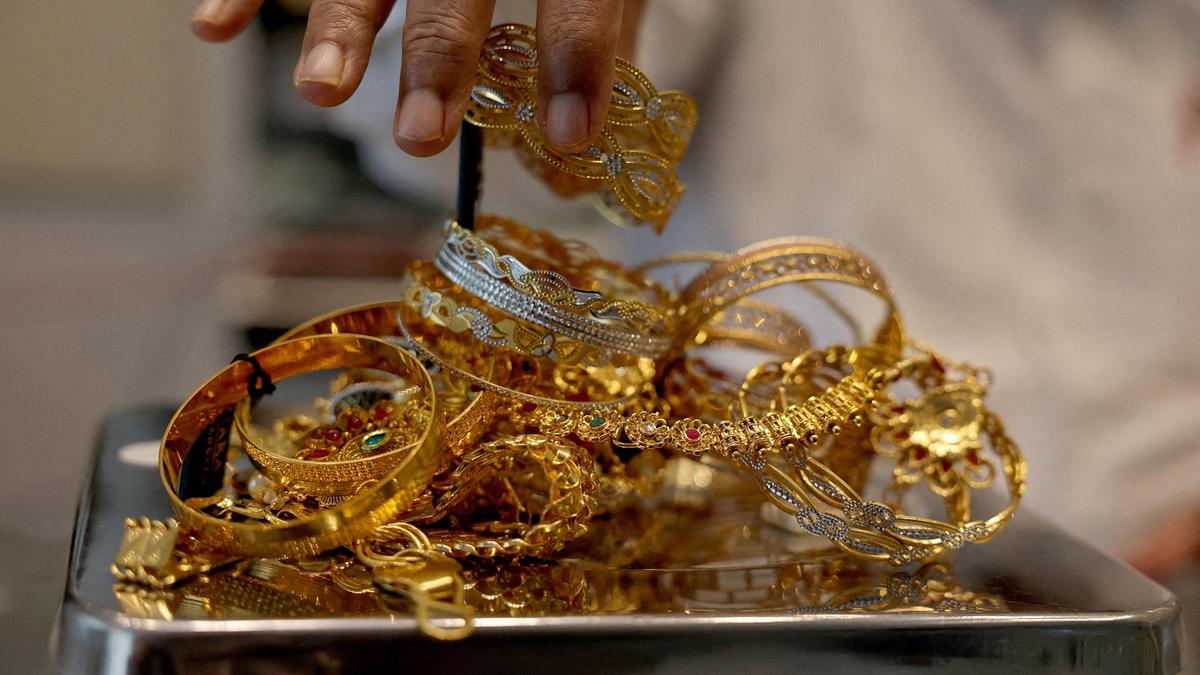
Against this backdrop, Dalio reiterated that gold remains a key hedge, despite recent sharp moves in precious metals prices.
When questioned if gold can still be the safest place to invest even after the recent price action, he answered, “It doesn’t change by the day.”
Dalio said, “Gold is up about 65% from a year ago, and down about 16% from its high, and I think people make the mistake of thinking, is it going to go up and down, and should I buy it?”
“Instead, … perhaps central banks or governments or sovereign wealth funds should say, what percentage of my portfolio should I have in gold [and] keep a certain percentage, because it’s a very effective diversifier to other poor parts of the portfolio.”
He said that gold’s role should not be judged on short-term price fluctuations, noting that while prices can move sharply, gold remains an effective long-term diversifier.
Calling it a diversifier, he said, “When the bad times come along, it does uniquely well, and when the good times are prosperous, less so,” adding that the most important principle for investors is maintaining a well-diversified portfolio.