 30 minutes ago
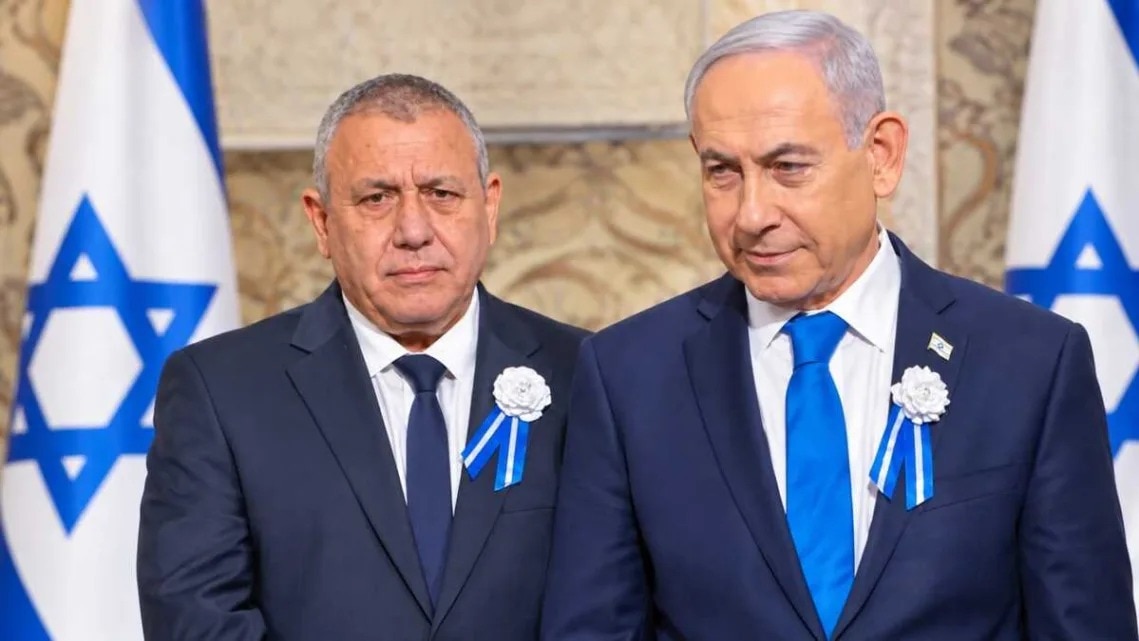
Yashar party leader Gadi Eisenkot has invited Israeli Prime Minister Benjamin Netanyahu for immediate negotiations hours after the latter offered to let his political rival serve as the country's first Prime Minister in a proposed rotational government, a Times of Israel report said.
The 66-year-old ex-IDF general Eisenkot said he was willing to examine whether Netanyahu's offer of a unity government was genuine, but maintained that his party had been trying to negotiate with Likud for weeks without receiving a meaningful response.
"If Likud is ready for genuine unity, I am prepared to assess its seriousness over the next 24 hours," Eisenkot said in a statement, inviting Netanyahu and his team to join him for "genuine, accelerated talks on guiding principles and policy issues". He added that the negotiations should be based on a detailed proposal sent to Netanyahu on Sunday, to which he said the Prime Minister had yet to respond.
The two leaders are now scheduled to meet on Sunday morning to begin direct negotiations on a possible unity government, according to Hebrew media reports. In the meantime, Eisenkot has also spoken to leaders of the so-called change bloc parties -- Yisrael Beytenu, B'Yachad and The Democrats -- and briefed them on the latest developments, his party said.
EISENKOT SCEPTICAL OF NETANYAHU'S OFFER
Eisenkot's response came after Netanyahu made an offer that would see him relinquish the first turn as Prime Minister in a rotational arrangement, allowing Eisenkot to lead the government initially while Netanyahu serves as alternate Prime Minister.
However, Eisenkot's statement indicated that he was not treating the announcement as an agreement already reached. Instead, he sought to establish whether Likud was prepared to negotiate on the substantive issues involved in forming a government.
"The unity Israel needs -- which I am ready to pursue and for which I am prepared to pay a political price -- is unity among Israeli citizens based on shared values," he said.
Eisenkot also questioned why Likud had not responded to his earlier attempts to initiate negotiations. He said a proposal had been sent through "a secret channel, established at [Netanyahu's] request", and covered several substantive issues.
According to Eisenkot, his side had offered "significant compromises" on some of these issues even before proceeding with coalition agreements with Yisrael Beytenu and The Democrats.
"For nearly three weeks, my team and I have been proposing and trying to conduct genuine, good-faith and accelerated negotiations, but we have encountered refusals and evasions," he said.
He added that the proposed talks should be based on the detailed proposal already sent to Netanyahu, rather than merely on the Prime Minister's public announcement about a rotational arrangement.
WHAT WAS NETANYAHU'S OFFER?
Hours before Eisenkot's response, Netanyahu announced that he was prepared to serve as the second Prime Minister in a rotation agreement, with Eisenkot taking the top position first.
The proposal marked a departure from Netanyahu's earlier position that he should lead any unity government, given that his Likud party emerged as the largest single party in the October 27 election.
Explaining his decision, Netanyahu invoked the security challenges facing Israel and said the possibility of a government incapable of confronting them required him to set aside his political preferences.
"In light of the magnitude of the existential danger and the possibility that a government without the ability to confront this danger will be formed, my responsibility as a leader requires me to put everything aside, including the principle of the largest party, and agree that Gadi Eisenkot will serve first as prime minister, and I will serve at the beginning of the term as alternate prime minister," Netanyahu said in a statement.
He had previously argued that Likud's electoral performance entitled him to lead a unity government or, at the very least, take the first turn in a rotational arrangement.
"The Likud under my leadership is the largest party in the country, by a large margin of a quarter of a million more voters than Eisenkot's party. Naturally, I should lead the unity government, or at least be first in a rotation," he said.
Likud won 27 seats in the 120-member Knesset, while Eisenkot's Yashar party secured 21.
However, Netanyahu said the country's security and future required a broader political arrangement and called on Eisenkot's camp to begin "open, genuine, honest and accelerated negotiations".
He also urged the rival camp to demonstrate a similar willingness to make compromises and concessions to establish a national unity government that could address Israel's security challenges.
Netanyahu's statement also focused heavily on the prospect of Arab-led parties becoming part of a government formed by Eisenkot. He criticised the possibility of relying on the Joint List and Ra'am, describing them as supporters of terrorism.
He claimed that such parties could allow hostile elements to gain influence within Israel and alleged that their political demands would threaten the country's security and territorial integrity. These were Netanyahu's claims as he sought to rule out their participation in a potential coalition.
"The only way to do this is by combining all the parties that see Israel as the nation-state of the Jewish people," he said, a formulation that would also allow the ultra-Orthodox parties to be part of the proposed arrangement.
Netanyahu also promised to reach an agreement with ultra-Orthodox parties on military conscription, an issue that remained unresolved during his previous government.
His offer came as Eisenkot's efforts to assemble an alternative coalition appeared to be gaining momentum, raising the possibility that Netanyahu could lose power after years at the helm of Israeli politics.
HOW ISRAEL ARRIVED AT THE POLITICAL DEADLOCK
The results left both principal camps with difficult choices. Neither could reach the halfway mark in Parliament without securing support from parties outside its immediate alliance.
The Arab-led parties' numbers offered one possible route for Eisenkot to assemble a parliamentary majority. However, both Netanyahu and Eisenkot had previously ruled out forming a government in partnership with them, making the coalition arithmetic considerably more complicated.
Following the election, Israeli President Isaac Herzog held consultations with representatives of the parties elected to the Knesset before asking Eisenkot to form the next government on November 8.
A total of 67 lawmakers recommended Eisenkot for the position of Prime Minister, compared with 48 who backed Netanyahu. The seven lawmakers belonging to United Torah Judaism did not recommend either candidate.
Herzog consequently gave Eisenkot the first opportunity to form a government, handing him a 28-day mandate, with a possible 14-day extension. He has until December 6 to secure the necessary support.
Netanyahu, meanwhile, continues as caretaker Prime Minister while the negotiations over the formation of a new government remain underway.
- Ends