 1 month ago
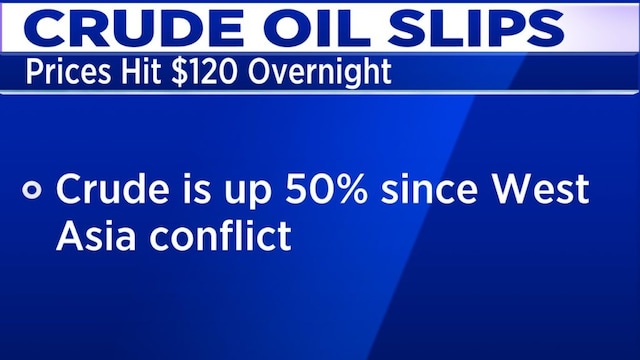
Crude oil prices may not cool off quickly even if the West Asia conflict ends. Claudio Galimberti of Rystad Energy said prices could stay in the $110–120 per barrel range for the next few months as supply takes time to normalise and disrupted flows return, with no real alternatives to key routes like the Strait of Hormuz.
The bigger challenge, however, is in gas markets. Damage to key facilities in Qatar could keep liquefied natural gas (LNG) supply tight for years, turning what was expected to be an oversupplied market into a deficit. “We are talking about something like 12 million tonnes that are not hitting the market in the next three to five years,” he said.
These are edited excerpts of the interview.
Q: $119 per barrel back to $105-106/bbl. Is this a temporary lull in oil markets, and will it hold?
A: This is a $64,000 question, as they used to say here in the States. We do not know. This is still the fog of war, but of course, what we heard from the President of Israel is that, if we are to believe his words, then if we are close to the end of this conflict, then yes, we can probably be happy with this outcome, and prices will gradually come down.
But let's bear in mind one very important thing: there are no alternatives right now to the Strait of Hormuz or the Gulf of Aden. So, these are two routes that you need to go through. There are only some partial ways to bypass them, and that's the reason why the market has been so dislocated for the past three weeks. So, there is still a lot of work that needs to be done, even if the war were to end tomorrow.
Q: It depends on how long the war drags on, for how long the Strait of Hormuz is shut, but the other part is the damage that has already taken place to some infrastructure. Now, the QatarEnergy CEO told Reuters yesterday that it will take three to five years to repair the damaged facilities. So even if the hostilities end today or tomorrow, what is your assessment for the loss in gas, or a loss in terms of the overall LNG, LPG, because the facilities have been damaged and it takes time to get them back on stream at full capacity?
A: That is absolutely correct. There has been, first of all, a lot of production shut-in already, right? When it comes to oil, 8.5–8.6 million barrels per day are shut in. To bring them back is going to take weeks; in some cases, it's going to take months.
But most of the oil and gas facilities, except for Ras Laffan in Qatar, have not been damaged. Therefore, they will be brought back online in a matter of weeks. So, it very much depends on how long they are going to be shut in. So, if they are shut in for two or three months, it's probably going to take two to three months to bring them back to pre-war levels.
Watch the full conversation here

When it comes to LNG in Qatar, 17% of their capacity has been bombed, which means that we are talking about something like 12 million tonne that are not hitting the market in the next three to five years. So, the LNG market, which was supposed to be in oversupply starting from next year, is probably going to be in a deficit, at least in the short to medium term. So, this is a very important structural shift.
Let's also not forget one important thing: the port of Yanbu in the Red Sea saw huge loadings for the past two weeks because Saudi Arabia was redirecting its production on the East-West pipeline, which ends at the port of Yanbu. We didn't see much activity since yesterday, and the reason is that Iran had threatened to retaliate against the bombing of South Pars.
So, we are still in the very early phases. If we are going to see a normalisation and a dwindling down of all the military activity, that's obviously very good news. But if that is the case, we're still in the very early phases.
Q: What kind of levels are you working with in your case analysis on Brent crude prices? Could you give us a broad range you're looking at? The hope is we don't get past the recent peak of around $120 per barrel mark. What's your take?
A: So, I am afraid that given the damage we have already seen and given the production shut-ins, we will probably see Brent hovering around $110–$120, even if the war were to end today. And that will be for the next couple of months because, logistically, it's going to be very complicated to bring all the flows back to normal.
The market is already, specifically in Asia, India is one of the cases, we have already seen a lot of production curtailment. So, refining runs have been decreased dramatically, even by 3–4 million barrels per day, starting with petrochemicals. So, in this situation, for the next two to three months, we are going to see high prices. After that, it very much depends on the Strait of Hormuz and all the production that is frozen.
But I would say, to see the same level of Brent that we saw before the war, therefore between $60–$70, we probably need to wait until Q4.
Q: So even if the war comes to an end, the impact could last at least a few months, and we should be getting used to elevated crude oil prices quickly. Before we let you go, a word on aluminium. Overnight, that was down to a 7–8% fall. There could be some liquidation of speculative positions. And also, we had seen a big run all of a sudden from supply constraints — people are suddenly talking about demand destruction. What do you make of the correction we saw in base metal prices? And if you have a broad range on that one?
A: Well, the demand destruction is something that actually happened faster than people expected, and the reason is that we are in a case that hasn't happened for so many decades — of rationing. So, it's really the rationing that's happening in this case, which means that the correction on demand can actually be quite drastic and quite quick.
Also Read: FMCG margins under pressure as crude rises, price hikes likely: Nuvama
If that is the case, then we may not be in an enormous deficit, which is caused by the eight million barrels a day that I mentioned earlier. And that's the reason why the volatility in the market is so high, because it's very difficult right now to understand the fundamentals. It's very difficult to pinpoint exactly where demand is and will be in the next three to four weeks, let alone months. And the same with supply.
The OVX (Oil Volatility Index), the implied volatility, is still at extremely high levels, very difficult to price right now, and very difficult to assign a price. But if we are correct in our assumption, then you would expect to see this level for the next couple of months.
Catch all the latest updates from the stock market here