 1 hour ago
The trillionaire businessman, tech tycoon and industrialist, Elon Musk, wants to bring his satellite internet service, Starlink, to India, and has recently directed flak at "oligarchs" preventing Starlink's launch, who, according to him, were hellbent on maintaining their "monopolistic chokehold on the Indian people".
Starlink would be, at least in terms of pricing, out of reach for most of whom Musk thinks it will benefit, that being India's vast rural hinterland, even as 6,44,131 villages of the country's 6,34,955 villages have been covered with mobile connectivity as of December 2025.
But experts believe there might be another reason for India's hesitation — Ukraine's reliance on Starlink for its defence against Russia. Amid unconfirmed reports that the US could cut Ukraine's access to the service, Zoho founder Sridhar Vembu warned that India cannot afford to trust foreign satellite networks and must build its own.
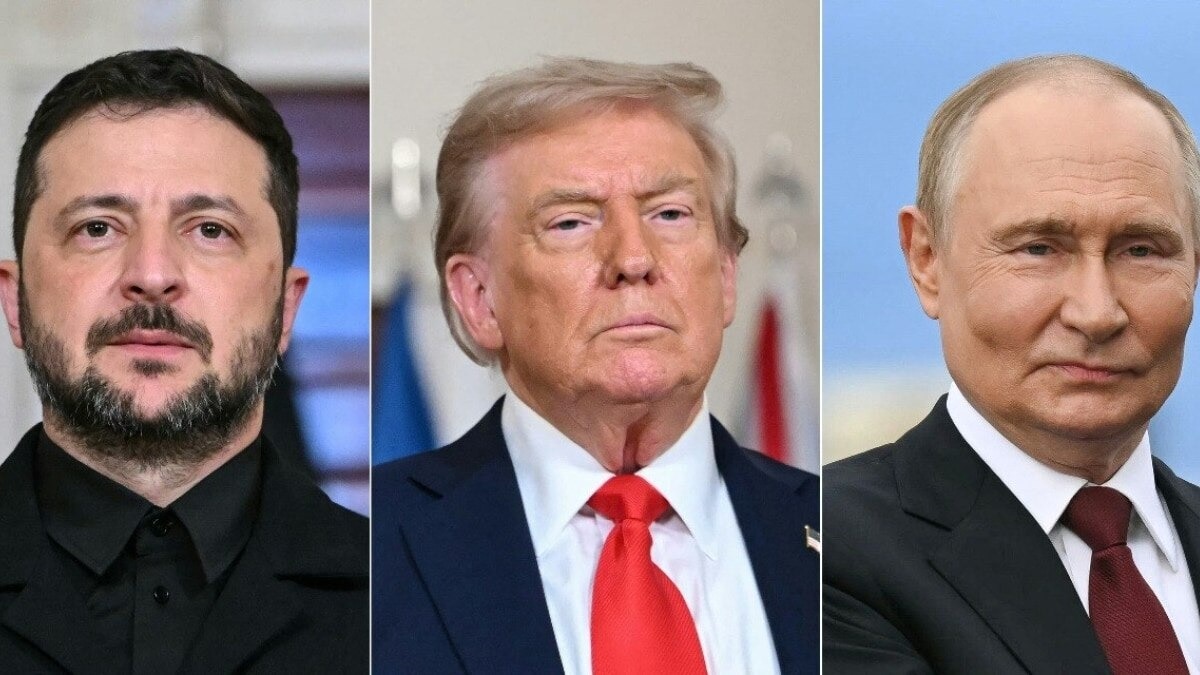
In an interview with British journalist Piers Morgan on Wednesday, Ukrainian President Volodymyr Zelensky warned of the human cost of losing access to Starlink, saying the decision would lead to further casualties. "It's a big mistake . . . This decision will bring a lot of human losses. People are dying because of this decision," he said.
The remarks came amid reports that the Ukrainian military abruptly lost access to the satellite internet service ahead of a Russian missile attack on energy infrastructure that left more than 600,000 people in Kyiv without electricity.
WHY IS STARLINK IMPORTANT TO UKRAINE'S DEFENCE AGAINST RUSSIA?
Elon Musk's Starlink has become a critical communications link for Ukrainian forces fighting Russia, allowing troops and commanders to access the internet in frontline areas where mobile networks and fibre-optic cables have been damaged or destroyed.
According to Reuters, the satellite service allows Ukrainian military units to coordinate operations and share critical information without the risk of having communications disrupted.
Starlink also plays a key role in supporting Ukraine's drone operations. According to Reuters, its resistance to electronic jamming has made it valuable to Ukrainian forces operating drones against Russian military positions, supply routes, fuel depots and other logistical infrastructure.
The satellite network is also used to support Ukraine's air defence, particularly operations involving interceptor drones. These drones are deployed to engage incoming Russian attack drones before they can reach their targets, including civilian areas and energy infrastructure.
Ukrainian President Volodymyr Zelensky himself acknowledged Starlink's importance in an interview with Wired magazine in 2022, saying it had helped Ukraine maintain communications during Russia's blockade of its cities and towns and in occupied territories. "Sometimes we completely lost communication with those places," he said, adding that he was grateful for Starlink's support.
WHAT HAPPENS WHEN STARLINK GOES DARK?
Ukraine's heavy dependence on Starlink means that any disruption to the service can affect its ability to coordinate military operations and defend against Russian attacks.
On October 14 (Wednesday), Ukraine reported restrictions affecting Starlink and Starshield without prior warning, disrupting drones used in both offensive strikes and air-defence operations. According to Ukrainian officials, speed restrictions were imposed on terminals mounted on moving platforms, with a reported limit of 100 mph (160 km/h). This meant that drones travelling faster than the threshold could lose connectivity, potentially disrupting their missions.
President Volodymyr Zelensky, in an interview with British journalist Piers Morgan on Wednesday, called the disruption a "big mistake". "People will die, of course, if attacks will continue and if Starlink will not work it's not helpful," he said. Zelensky added that he hoped the restrictions were the result of a "mistake", suggesting they could have stemmed from a "huge technical problem" at SpaceX.
He later told the British newspaper, The Financial Times that he believed that changes in the capability of the military version of SpaceX's Starlink receptors this week, which curbed Ukraine's ability to use them to pilot its drones, were a policy decision. "It was not a technical problem, it was the will," he told the paper.
Musk, for his part, stated in a post on social media platform X, that usage of the military version of Starlink aka Starshield, was ultimately up to Donald Trump, as President of the US.
"Starshield systems are owned and controlled by the US government. Any limits on speed or usage are decided by the US military and ultimately POTUS," he wrote.
This was not the first time that problems with Starlink had affected Ukrainian military operations. In a report published on July 25, 2025, Reuters reported that Elon Musk had ordered Starlink coverage to be switched off over part of Ukraine's Kherson region in September 2022, as Ukrainian forces attempted to encircle Russian troops near the city of Beryslav.
According to the Reuters report, the decision disrupted frontline communications, drone surveillance and artillery coordination, leading to the failure of the operation.
WHAT ARE THE LESSONS FOR INDIA REGARDING STARLINK?
Keeping aside the fact that Starlink can provide high-speed internet connectivity even in India's most remote regions, provided users can afford the service, the fact still remains that Musk retains the ability to shut off access to Starlink at any particular point of time.
As a report published by The New York Times in July this year noted, "A combustible personality, the 52-year-old's allegiances are fuzzy. While Musk is hailed as a genius innovator, he alone can decide to shut down Starlink internet access for a customer or country, and he has the ability to leverage sensitive information that the service gathers".
Other countries have taken the memo.
In 2020, China registered with an international body to launch 13,000 internet satellites of its own, after failing to get an assurance from Musk that Starlink would not be misused in the country.
Taiwan, linked to the rest of the world via undersea internet cables that would be vulnerable in a hypothetical Chinese invasion, has been reluctant to adopt Starlink for the same reason.
Similarly, the European Union, partly driven by misgivings about Starlink, earmarked 2.4 billion euros, or $2.6 billion, last year to build a satellite constellation for civilian and military use, reported The New York Times.
If India is to grant the necessary regulatory approvals for Starlink to begin commercial operations, New Delhi would need to take the lessons from Ukraine into account. It must ensure that its domestic communications and internet infrastructure is sufficiently robust to prevent a Starlink blackout imposed by Musk from crippling critical services.
India's Unified Payments Interface (UPI), for instance, illustrates the importance of developing domestic digital infrastructure rather than relying entirely on foreign systems. If, for any reason, the country is cut out of the Society for Worldwide Interbank Financial Telecommunication (SWIFT) network, like Russia was following its invasion of Ukraine, Indians could continue to partake in digital transactions via UPI.
New Delhi must similarly ensure that its communications networks are resilient, diversified, and capable of maintaining essential services if access to a foreign satellite network is restricted or interrupted. As Zoho founder, Sridhar Vembu, put it recently in a post on X, "We cannot trust technology from them. We have no option but to build."
- Ends