1 hour ago
White House confirms peace talks are happening face to face
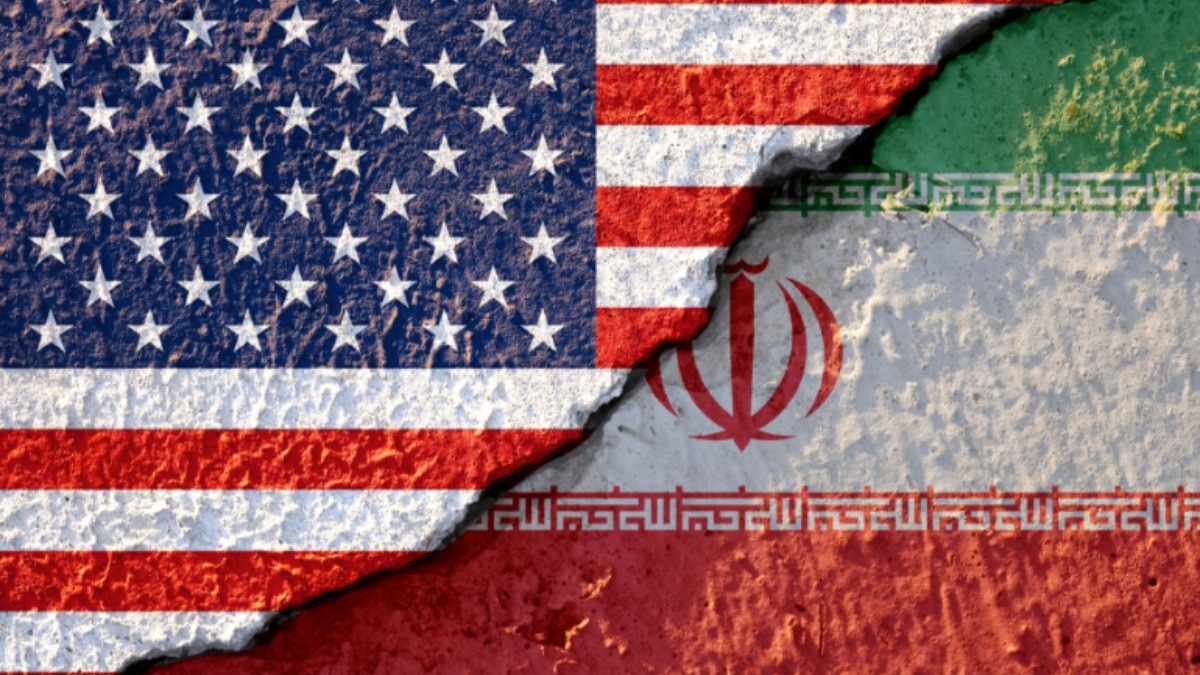
The White House has confirmed that the negotiations between the US and Iran currently under way in Islamabad are happening face to face.
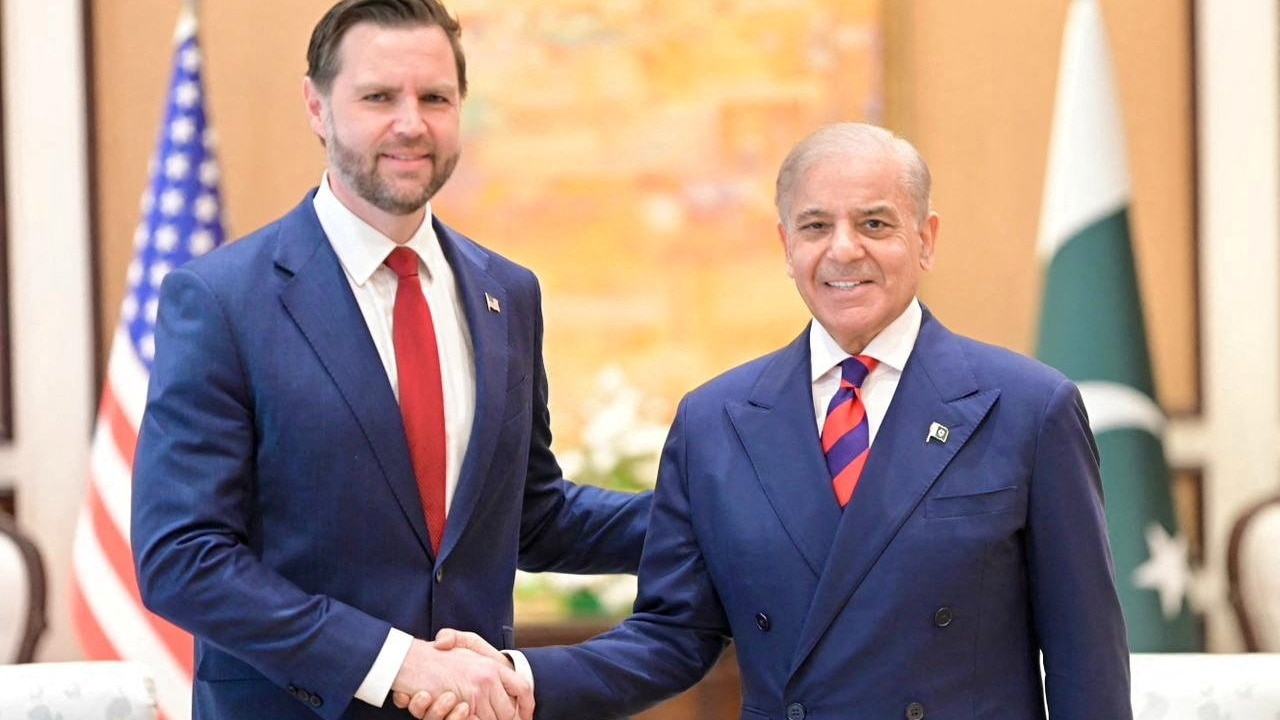
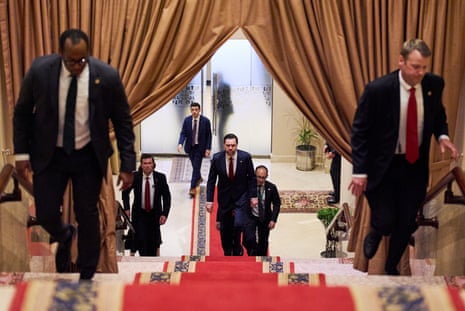
The meeting today marks the highest-level direct engagement between Washington and Tehran in decades. The core US delegation is led by Vice-President JD Vance, alongside special envoy Steve Witkoff and Jared Kushner, supported by senior advisers including Dr Andrew Baker and Michael Vance.
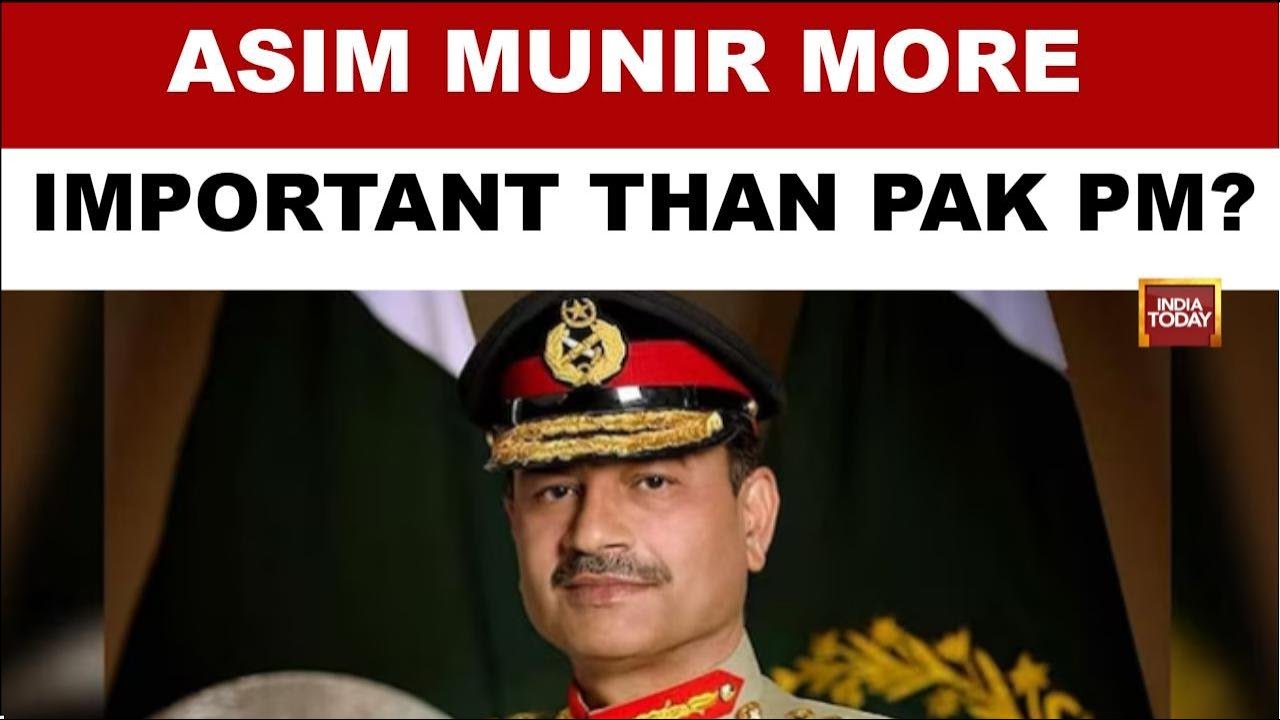
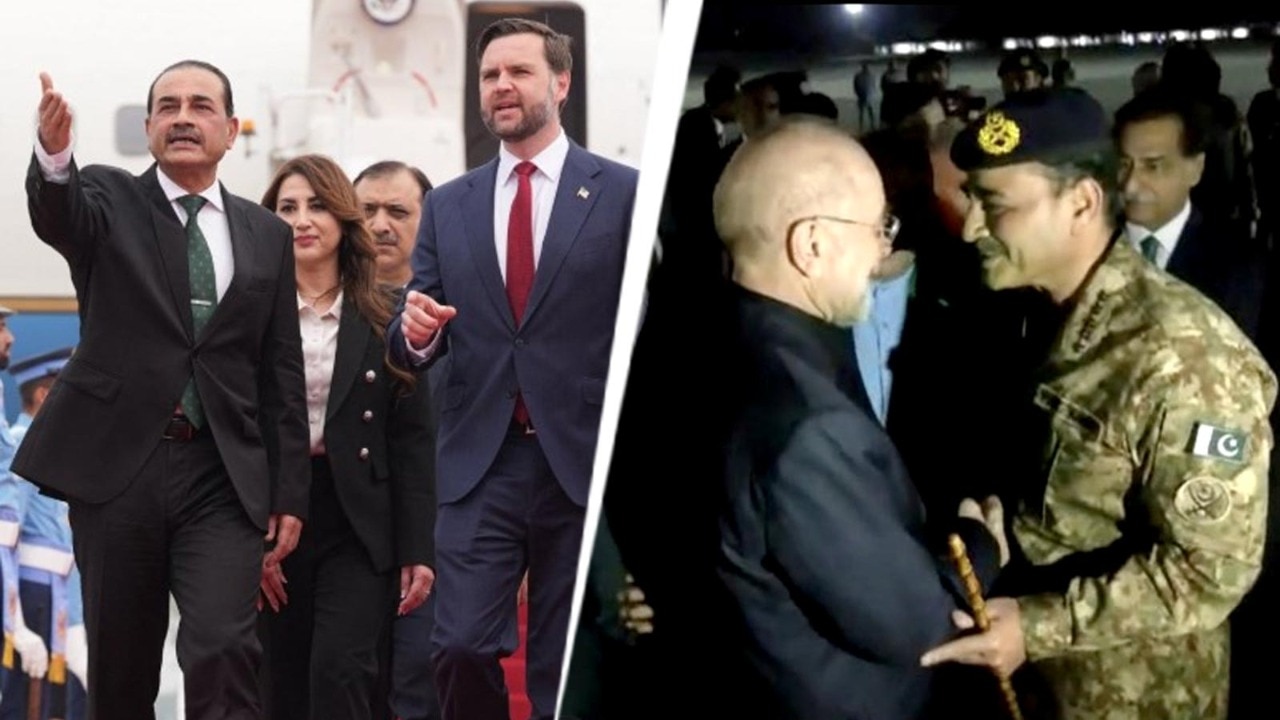
This high-stakes diplomatic summit, facilitated by Pakistani prime minister Shehbaz Sharif and chief of army staff Asim Munir, aims to secure a peace agreement to end the weeks-long conflict.
The White House also confirmed that a “full suite of US experts on relevant subject areas are present in Islamabad” and “additional experts are supporting from Washington.”
Key events Show key events only Please turn on JavaScript to use this feature
A new round of talks between Iranian and US delegations has begun in Islamabad following a break, with Pakistani officials acting as mediators, Iran’s semi-official Tasnim news agency reported, citing its correspondent.
“Considering the US’s excessive demands, it seems that this is the Iranian team’s last chance to reach a common framework in this round of talks,” the agency said.
The Gulf region has experienced a significant lull in hostilities, with no strikes reported on Saturday as high-stakes, face-to-face negotiations between the US and Iran continued in Islamabad.
This relative calm marks the first weekend of a formal two-week ceasefire that went into effect last Tuesday. The pause in combat was brokered to allow diplomatic delegations, including US vice-president JD Vance and Iranian officials, the opportunity to negotiate a potential end to the war involving the US, Israel and Iran, which has gripped the region since 28 February.
A spokesperson for Iran’s joint military command has denied an earlier claim by the US military that two navy destroyers transited the waterway, saying that “initiative over the passage of any vessel rests with the armed forces of the Islamic Republic of Iran”, according to Iran’s state media.
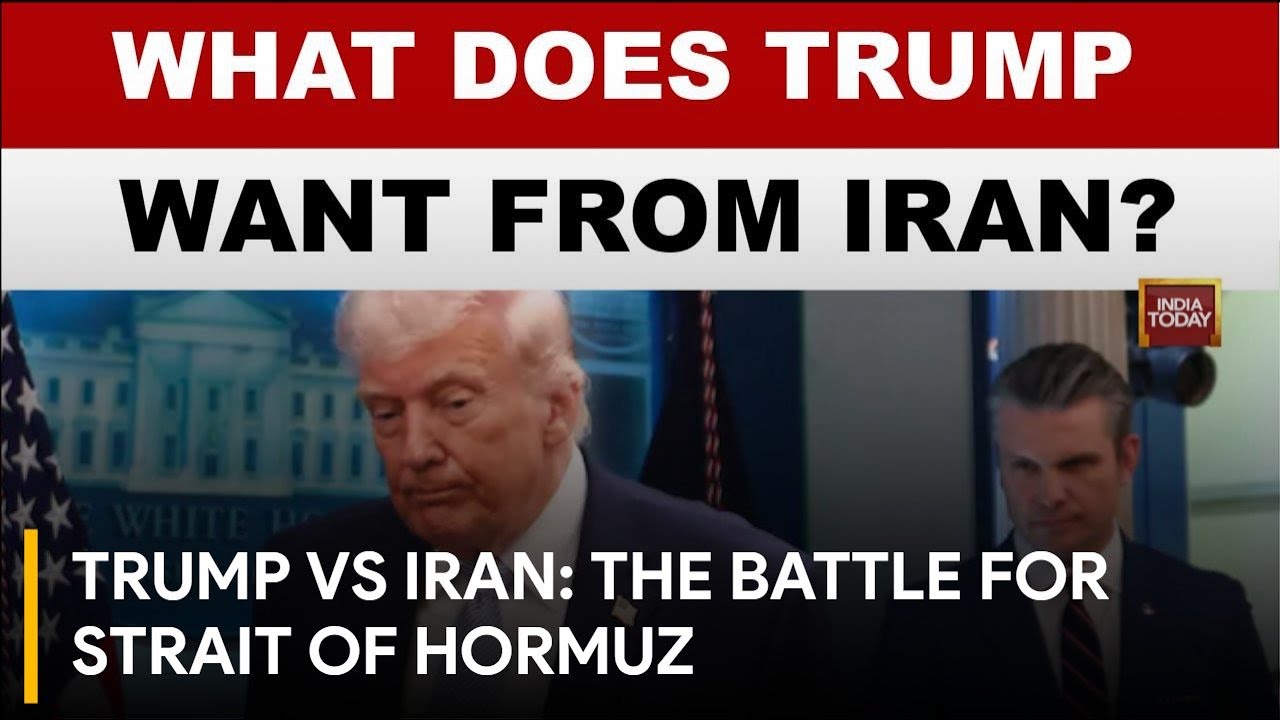
The strait of Hormuz, the narrow passage through which 20% of all oil and natural gas trade once passed, is already reported to be one of the main points of “serious disagreement” during negotiations between the US and Iran, now taking place in Islamabad.
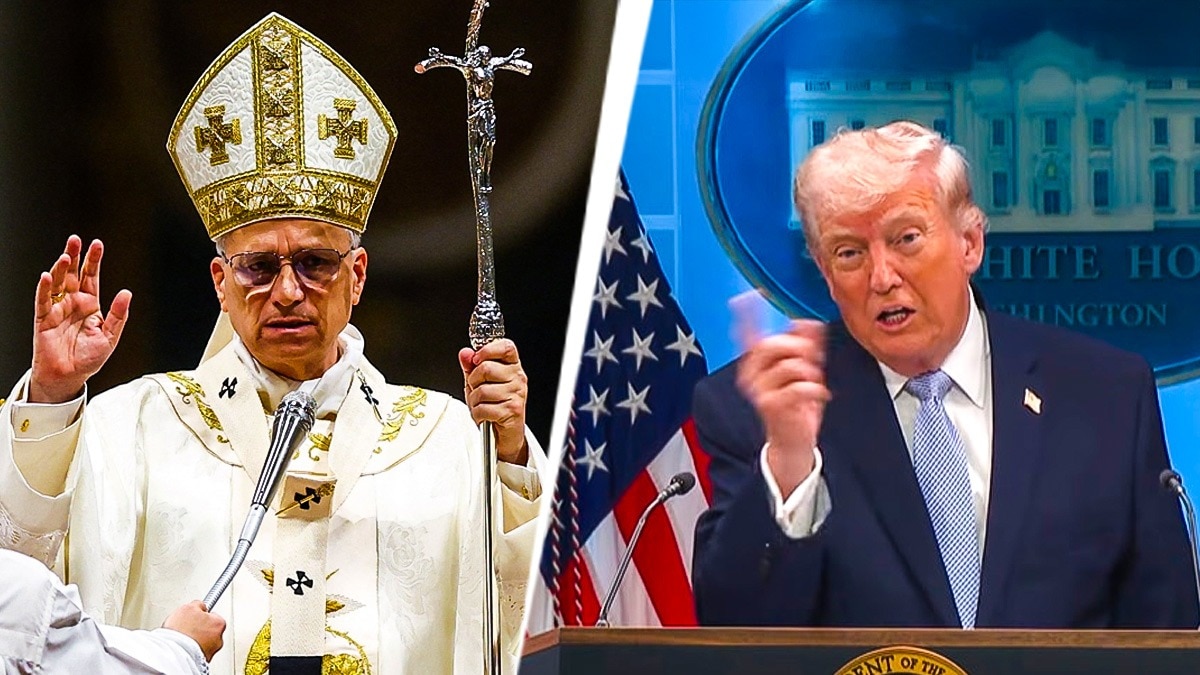
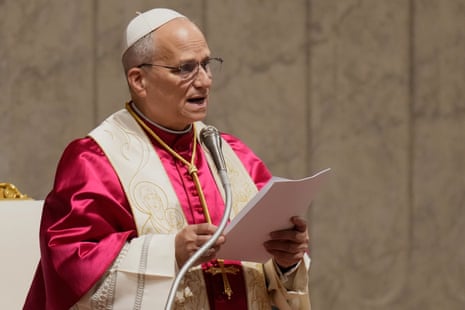
In his strongest words yet, Pope Leo XIV on Saturday denounced the “delusion of omnipotence” that he says is fueling the US-Israel war in Iran and demanded political leaders stop and negotiate peace.
Leo presided over an evening prayer service in St Peter’s Basilica on the same day the US and Iran began face-to-face negotiations in Pakistan.
The first US-born pope didn’t mention the US or Trump by name in his prayer, which was planned before the talks were announced. But Leo’s tone and message appeared directed at Trump and US officials, who have boasted of US military superiority and justified the war in religious terms.
“Enough of the idolatry of self and money!” Leo said. “Enough of the display of power! Enough of war!
“Stop! It is time for peace! Sit at the table of dialogue and mediation, not at the table where rearmament is planned,” he added.
Leo, who is known for choosing his words carefully, has emerged as a vocal critic of the Iran war.
Netanyahu says Israel will keep fighting Iran
Israeli prime minister Benjamin Netanyahu says Israel remains committed to keep fighting Iran, despite ongoing negotiations between the US and Iran.
“Israel under my leadership will continue to fight Iran’s terror regime and its proxies, unlike Erdogan who accommodates them and massacred his own Kurdish citizens,” Netanyahu wrote on social media.
Israel is not present at the US-Iran talks in Islamabad.
The strait of Hormuz remains among the main points of “serious disagreement” in talks between Iranian and US delegations in Islamabad, Iran’s semi-official Tasnim news agency reported on Saturday. It added that consultations were continuing despite what it described as excessive US demands, while Iran insisted on preserving its military gains.
French president Emmanuel Macron said on Saturday that he had spoken with Iranian president Masoud Pezeshkian, and had emphasized to him the importance of de-escalating the current situation through the ceasefire talks in Pakistan.
“I stressed the need for Iran to restore freedom of navigation and security in the Strait of Hormuz as quickly as possible, to which France stands ready to contribute. I insisted on the importance of fully respecting the ceasefire, including in Lebanon,” Macron said in a post on X.
The US military says it “began setting conditions for clearing mines in the strait of Hormuz” in an update released on Saturday afternoon.
“Today, we began the process of establishing a new passage and we will share this safe pathway with the maritime industry soon to encourage the free flow of commerce,” said Adm Brad Cooper, commander of Centcom, in the statement.
Navy destroyers USS Frank E Petersen and USS Michael Murphy have transited the strait of Hormuz into the Arabian Gulf, marking the start of a mission to clear the waterway of sea mines laid by the IRGC, according to the statement.
The operation aims to restore passage to the world’s most vital energy corridor, which has been effectively blocked for over six weeks, causing a global surge in oil prices and historic supply disruptions.

Robert Tait
Collateral damage is a universally acknowledged hazard of war – more commonly known for its impact on truth and non-combatant civilians.
Its consequences are much less frequently visited on military alliances.
The United States’ North Atlantic Treaty Organization (Nato) allies are fearful that may be about to change as a result of the fallout from Washington’s decision to team up with Israel in waging war against Iran.
Donald Trump has attacked the pact with a vehemence rarely heard over what he regards as disloyalty and failure to help in re-opening the strait of Hormuz. Tehran closed the strategic waterway in response to the military onslaught it faced in the conflict, which is currently paused thanks to a two-week ceasefire brokered by Pakistan.
Read more:
White House confirms peace talks are happening face to face
The White House has confirmed that the negotiations between the US and Iran currently under way in Islamabad are happening face to face.
The meeting today marks the highest-level direct engagement between Washington and Tehran in decades. The core US delegation is led by Vice-President JD Vance, alongside special envoy Steve Witkoff and Jared Kushner, supported by senior advisers including Dr Andrew Baker and Michael Vance.
This high-stakes diplomatic summit, facilitated by Pakistani prime minister Shehbaz Sharif and chief of army staff Asim Munir, aims to secure a peace agreement to end the weeks-long conflict.
The White House also confirmed that a “full suite of US experts on relevant subject areas are present in Islamabad” and “additional experts are supporting from Washington.”
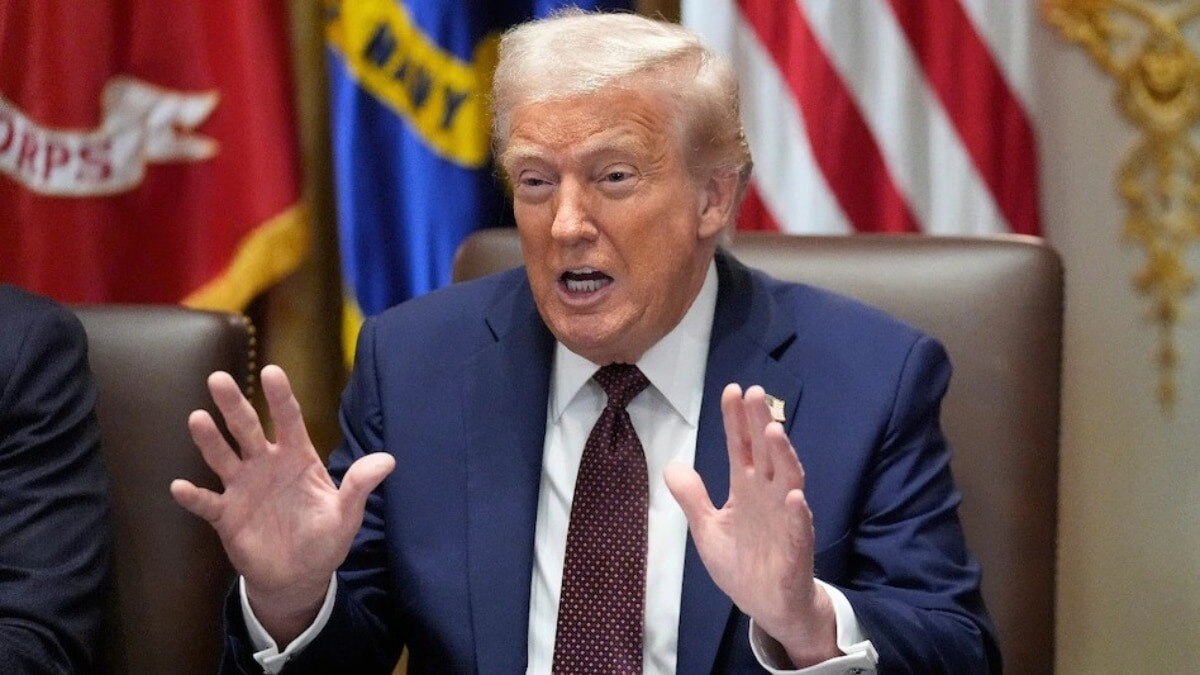
Donald Trump has launched another in a series of attacks on media coverage of the Iran war in a Truth Social post today, claiming that the US has “completely destroyed” Iran’s military and “everything else” at the same time the US vice-president is in Pakistan undergoing negotiations with Iran. The US president also claims that the strait of Hormuz will “soon be open”.
“The Fake News Media is CRAZY, or just plain CORRUPT! The United States has completely destroyed Iran’s Military, including their entire Navy and Air Force, and everything else,” Trump wrote. “Their Leadership is DEAD! The Strait of Hormuz will soon be open, and the empty ships are rushing to the United States to “load up.” But, if you listen to the Fake News, we’re losing!”
Trump did not specify which outlets he was referring to as “fake news” for their coverage of the war on Iran.
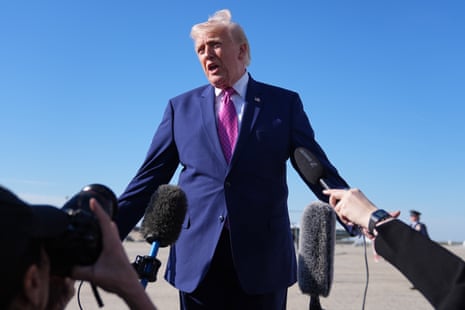
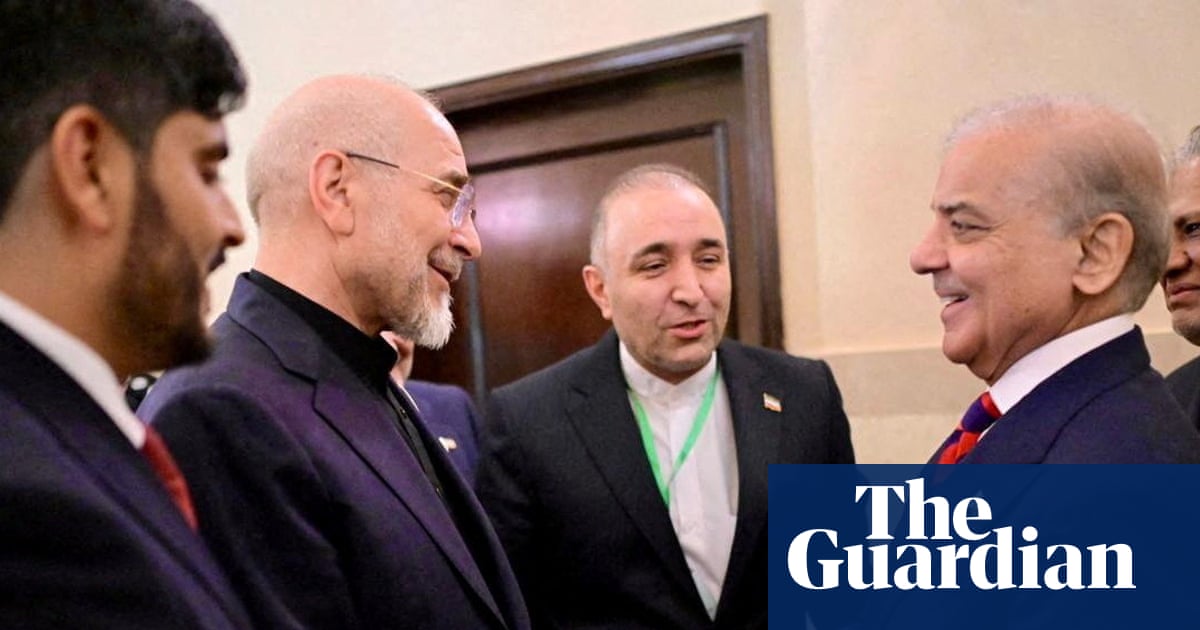
Here are a few photos of the ongoing negotiations between the US and Iran in Pakistan.
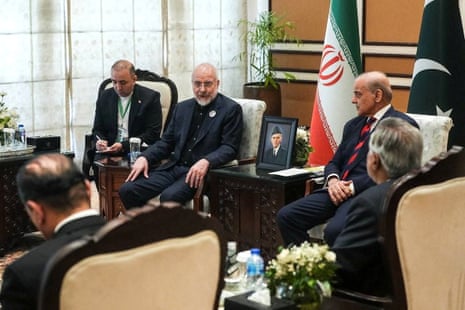
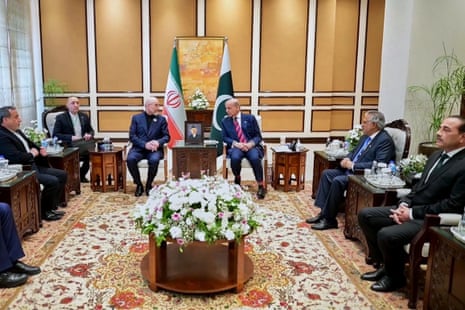
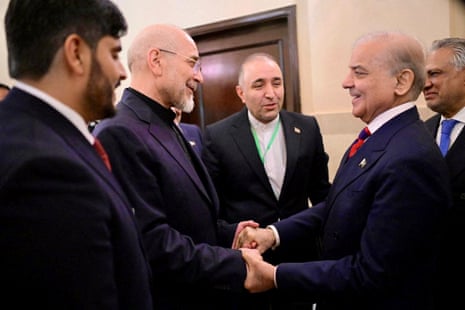
A Pakistani official has confirmed to the Associated Press that negotiations have officially begun between the US and Iran in Pakistan. The official told the AP that they “cannot say whether they are sitting in the same room or in separate rooms, but talks have started and are progressing well”.
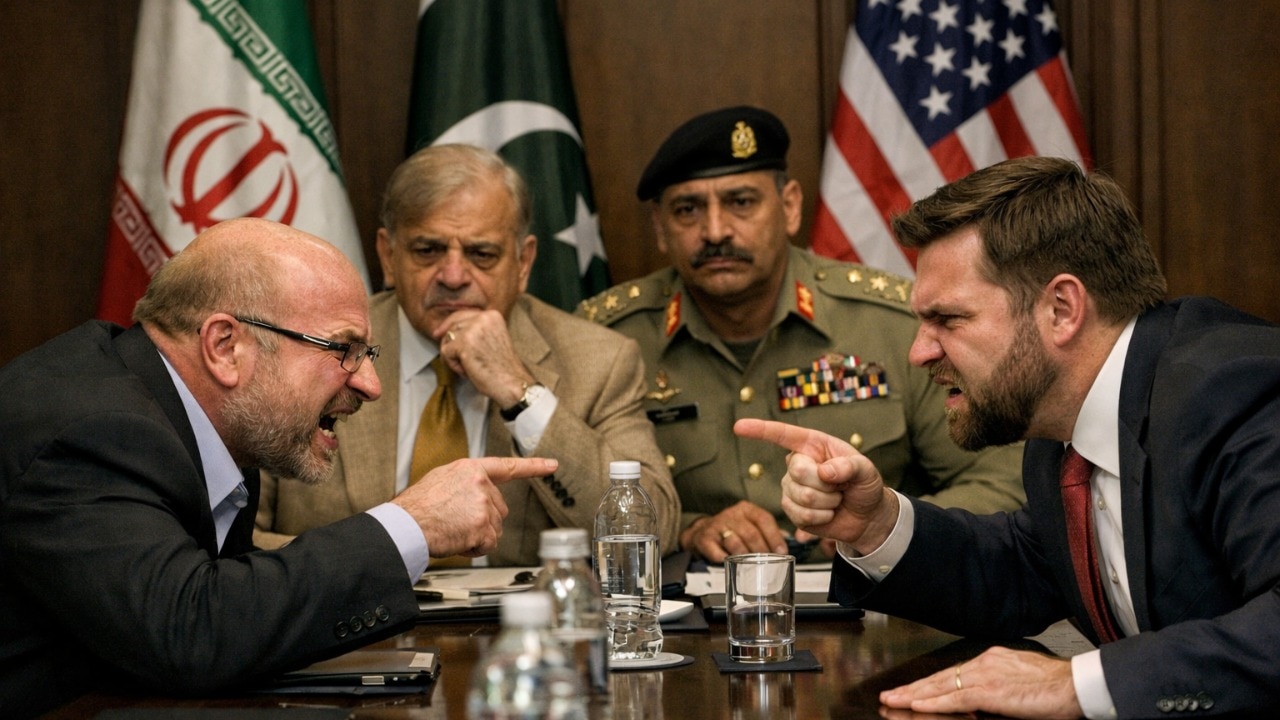
The three-way talks are between US officials JD Vance, Steve Witkoff and Jared Kushner, Iran’s Mohammad Ghalibaf and Abbas Araghchi, and Pakistan army chief Asim Munir.
In Gaza, which marked six months since the ceasefire between Israel and Hamas took effect on Friday, Palestinian health officials said at least seven people have been killed in two Israeli airstrikes overnight.
An airstrike hit a police checkpoint in the Bureij refugee camp in the central Gaza Strip early this morning, killing at least six, while a second airstrike hit the northern town of Beit Lahia, killing at least one, officials said.
The Israeli military said the strike in Bureij had been carried out after members of Hamas approached the yellow line demarcating the half of Gaza occupied by Israel, according to Reuters news agency. It did not immediately comment on the strike in Beit Lahia.
Israel has repeatedly shot at people in areas around the yellow line since the ceasefire deal was struck in October, often accusing militants of trying to cross the line or attack troops.
Since October, Israeli attacks have killed at least 700 people in Gaza, according to health officials there.
Iranian media has denied reports that US warships have crossed the strait of Hormuz.
The denial in the semi-official Tasnim news agency follows a report by the US news site Axios, citing a US official, that several US navy ships crossed the narrow waterway today.
There are conflicting reports over what’s happened. Tasnim, quoting an Iranian foreign ministry spokesperson, reported that a US destroyer attempted to enter the strait but was forced to retreat after a warning from Iran’s armed forces. Axios, citing a US official, said no such warning was given.
Earlier today, Donald Trump claimed the US has started to clear mines in the strait of Hormuz.
Just days before negotiations are expected to take place in Washington between Israel and Beirut, the Israeli military said it has struck more than 200 targets in Lebanon in the past 24 hours, claiming they belong to the Iran-backed Hezbollah group.
“The air force continues to strike infrastructure belonging to the Hezbollah terrorist organisation and to support the operations of ground forces operating in southern Lebanon,” the Israel Defense Forces said in a statement on social media.
A map of Lebanon with pinpointed locations of Israeli strikes since the US-Iran ceasefire began.Lebanon divided over potential talks with Israel

William Christou
In Lebanon, opinion was split over the government’s decision to negotiate directly with Israel, raising social tensions in the country already racked by a mass displacement crisis.
A rally by Hezbollah supporters on Friday saw Hezbollah supporters march from the prime ministers’ office to Hamra in West Beirut. Shouting matches erupted between residents of Hamra, an area not typically supportive of Hezbollah, and protesters, with the latter chanting, “Shia, Shia,” – a reference to the majority Shia support base of the group.
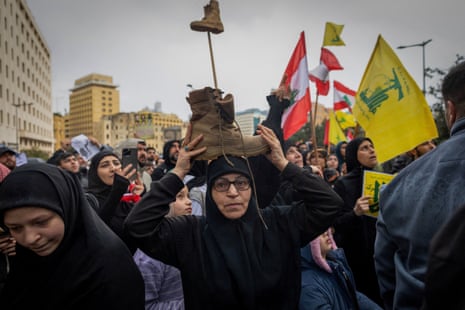
Hezbollah supporters staged another rally in front of the prime ministers’ office against negotiations on Saturday afternoon, with protesters waving Hezbollah flags and pictures of the late Hezbollah chief Hassan Nasrallah. The Lebanese army deployed troops around the area, and warned that it would not tolerate any attempts to destabilise the country at “this sensitive moment”.
Internal tensions in Lebanon had been on the rise since Israeli bombing over the last month displaced more than 1.2 million people across the country. Disagreements over Lebanon’s engagement with Israel threatened to further fracture the divided country.
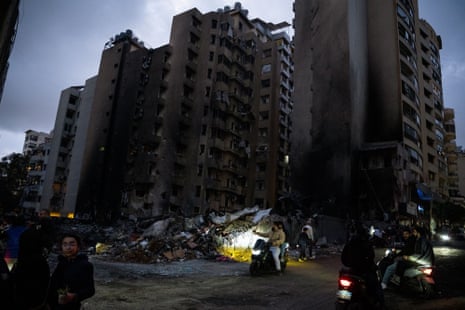
Residents of Lebanon were hopeful that Iran would make good on its promise to include Lebanon in its ceasefire with Israel and the US. Lebanese looked ahead to a meeting between Lebanon’s prime minister Nawaf Salam and US secretary of state Marco Rubio in Washington next week for potential progress on a ceasefire in Lebanon.
Despite talk of a ceasefire, Israeli strikes and Hezbollah rocket fire continued. Israeli strikes on the southern towns of Kafr Sir, Zifta and Toul killed ten people overnight, while Hezbollah fired rockets at cities in Israel’s north. Israeli troops and Hezbollah fighters continued to clash inside Lebanon, battling over the strategic city of Bint Jbeil.
US and Iranian officials meeting directly in Islamabad talks - reports
Al Jazeera, citing sources close to the mediation, has reported that the Iranian and US delegations are meeting face-to-face, with Pakistani mediators also present in the negotiating room.
Reuters has also reported the same, citing a Pakistani source.
The three-way talks are between US officials JD Vance, Steve Witkoff and Jared Kushner, Iran’s Mohammad Ghalibaf and Abbas Araghchi and Pakistan’s army chief Asim Munir.
In previous US-Iran negotiations, including the indirect nuclear talks that took place in Oman in the days before the war began on 28 February, mediators would shuttle back and forth between the two disputing parties to relay proposals and other information.