 1 month ago
The US Federal Reserve is unlikely to raise interest rates at its July meeting after June consumer inflation surprised on the downside, according to Ed Yardeni, President of Yardeni Research.
While the US central bank is expected to maintain its restrictive policy stance until inflation moves closer to its 2% target, Yardeni said the latest data has changed expectations for the near-term policy outlook.
Yardeni said inflation could pick up again in July, including from artificial intelligence
(AI)-related demand, but he expects the Fed to stay on hold rather than tighten policy further. Over the long term though, he sees AI improving productivity, helping economic growth without adding to inflationary pressures.
He also noted that while the Consumer Price Index (CPI) eased, the personal consumption expenditures (PCE) price index—the Fed's preferred inflation measure—has remained relatively stronger.
According to Yardeni, the Fed will likely keep policy restrictive without necessarily increasing borrowing costs further.
This is an edited transcript of the interview.Q: June CPI data took everyone by surprise: consumer prices declined in June for the first time since 2020. You would have thought that inflation was picking up, and plus you've got this PCE data, which is perhaps painting a little bit of a different picture. So, take us through your views on inflation and Kevin Warsh's first testimony. What did you learn from it?A: Kevin Warsh didn't say much new. He did reiterate that he still believes that AI is going to make a tremendous difference in boosting productivity, which will boost real economic growth without boosting inflation; quite the opposite. Productivity is very disinflationary. So, he continued to argue that this will be a very important factor. But in the short term, he acknowledged that the Fed hasn't managed to get inflation down to its 2% target for over five years, so he reiterated that he's committed to bringing inflation down to 2%, and the Fed therefore remains in a tightening stance. They're certainly not going to be lowering interest rates, but on the other hand, I think everybody who thought there might be a rate increase in July - and we thought that was possible at the end of the month - now knows that's just not going to happen because of this remarkably moderate CPI inflation rate.
There is another inflation measure called the consumption deflator that has been running a little bit hotter, and that's the one that the Fed tries to get down to 2%. So, the Fed is going to maintain a tightening stance. That doesn't mean they're going to raise rates, and meanwhile, we may very well get lucky here and see inflation continue to moderate. Of course, in the July data, we will get a pickup in inflation again, and maybe some pickup in AI-related inflation.
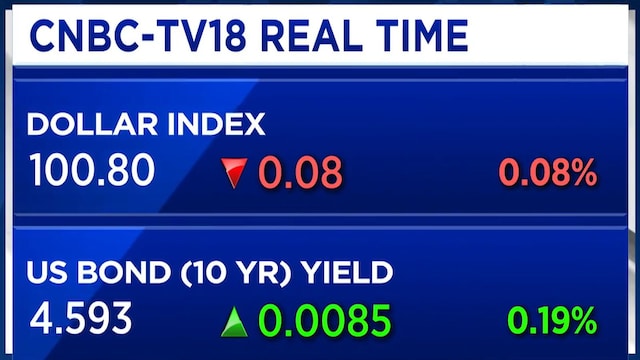
But all in all, the bottom line is reflected in what we see in the bond market. Bond yields on the two-year Treasury have come down because there's not going to be a rate increase anytime soon.
Q: The other news point was this IBM development. The view is that corporates will spend on data center equipment, and they're going to take that money away from software spending. What do you make of it and the reaction to that?A: IBM was a remarkable event here. They have never seen a one-day plunge where the stock gave up 25%, and yet the stock market didn't seem to pay much attention to it. IBM has been viewed as a play not on AI but on quantum computing, and when we suddenly got news that the underlying business had issues, everybody kind of focused on that and forgot about all the excitement surrounding quantum computing. I think this is a good opportunity to buy IBM. They are going to be leaders in quantum computing.
But for the here and now, what we're seeing is - thanks to the perception that the Fed's not going to be raising rates anytime soon, and expectations that if oil prices go up, they won't stay elevated for long before they come back down again. Anyway, we are seeing semiconductor stocks making a nice rebound here, which is still a vote of confidence in the AI trade.
Q: What about gold? At one point in time, all that glittered was gold. Gold has pulled back, and we're not seeing any big pop over the last many trading sessions. It was around $5,500 per ounce and is now around $4,100 per ounce. Earlier, you were a little bit bullish on gold's prospects. Do you believe that it is providing an entry?A: I am still long-term bullish on gold. I think that the stock market is going to hit 10,000 on the S&P 500 by the end of the decade, and gold is inversely correlated with the stock market in the short term, but on a long-term basis, the trends are pretty similar. So that kind of speaks to rebalancing. As people make more money in stocks, they tend to diversify their portfolios and move into gold.
Speaking of diversifying portfolios, central bankers are still committed to buying gold. China's central bank has continued to buy gold, and yet we have seen gold weaken.
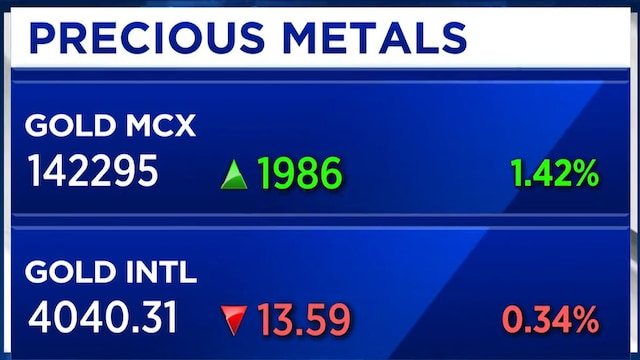
When you look at the chart from a technical perspective, this level is extremely important. $4,000 per ounce is a critically important level. I think it's going to hold, and if it does, we'll get to $5,000 by the end of the year. The record high so far was about $5,600 per ounce at the beginning of the year. But all in all, gold is a diversifier in portfolios. It certainly hasn't been acting the way you would think, with a war breaking out and some inflation picking up. To see gold go down has everybody scratching their heads.
Q: The market here in India has been doing a little better. Foreign flows have come back. IT stocks have been doing well. It's not as if there is suddenly great growth visibility for IT stocks or that managements are sounding very positive or anything like that. Maybe at the margin, you can argue, but it depends on who you ask and how you look at it. But what has happened definitely is that Korea has sold off. Korea is down some 25% from the highs, and the argument is that it was sucking in all the money. As that starts to underperform and it's back to about six times forward earnings, Korea is at a low once again. So, if this memory strength continues, who knows? It may start doing well again. But for now, some of that money is coming back and looking at stocks in India. Does that sound plausible?A: It sounds very positive to me. Everybody's kind of confused about AI and whether it is for real, whether it's ever going to be a real business that generates a positive rate of return, and what about competition from cheaper models out of China?
But at the end of the day, this is all about processing as much data as we possibly can. We have been doing that since 1965, driven by this digital revolution, and we have come a long way. I don't think that is going to change. I think this is all legitimate. We are going to see that AI is a big productivity booster.
It is a big business, and it won't destroy jobs, and it won't destroy companies that are in the software industry. For a while, software in the United States, software in India, call centers, and all that were suddenly viewed as being potential roadkill for the AI trade. But people are becoming a little bit more realistic that, on balance, this is probably a good development for companies across the board.
For the full interview, watch the accompanying video

Catch all the latest updates from the stock market here