1 month ago
Iran has hinted at unveiling a new weapon, which it said might give its enemies a 'heart attack', as talks with the US have hit a dead end. Experts have hinted that it might be the Hoot super torpedo that can slice through warships in no time.
Imagine an underwater super-weapon that travels like a bullet and can slice through enemy warships and submarines. Named Hoot, it is likely the secret weapon Iran teased on Thursday that it said its enemies were "deeply afraid of". The warning came as peace talks with the US hit a dead end, as Donald Trump rejected Tehran's demand to lift the naval blockade in exchange for reopening the Strait of Hormuz. It has led to fervent speculation on what the weapon might be.
The warning shot was fired by Iran's Navy Commander Shahram Irani. Despite the Iranian navy being severely depleted during the war, Irani emphasised Tehran would "very soon" strike the enemy with a "new weapon". "It is right next to them (too). I hope they won't have a heart attack," Irani said, while keeping up the suspense.
Defence expert Sandeep Unnithan told IndiaToday.in that Irani could be hinting towards the Hoot rocket torpedo, which was first tested clandestinely around 2006. It moves so fast that defences have barely any time to react. However, the weapon has its drawbacks as well. We will come to that later.
However, not much is known about the Hoot as Iran has kept details about it under wraps.
WHAT IS THE HOOT TORPEDO?
Hoot, in Persian, means whale. Iran has claimed it to be one of the fastest underwater weapons in the world. In fact, Iran is only the second country, after Russia, to have what is called a super-cavitating torpedo. Russia's own version, the VA-111 Shkval, was inducted way back in the 1990s.
So, how are super torpedoes different? Conventional torpedoes, which are like underwater guided missiles, have a speed between 60-100 km/hour. However, Iran claims its Hoot can reach a speed of over 360 km underwater.
If true, it will be a breakthrough as water is known to be a powerful resistance agent. Weapons fired underwater lose momentum due to being 1,000 times denser than air.
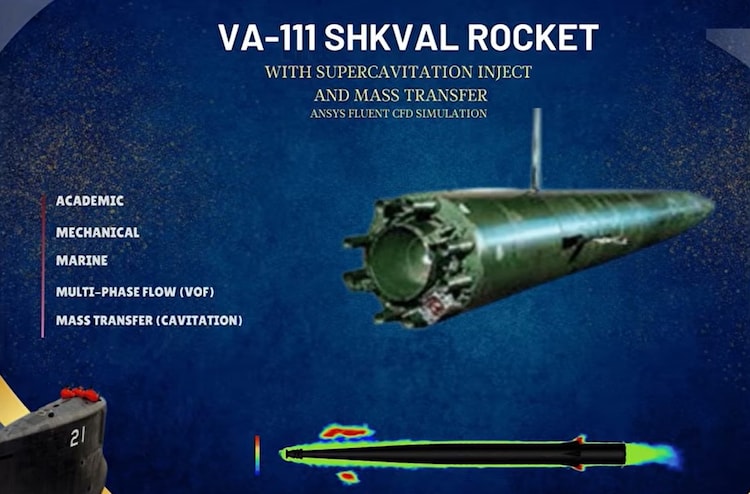
But Iran's Hoot or Russia's Shkval function differently.
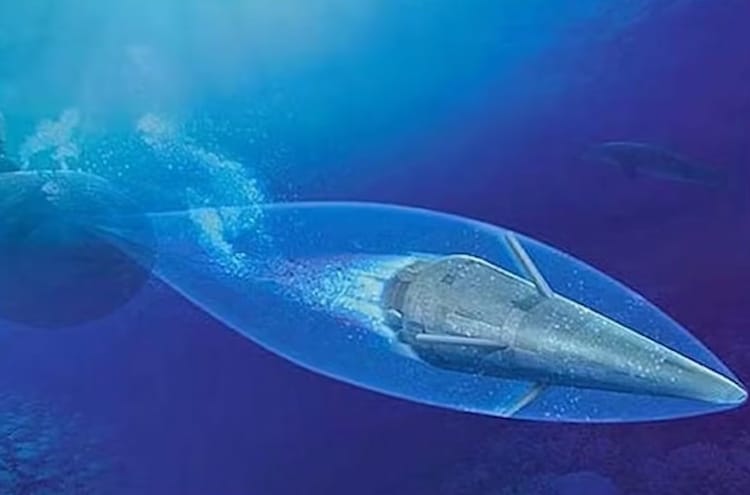
Way back in the 1970s, Soviet scientists developed a solid-fuelled rocket motor in a torpedo. It creates a gas bubble around the torpedo to drastically reduce water resistance and enable it to move at very high speeds. This is what is called super-cavitation technology mentioned earlier.
Simply put, such a torpedo, instead of slicing through water like a normal weapon, creates a gas bubble around itself, basically turning the ocean into a high-speed runway. It is essentially a fire-and-forget missile.
What separates the Hoot from others is its ability to carry a high-explosive warhead of over 200 kg.
But such speed comes at a cost. That cost is range. Now, due to its high-speed, such super torpedoes burn fuel extremely fast. Due to this, the Iranian Hoot or the Russian Shkval have a range of only 15 km. Conventional torpedoes have twice the range (around 30 km).
Now, coming to the key question. Can the Hoot sink a US aircraft carrier?
CAN IRAN'S HOOT SINK A US AIRCRAFT CARRIER?
According to Unnithan, the biggest drawback is that the Hoot hasn't been tested in realistic scenarios. "The problem with such super torpedoes is that they are notoriously difficult to guide accurately because of speed, noise and bubble interference with the SONAR," Unnithan said.
Now, American aircraft carriers like the USS Abraham Lincoln, which is deployed near Iran, have heavy armour belts in vulnerable areas, double and triple hull sections, and massive reserve buoyancy.
Carriers like the USS Abraham are built to survive multiple hits from heavy torpedoes. Moreover, such carriers operate with layered defences and are typically surrounded by destroyers, cruisers, submarines, and jets.
Together, this is what is known as a carrier strike group (CSG) screen, which covers hundreds of miles.
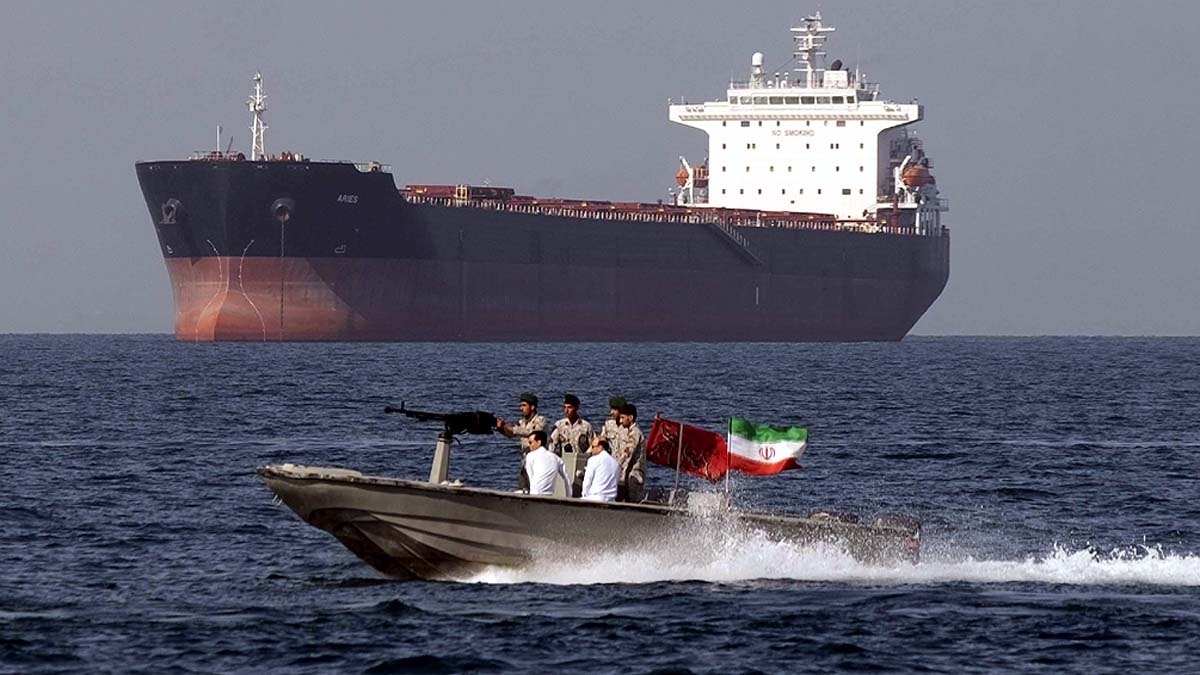
Now, for Iran to launch its Hoot torpedo, which can be done from submarines, vessels, or speedboats, it will need to penetrate this shield. For this, an Iranian vessel will have to come treally close as the Hoot has a range of just 15 km. Penetrating this shield, and that too undetected, is nearly impossible. 'Nearly' is the keyword here as Iran is known to pull up battlefield surprises.
"The short range (of the Hoot) means that the Iranians will have to come in really close to any platform. This is tactically suicidal against a carrier strike group in open water," Unnithan said.
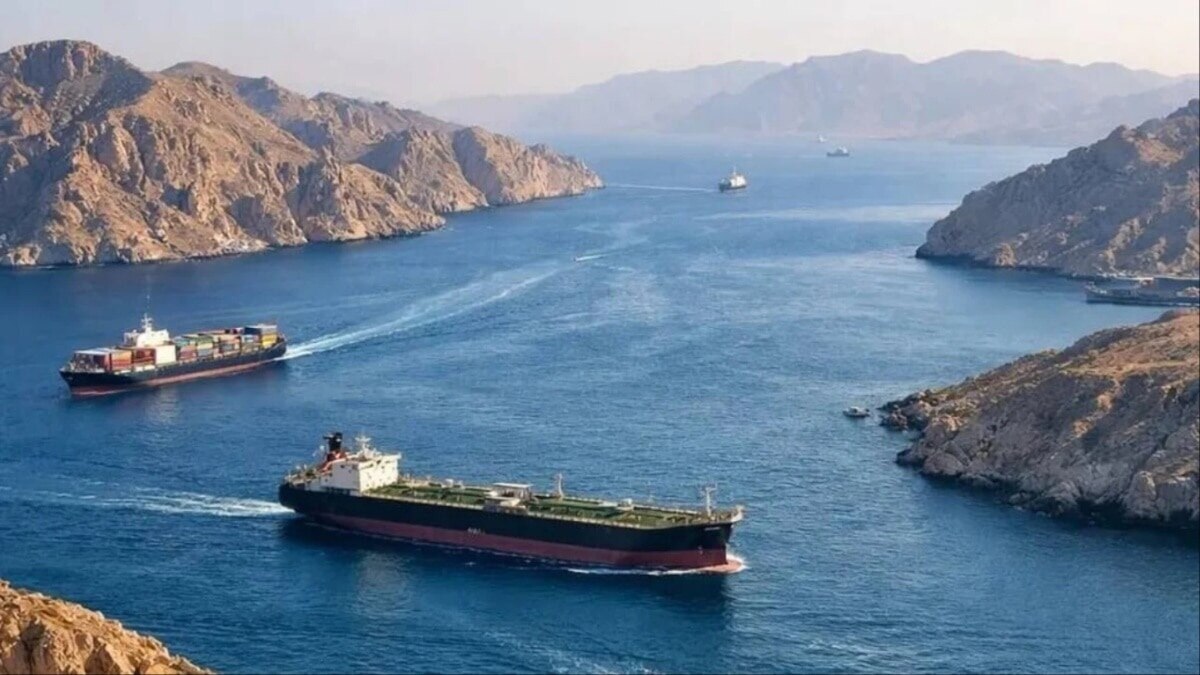
The only place where Iran can possibly launch its Hoot super torpedo is in confined waters like the Strait of Hormuz, the vital energy corridor that has been blocked by Tehran, upending global oil supplies.
However, US carriers have avoided the Hormuz and have been operating from standoff distances, wary of being ambushed by Iran.
Now, if the Hoot torpedo miraculously hits a US carrier, it could cause significant damage. "But that would be a one in a million shot," Unnithan said.
- Ends
Published By:
Abhishek De
Published On:
Apr 30, 2026 16:27 IST
Tune In