1 hour ago
The US is redeploying critical military hardware, including an aircraft carrier and fighter jets, in the Middle East amid heightened tensions with Iran after thousands were killed in protests in the Islamic nation. There have been mixed signals from US President Donald Trump even as Israel prepares for a surprise war, even as Iran warned that any strike on it would plunge the entire region into a wider military conflict.
Several American media outlets reported that the US was reinforcing its United States Central Command (CENTCOM), which oversees operations in the Middle East, bringing F-15E Strike Eagle jets and the aircraft carrier USS Abraham Lincoln strategically close to Iran. The US has also bolstered its air and missile defences in the Middle East, according to reports.
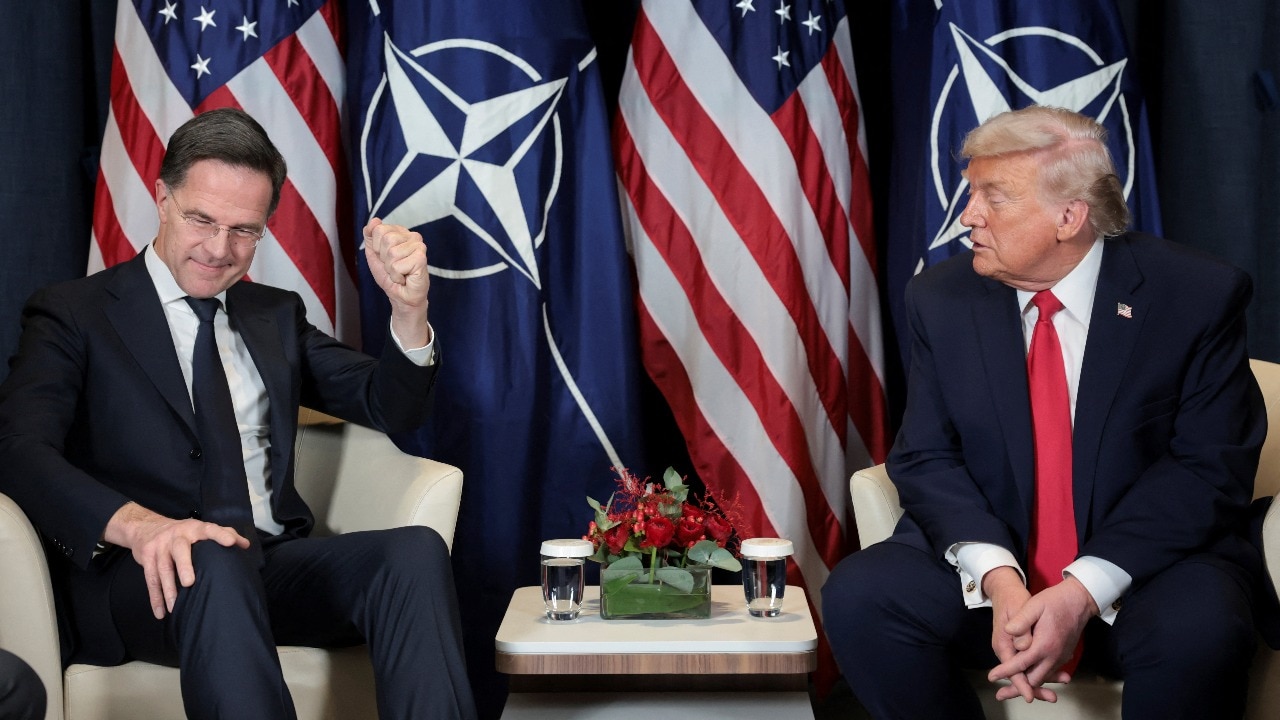
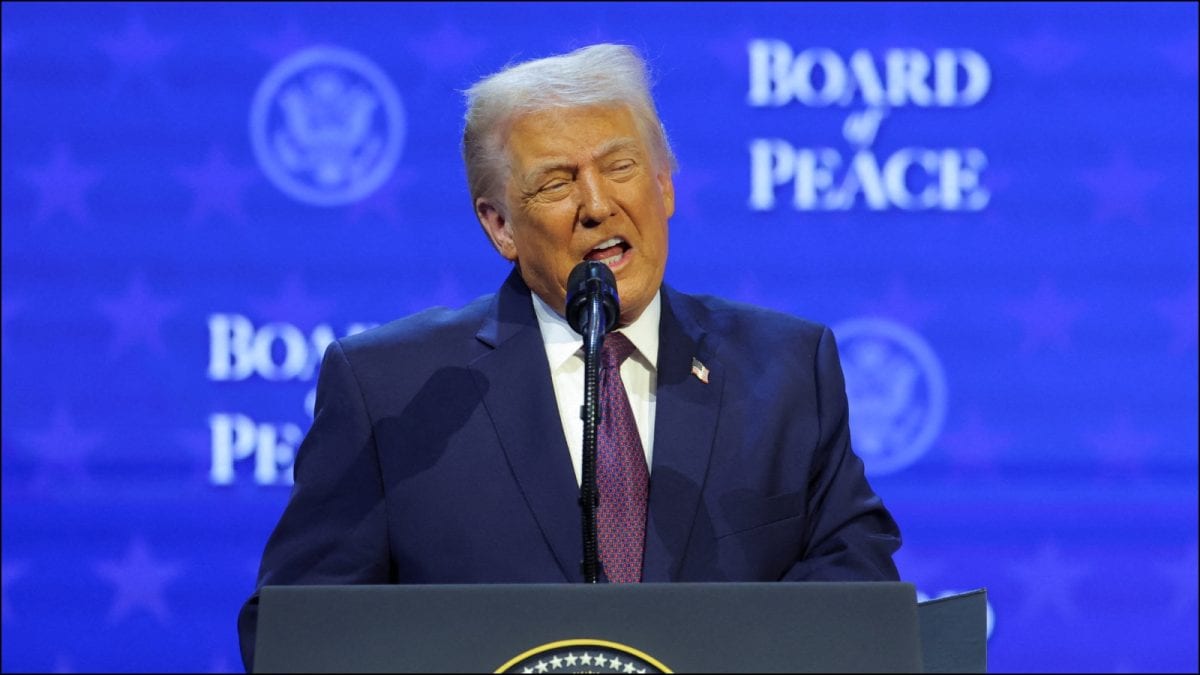
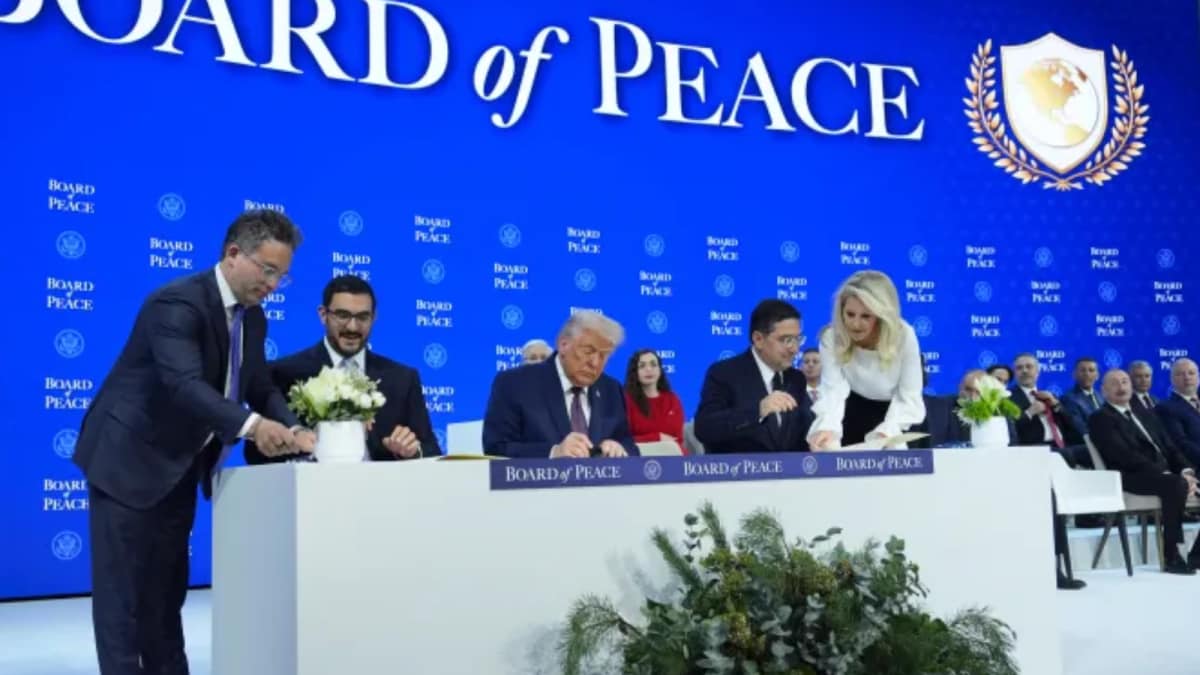
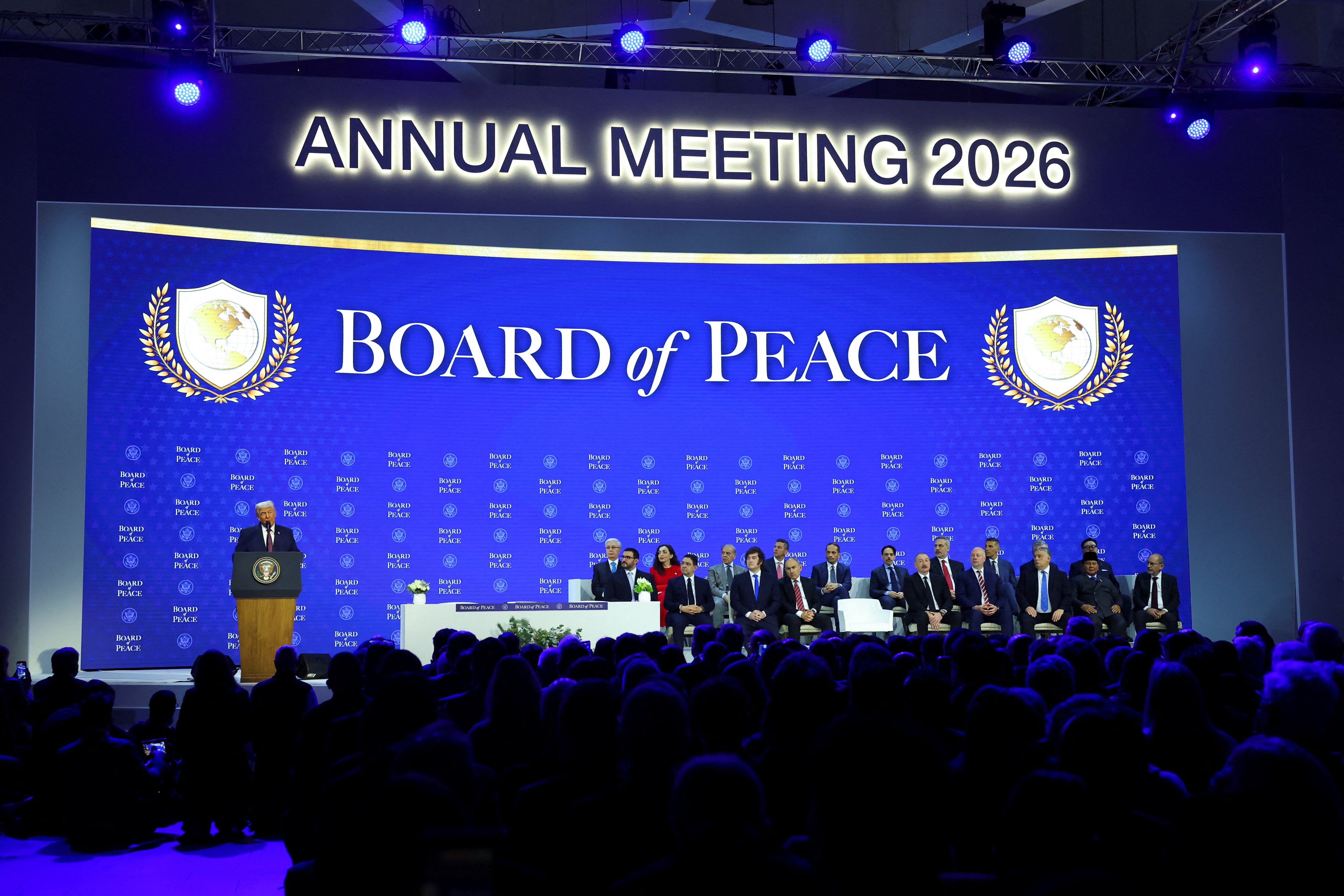
The developments come even as Trump told the CBS on Wednesday at the World Economic Forum (WEF) in Davos that he hoped military action against Iran would not be necessary. He claimed that his threats had prompted Tehran to suspend the planned executions of 837 protesters. The US President said the pause was "hopefully permanent". A CNN report said Trump had earlier called off military action after receiving assurances from Iran that the regime would halt the executions.
Despite an internet blackout and clampdown on Starlink services, horrifying details of killings and torture are emerging from Iran. A Reuters report quoted an unnamed Iranian official as confirming that 5,000 people, including 500 security personnel, had been confirmed dead in the unrest.
Tensions across the region remain elevated, with the regime of Ayatollah Khamenei threatening Trump of an attack. Speaking to NewsNation, Trump warned that alleged assassination threats from Tehran would be met with overwhelming force, stressing that military options remained firmly on the table. The Wall Street Journal reported that Trump was pressing his aides for a "decisive" strike even as the US military rapidly deploys assets across the Middle East.
Iranian Foreign Minister Seyyed Abbas Araghchi, writing in The Wall Street Journal, warned that Iran would respond forcefully to any renewed attack. Israeli newspaper Haaretz reported that the Jewish nation's defence establishment was on high alert, with officials increasingly treating a potential US strike as imminent.
US MILITARY BUILD-UP IN THE MIDDLE EAST WITH EYE ON IRAN
According to media reports, the US military began reinforcing its United States Central Command (CENTCOM), which oversees operations in the Middle East, in early to mid-January 2026.
On January 18, Air and Space Forces Magazine reported that 12 F-15E Strike Eagle jets of the US Air Force were redeployed from the UK to air bases in Jordan, alongside KC-135 aerial refuellers and C-130 cargo aircraft. The F-15E, a multirole combat jet, was previously used by both the US and Israel to counter Iranian drone attacks during last year's 12-day conflict with Iran.
Meanwhile, Forbes reported that the aircraft carrier USS Abraham Lincoln, equipped with F-35C and F/A-18 fighter jets and its escort group, transited the Strait of Malacca from the South China Sea around January 20. The carrier was operating in "dark mode", with its transponder switched off for security reasons, as it moved through the Indian Ocean.
The repositioning of the carrier from the Indo-Pacific to CENTCOM's area of responsibility is expected to place it near the Arabian Sea or Persian Gulf in the coming days, significantly expanding US strike and power-projection capabilities in the region.
The US has also bolstered its air and missile defences. According to The Wall Street Journal, additional THAAD and Patriot missile batteries have been deployed across the Middle East, including in Israel, Qatar and Jordan.
Taken together, these deployments give Washington the capability to carry out swift and wide-ranging strikes against Iran.
ISRAEL FEARS BEING ATTACKED BY IRAN, GOES INTO WAR MODE
Israel has responded to the US build-up with heightened readiness, raising alert levels amid concerns that a US strike on Iran could come with little warning.
Israeli media outlet Haaretz quoted Israeli security officials as saying that the Israel Defence Forces (IDF) is treating the possibility seriously despite the absence of public signals from Washington, citing the unpredictability of Trump's decision-making.
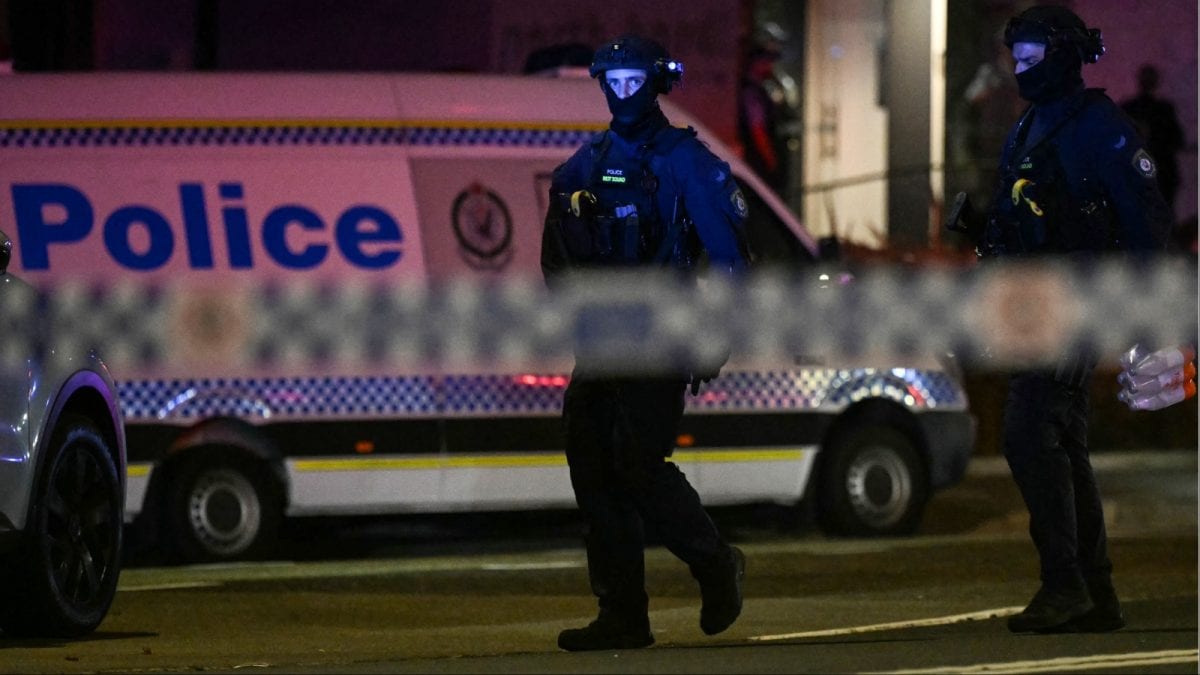
Military and civilian agencies, including police, fire and emergency services were preparing for multiple scenarios, though officials acknowledged that any US decision could still be reversed at short notice. Israel's air-defence network had also been placed on high alert, according to reports.
Israeli assessments suggest Iran might retaliate indirectly if attacked, potentially attempting to draw Israel into the conflict through missile or proxy attacks. However, senior officers said Tehran might avoid directly targeting Israel unless a US campaign became prolonged or threatened the regime's survival.
Speaking on Wednesday, IDF Chief of Staff Lt Gen Eyal Zamir said the military was prepared to confront any threat. "In the face of the scope of the multi-front threats to the State of Israel, the Home Front Command stands on defence, is trained, competent and on high alert," Zamir said, according to The Times of Israel, referring to Iranian warnings that Israel and US bases would be targeted if strikes are ordered.
Iran, for its part, warned that any US attack would trigger mass retaliation and risk plunging the Middle East into a wider war.
In his Wall Street Journal editorial, Foreign Minister Araghchi wrote that "unlike the restraint Iran showed in June 2025," its armed forces would respond with full force if attacked again. He also accused Israel of pushing Washington toward confrontation, warning that any all-out conflict would be far longer and more destructive than what Israel's leaders were suggesting to the White House.
WILL US ATTACK IRAN?
Trump's shifting posture, oscillating between de-escalation and confrontation, has injected uncertainty into Washington and across the region. After receiving backchannel assurances that Iran had halted mass executions, he paused planned strikes last week, telling reporters there was "no plan for executions".
Yet, according to US officials cited by The Wall Street Journal, Trump continued to demand "decisive" military options, repeatedly using the term to describe scenarios ranging from limited strikes on Islamic Revolutionary Guard Corps targets to broader actions aimed at pressuring or destabilising the regime.
The Wall Street Journal reported Trump's approach combined coercive pressure with tactical off-ramps. His threats appeared to have forced concessions, but deep distrust of Tehran, fuelled by reports of crackdowns, alleged assassination plots and Iran's own warnings kept the possibility of a strike alive. Trump's inner circle remained divided. Some advisers favoured a limited, high-impact strike to restore deterrence, while others warn that Iranian retaliation could quickly spiral into a regional war, according to reports.
A Western military official had, in an interview with Reuters earlier, cautioned that the Trump administration often used "unpredictability" as "part of its strategy".
As of Thursday (January 22), no attack had been authorised. According to The Wall Street Journal, any potential strike on Iran would require large numbers of F-35 stealth jets and B-2 bombers, which hadn't been deployed to the region yet. But the scale of the US military build-up, coupled with Israel's heightened alert and Trump's shifting rhetoric, suggested that the window for military action remained open, and that a sudden strike couldn't be ruled out.
- Ends
Published By:
Shounak Sanyal
Published On:
Jan 22, 2026
Tune In