1 month ago
The negotiations opened against the backdrop of a fragile ceasefire in Lebanon and conflicting positions between Washington and Tehran on key regional issues, threatening to complicate efforts to advance the Pakistan-brokered agreement signed on Wednesday.
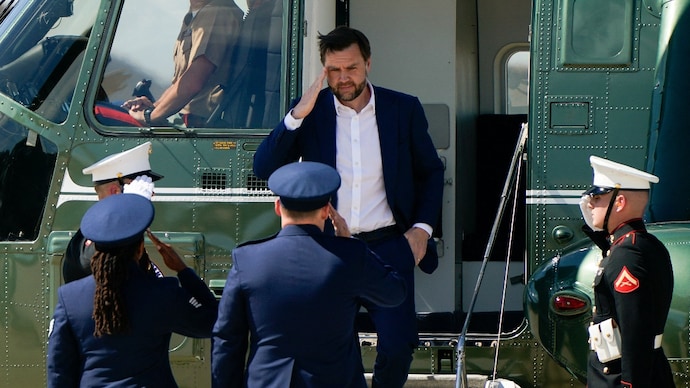
JD Vance arrives in Switzerland for US-Iran peace talks

UPDATED: Jun 22, 2026 02:00 IST
The first round of talks between Iran and the United States aimed at ending months of conflict in the Middle East was paused on Sunday in Switzerland amid disagreements over Lebanon and a brief Iranian walkout triggered by comments from US President Donald Trump, though Tehran said the negotiations had not ended.
The talks, attended by US Vice President JD Vance and an Iranian delegation led by chief negotiator Mohammad Baqer Qalibaf and Foreign Minister Abbas Araqchi, come days after an interim agreement signed by Trump and Iranian President Masoud Pezeshkian to end nearly four months of hostilities. The outcome of Sunday's talks is expected to determine the agenda for a second round of negotiations as both sides seek a comprehensive agreement to resolve outstanding disputes, including over Iran's nuclear programme.
The negotiations opened against the backdrop of a fragile ceasefire in Lebanon and conflicting positions between Washington and Tehran on key regional issues, threatening to complicate efforts to advance the Pakistan-brokered agreement signed on Wednesday.
Before formal negotiations began, Qalibaf met Qatari and Pakistani mediators separately before leading the Iranian delegation into the four-party talks later in the day.
Iranian officials reiterated ahead of the talks that progress depended on Washington fulfilling its commitments under the interim agreement, particularly securing an end to Israeli attacks in Lebanon.
Iran has maintained that the talks should focus on implementing commitments under the 14-point deal and has accused the United States of failing to fulfil its first provision — a ceasefire "on all fronts" — citing renewed exchanges of fire between Israeli forces and the Iran-backed Hezbollah movement in Lebanon.
A member of Iran's negotiating team told state media that if the war in Lebanon did not end, negotiations on other subjects would not proceed.
During the first round of the talks, which lasted about 80 minutes, discussions focused on ending the conflict, securing sanctions relief and releasing Iranian frozen assets, according to Iran's Foreign Ministry spokesperson.
Iranian negotiators said a draft framework for sanctions waivers on Iranian oil exports had been finalised and could be implemented soon. They also said executive arrangements for the release of Iranian frozen funds were being discussed with the participation of a Qatari delegation.
Tensions escalated on Sunday after Trump warned Iran to stop its proxies in Lebanon or face severe consequences. Iranian media reported that Tehran's delegation briefly left the venue in protest.
Tasnim news agency, citing a source, said the Iranian team objected to Trump's comments and temporarily walked out of the talks. Qalibaf later warned that the United States should be careful with its statements, adding that Iran's armed forces were prepared to respond.
Vance, however, sought to downplay the tensions, describing them as part of a difficult diplomatic process and insisting progress was still being made.
"These things are always a little bit messy," he told reporters, while reaffirming Washington's commitment to a broader regional settlement. Vance added that Trump had instructed the U.S. delegation to "turn over a new leaf" in efforts to improve relations with Iran.
The dispute also disrupted plans for a symbolic handshake and joint photograph between the two delegations. According to Iranian media, Qalibaf and Araqchi declined to participate, dismissing the proposed photo opportunity as an American "media show." Iranian officials later informed organisers they would not take part in any joint media event.
Meanwhile, Lebanon experienced one of its quieter days in recent weeks, with no reports of major overnight violence following two days of intense Israeli strikes and Hezbollah attacks.
However, Israeli Prime Minister Benjamin Netanyahu signalled that tensions could persist, saying Israel would continue to hold the "security zone" it has established in southern Lebanon for as long as necessary.
"We established a security zone in Lebanon, and we shall keep it as long as is necessary to protect our people," Netanyahu said at a conference in Jerusalem.
- Ends
Published By:
Nitish Singh
Published On:
Jun 22, 2026 02:00 IST