1 hour ago
Former US Security Adviser John Bolton said the US-Iran ceasefire and memorandum of understanding had collapsed. He said Donald Trump entered the conflict without a clear strategy and now faces a self-created trap.
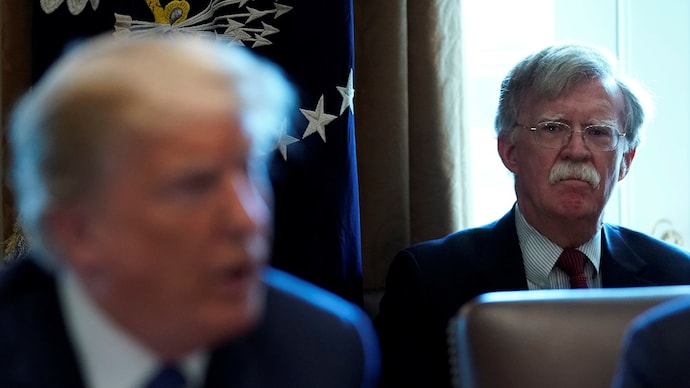
John Bolton questioned why the Trump administration appeared unprepared for the latest escalation. (File Photo: Reuters)
The ceasefire between the United States and Iran has effectively collapsed, and President Donald Trump is now "trapped by his own making", former US Security Adviser John Bolton said, warning that Washington entered the conflict without a clear strategy and negotiated with Iranian officials who never held real power.
In an exclusive interview with India Today's Rajdeep Sardesai, Bolton argued that the US-Iran memorandum of understanding (MOU) had failed, the Strait of Hormuz crisis had exposed major flaws in Washington's planning, and the region was now edging towards another dangerous phase of conflict.
'THE MOU IS BASICALLY DEAD'
At the heart of the crisis, Bolton said, is a peace agreement that never had a realistic chance of succeeding.
"I think the memorandum of understanding basically is dead and I think the ceasefire is dead along with it," he said.
According to Bolton, the US negotiated with Iran's civilian leadership even though the country's military decisions remained in the hands of the Islamic Revolutionary Guard Corps (IRGC).
"The MOU was negotiated with civilian authorities, the Speaker of the Parliament, the Minister of Foreign Affairs, who don't control the Revolutionary Guard, components that have the missiles, the ships, the mortars, the drones to try and close the Strait of Hormuz."
The former national security adviser also argued that months of US-Israeli military action had shattered Iran's central command structure.
"I think now you don't really have a functioning government. You have different pieces, different heads of authority that are not answerable to a single source."
"We've been negotiating with people who don't hold the cards."
'TRUMP DIDN'T SEE THIS COMING'
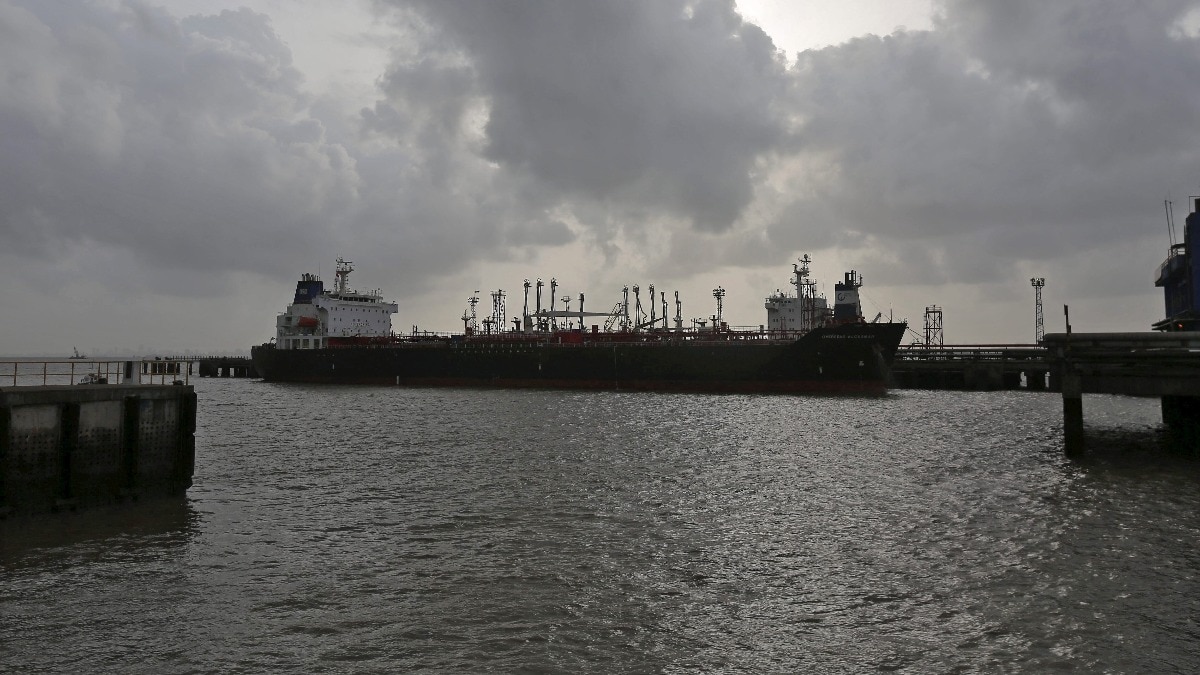
The Strait of Hormuz, Bolton argued, has become Iran's strongest bargaining tool because Washington underestimated how quickly Tehran could weaponise it.
"The Revolutionary Guard has done that."
Calling the waterway one of the world's most obvious strategic choke points, Bolton questioned why the Trump administration appeared unprepared for the latest escalation.
"One question the Trump administration is going to have to answer at some point is how could they have not seen this coming?"
"Anybody who can read a map can see that the Strait of Hormuz is a choke point."
Even former US President Jimmy Carter, he noted, had discussed contingency plans shortly after Iran's 1979 revolution over the possibility of Tehran attempting to shut the waterway.
"Why Trump didn't see it or why we weren't prepared is a question I can't answer... It was a big mistake."
'TRUMP IS IN A TRAP OF HIS OWN MAKING'
Much of Bolton's criticism was directed at Trump himself, accusing the US President of launching a conflict without defining what success would look like.
"Trump has made a lot of mistakes in this."
Before hostilities began, Washington failed to prepare the American public, coordinate with allies or develop a long-term strategy, he argued.
"He didn't prepare the American people. He didn't consult with friends and allies around the world. He doesn't seem to have had a strategy. I don't know what his objectives are."
Domestic politics, rather than strategic planning, also shaped the memorandum of understanding, Bolton said.
"He wanted oil, again, to come out of the Gulf, to lower global oil prices, to get the price at the pump in America for American consumers down and lessen the danger to the Republican Party in the November congressional elections."
With the agreement now effectively abandoned, Trump has boxed himself into a difficult position, Bolton argued.
"The MOU has failed now, so Trump is in a trap of his own making."
"He launched the war. He didn't think through the implications. He's got political trouble at home, and he can't find anybody in the Iranian regime to talk to that makes any difference."
'NO CLEAR OBJECTIVE'
Bolton believes the absence of a clearly defined objective remains Washington's biggest weakness.
"It certainly appears" that the Middle East is moving towards another phase of war, he said, but argued that the White House still cannot explain what it is trying to achieve.
"Trump today still cannot tell you what his objectives are."
If regime change was the goal, Bolton said, the administration had done almost nothing to prepare for it.
"If the objective was regime change, which I think would have been entirely justifiable, Trump has not done the necessary preparation for it."
Military action alone, he argued, could never remove Iran's leadership.
"I certainly never believed... that you could overthrow the regime in Tehran, simply by air power."
Instead, Washington should have worked with opposition groups inside Iran and helped build an alternative political structure before expanding military operations.
BACKS BLOCKADE, WARNS OF ESCALATION
Despite his criticism of Trump's handling of the conflict, Bolton backed the decision to restore the blockade on Iranian ports.
"The first thing to do is reimpose the blockade against the export or import of any products from Iran so that they get no revenues from the international sale of oil."
Opening the southern side of the Strait of Hormuz for Gulf Arab shipping would also help stabilise energy markets, he said, even if doing so required military force.
"I think that's going to require the use of military force and it brings with it, therefore, the risk of escalation."
"But if you're not prepared to take that risk, then you are ceding control of the Strait of Hormuz to the Revolutionary Guard."
'TRUMP DOESN'T THINK BEYOND 24 HOURS'
Bolton also criticised Trump's abrupt reversal over his proposed 20 per cent transit fee on cargo moving through the Strait of Hormuz.
"This is a good example of how Trump doesn't think beyond 24 hours."
The proposal, he argued, contradicted America's long-standing position that commercial shipping should enjoy freedom of navigation through international waterways.
"His 20% toll... lasted less than 24 hours."
As pressure mounts at home and abroad, Bolton believes Trump's decision-making is becoming increasingly unpredictable.
"He sends crazy messages... and they don't do it. He can't deal with what's happening."
"It will make him more frustrated and more erratic."
Bolton also repeated his long-held belief that lasting peace in the region would only come with political change in Tehran.
"Ultimately, you're never going to get peace and security in the Middle East with the regime still in power in Tehran."
Rejecting criticism that such a position violated international law, he argued that Iran's leadership continued to threaten regional security and Western interests.
The US-Iran conflict intensified further on Wednesday as the United States launched another round of strikes on Iran's coastal defence systems and missile sites after reimposing a naval blockade on Iranian ports. Tehran hit back by threatening to close more regional energy export corridors.
The fresh escalation comes as both sides continue battling for control of the Strait of Hormuz, through which about 20 per cent of global oil and gas shipments passed before the war.
- Ends
Published By:
Satyam Singh
Published On:
Jul 15, 2026 23:31 IST