1 month ago
India launched a blistering attack on Pakistan at the United Nations Security Council (UNSC) on Thursday, accusing Islamabad of systematically crushing the rights of people in Pakistan-Occupied Kashmir (POK) while repeatedly invoking Jammu and Kashmir at international forums to deflect attention from its own record.
Speaking during the UN Security Council Open Debate on Strengthening the Mechanisms for Peaceful Settlement of Disputes, India's Permanent Representative to the UN, Ambassador Harish Parvathaneni, said the reality inside Pakistan-occupied Jammu and Kashmir exposed the "true nature" of the Pakistani state. He asserted that Pakistan should focus on addressing its internal challenges instead of promoting what he described as a misleading narrative before the international community.
His remarks came after Pakistan once again sought to raise the Kashmir issue at the Security Council, prompting a firm rebuttal from India. New Delhi reiterated its long-held position that Jammu and Kashmir is an integral part of India and maintained that the only unresolved issue is Pakistan's continued illegal occupation of Indian territory.
'WORLD IS WITNESS' TO CONDITIONS IN POK
Drawing attention to the situation in Pakistan-Occupied Kashmir, Ambassador Parvathaneni said that the people living there have faced decades of repression.
"The world is witness to the continued suppression of basic rights, freedom of expression and association and stifling of fundamental freedoms of Kashmiris in Pakistan Occupied Kashmir. These are not isolated instances, but part of a larger design by the Pakistani establishment in Pakistan Occupied Kashmir for close to eight decades," he said.
The Indian envoy argued that the developments unfolding in POK reveal a pattern that goes far beyond isolated incidents. According to him, the restrictions on civil liberties and political freedoms form part of a long-standing policy that has affected the region for decades.
INDIA POINTS TO PAKISTAN'S INTERNAL CRISIS
Expanding his criticism beyond POK, Parvathaneni said the same pattern of repression could be seen across Pakistan. He cited the country's recent political developments, including the imprisonment of opposition leaders and changes to its constitutional framework, to argue that democratic institutions had weakened significantly.
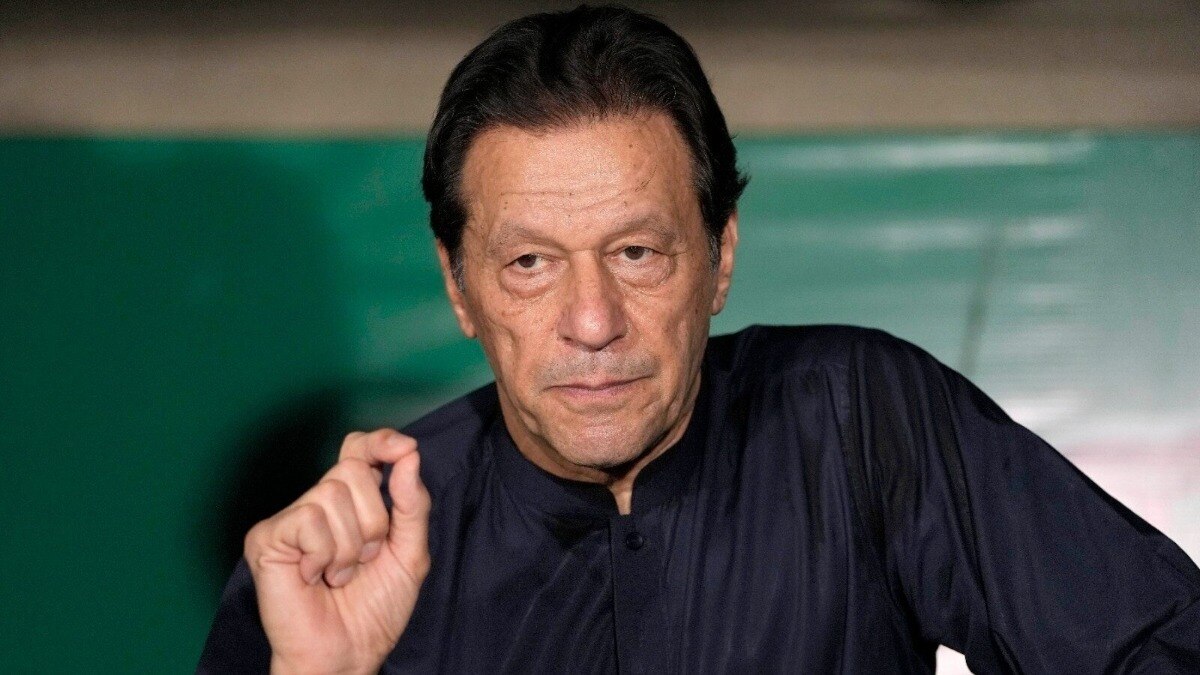
"Incarceration of leaders including a former Prime Minister, electoral outlawing of the main opposition party, a constitutional coup by the military through the 27th Amendment, and other such actions have decimated any semblance of democracy," he said.
"Pakistan would do well to look inward and address the real issues in the country rather than resorting to fabricated narrative construction with religious imagery aimed at scoring domestic brownie points and misleading the wider UN membership," he added.
Parvathaneni also questioned why developments inside Pakistan receive relatively limited attention at the United Nations.
"While similar developments in other countries are excoriated by the United Nations, such repression and developments in Pakistan do not receive the attention they deserve," he said.
'JAMMU AND KASHMIR IS AN INTEGRAL PART OF INDIA'
Reiterating India's established position, the ambassador rejected Pakistan's repeated attempts to raise Jammu and Kashmir at the UN.
Calling Pakistan's intervention at the Security Council another effort to misuse the global platform, he said, "The Union Territory of Jammu and Kashmir has always been, is, and will remain an integral and inalienable part of India. This is the constitutional and legal reality that Pakistan deliberately chooses to ignore."
He further asserted that the central issue concerning Jammu and Kashmir was Pakistan's continued occupation of territory that belongs to India.
"The only outstanding issue with regard to Jammu and Kashmir is the naked aggression and illegal occupation of India's sovereign territory by Pakistan," he said.
INDIA CALLS FOR CLEAR DISTINCTION BETWEEN DISPUTES AND AGGRESSION
Apart from responding to Pakistan, India also used the debate to underline broader principles governing international peace and security.
Parvathaneni argued that the UN Security Council must clearly distinguish between genuine disputes and situations involving armed aggression or illegal occupation, saying the two should not be treated as the same under the UN Charter.
He said efforts to resolve conflicts must be inclusive, practical and rooted in present-day realities, while cautioning against framing such issues through religion, ethnicity or identity, which, according to India, only deepens divisions instead of helping resolve them.
The envoy also called for a review of long-standing UN Security Council mandates, saying they should remain relevant to current realities rather than continue indefinitely. He argued that outdated mandates should not survive without periodic assessment, particularly when the UN faces financial constraints.
India further supported a greater role for established regional and sub-regional organisations in resolving conflicts, saying such bodies possess the regional understanding and expertise required for effective peacebuilding.
- Ends
Published By:
Satyam Singh
Published On:
Jul 24, 2026 01:52 IST