1 month ago
While tensions simmer at the border and Trump slaps crushing tariffs on both nations, India's shipments to China just hit record levels. Is this economic pragmatism or tariff loophole mastery?
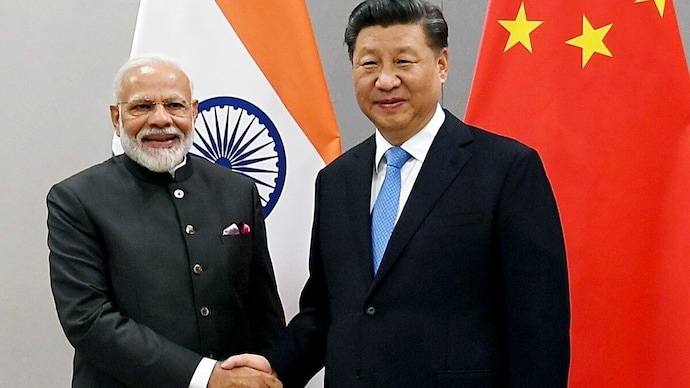
From Tianjin to Chushul: How Modi–Xi talks paved the way for the 23rd round of India–China border dialogue

UPDATED: Dec 19, 2025 22:38 IST
India and China are not friends. Since the deadly 2020 Galwan clash, the relationship has been defined by military standoffs, app bans, blocked investments, and loud pledges from New Delhi to cut dependence on Beijing. Fresh border tensions in 2025 only hardened that stance.
Yet between April and November 2025, India's exports to China surged nearly 33%, climbing from $9.20 billion to $12.22 billion. November alone delivered a staggering 90% year on year jump to $2.20 billion. Petroleum products, electronics, marine goods, and oil meals are flowing east at record pace even as troops stare each other down across frozen mountain passes.
This is not a reset. This is pragmatic economic disconnect operating in parallel with deep geopolitical mistrust. And it is happening precisely when Donald Trump is escalating his tariff war, slapping 25% reciprocal duties on India, plus another 25% for buying Russian oil, pushing some categories to an eye watering 50% total.
The contradiction is jarring. Despite border standoffs, despite the String of Pearls encirclement strategy with Chinese ports surrounding the Indian Ocean, despite the China-Pakistan Economic Corridor cutting through disputed Kashmir, trade not only endured but accelerated.
What is driving this? Supply chain rerouting triggered by Trump's tariffs. As China–US trade flows were disrupted, Chinese firms scrambled to secure inputs from alternative sources. India stepped in as a supplier of intermediates rather than finished goods. Petroleum products, electronic components, and industrial inputs flowed from Indian facilities into Chinese systems pivoting exports towards Europe and Southeast Asia.
Critically, India's exports to the United States also jumped more than 20% in the same period. This dual surge, eastward to China and westward to the US, reveals that India is no longer trapped in single export dependency. Diversification is now operational.
Trump's tariffs were meant to force choices. Instead, they forced innovation. And in 2025, quiet tactical adaptation is where India appears to be playing its strongest hand.
- Ends
Published By:
indiatodayglobal
Published On:
Dec 19, 2025