 1 hour ago
Imagine an armed group attacking a country that has one of the most advanced militaries and air defences in the Middle East. That’s exactly what the Houthis, who control parts of Yemen, have done.
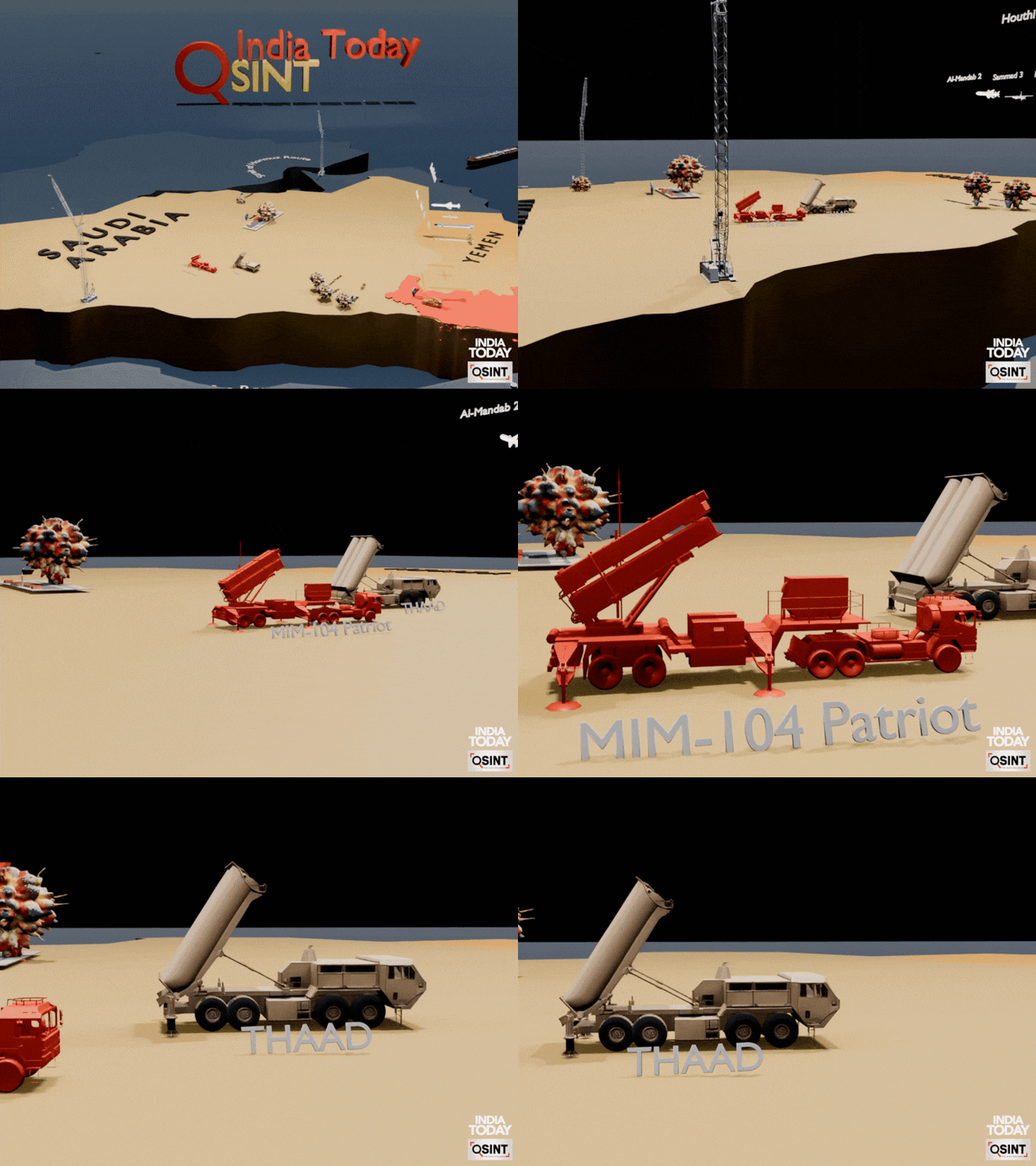
Saudi Arabia bought two of the most powerful air defence systems America sells, Patriot and THAAD. Still, the Houthis broke through and hit an international airport in the heart of Riyadh. Even Jeddah, where Saudi Arabia launched its very first THAAD unit, was put on missile alert.

Riyadh is about 910 km from Saada, the Houthi stronghold. Jeddah is about 715 km. And hence, this is not a border skirmish anymore but a war deep inside the kingdom.
At least 18 people died, more than 300 were injured, and the airport stays closed till October 17.
So how did it happen?
India Today’s open-source intelligence team (OSINT) set out to answer that. We mapped reported attacks across the kingdom and pinned down what was targeted. It then followed the trail back to Iran, tracing the origins of the Houthis’ arsenal.
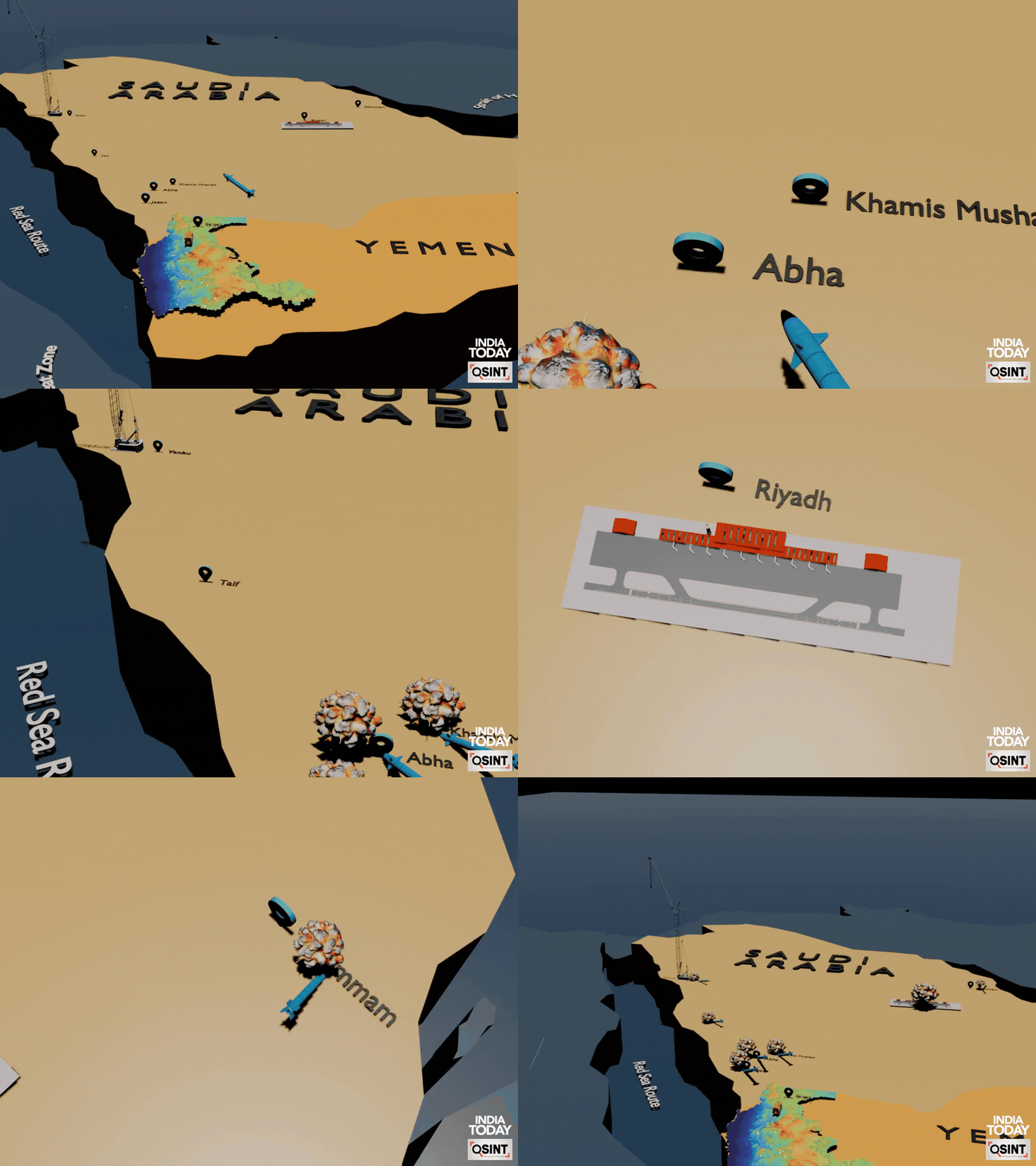
Saudi Arabia has some of the best missile defence in the world. It uses two American systems, Patriot and THAAD, which shoot down missiles in the air. But the Houthis, also called Ansar Allah, a group backed by Iran, are still getting through. They have hit the airport in Riyadh again and again. The attack on October 10 was the worst Saudi Arabia has seen in over ten years. This fight used to be far away near the border. Now it has reached the capital.
Geography shapes the threat in the south
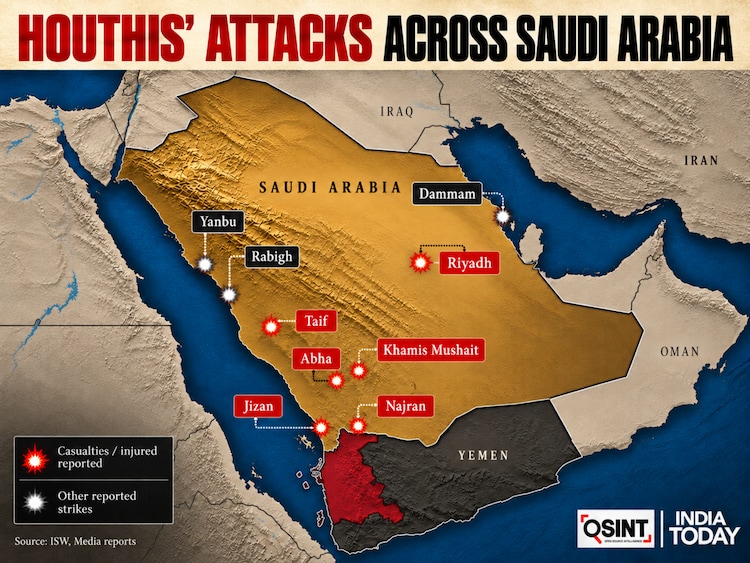
Houthi attacks have threatened Saudi Arabia’s critical aviation infrastructure, exposing the limits of its air defences. This map plots reported strikes across the kingdom, highlighting the concentration of attacks in the south and threats reaching major urban centres
From Jizan, near the Yemeni border, to Riyadh deep inside the kingdom, the geography of Houthi attacks reveals a widening threat. Saudi Arabia’s Foreign Ministry said Houthi attacks targeted civilian and economic sites in Abha, Khamis Mushait, Jazan and Najran.
An earlier study by the Center for Strategic and Studies (CSIS), a Washington-based foreign policy and national security think tank, analysed 4,103 Houthi attacks. It found that Asir, Jazan and Najran accounted for more than 80% of attacks inside Saudi Arabia. Their proximity to Yemen, the study noted, “limits the reaction time of Saudi air defense systems.” Although the study is based on data from January 2016 to October 2021, predating the latest escalation, it identifies a longstanding vulnerability along Saudi Arabia’s southern border.
However, the threat extends far beyond the southern border. On September 24, the Saudi-led coalition said it had intercepted six ballistic missiles aimed at Taif and Yanbu, a key Red Sea oil export hub. By October 11, Saudi authorities had also reported an attack targeting King Fahd Airport in Dammam, in the kingdom’s east. Riyadh, Taif, Yanbu and Dammam illustrate the geographical spread of reported threats.
The arsenal compounds the challenge
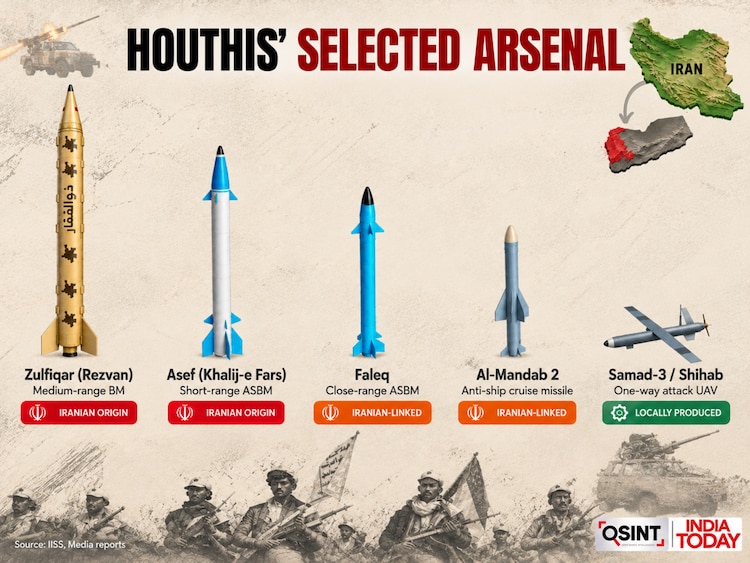
Zulfiqar ballistic missile, Asef (Khalij-e Fars) and Faleq anti-ship ballistic missiles, Al-Mandab-2 cruise missile, and Samad-3 and Shihab drones offer a glimpse of the Houthis’ wider arsenal, which spans multiple missile and drone classes. “Iran has provided support for Houthi weapons capabilities,” according to CSIS, though the weapon used in the Riyadh airport attack remains unidentified.
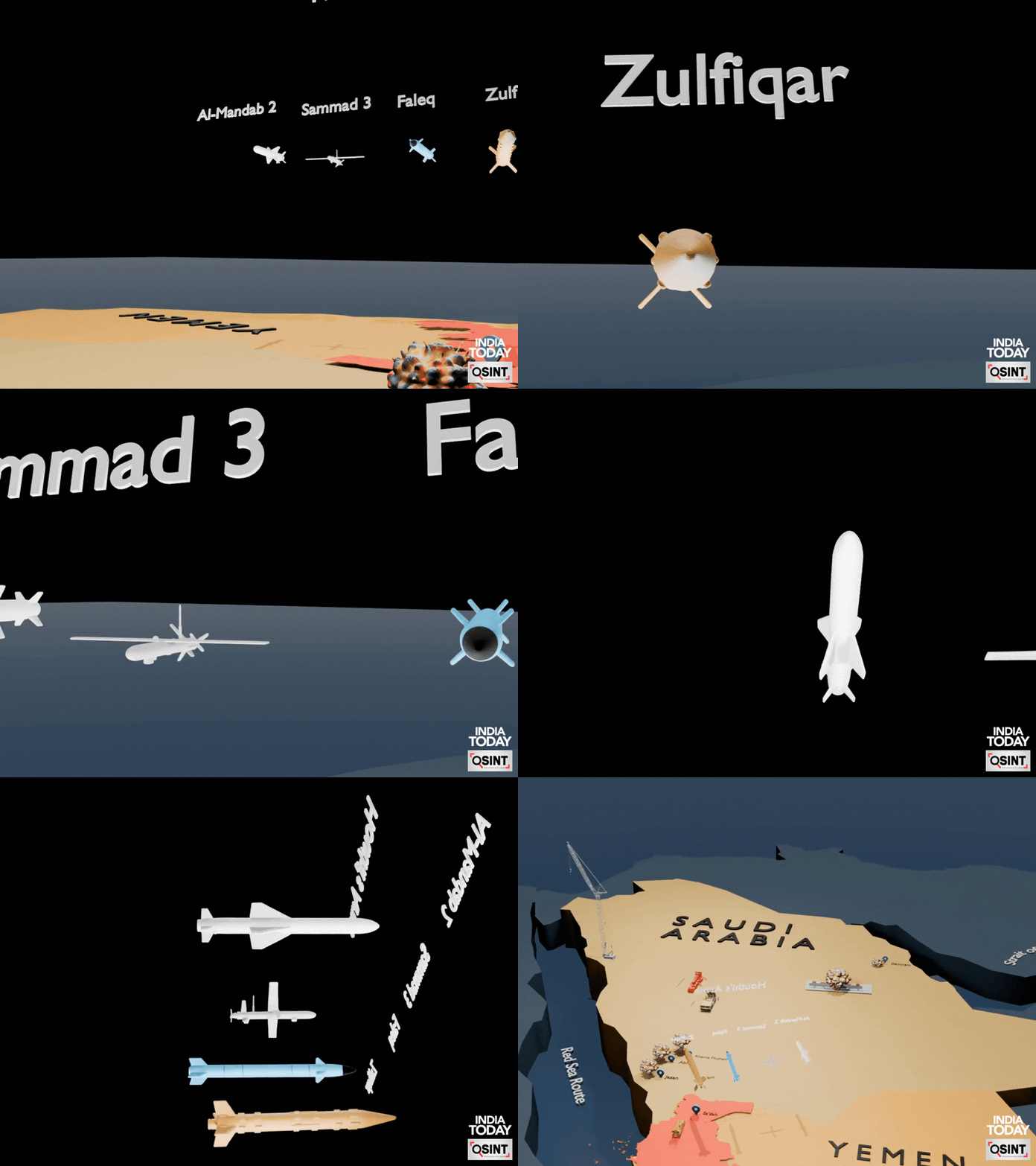
The danger lies in combining systems with different flight profiles. The IISS warns that “the combined use of ballistic and cruise missiles and other air-breathing munitions” can challenge even layered air defences. Low-flying drones and cruise missiles can also leave defenders less time to respond.
The cost imbalance compounds the challenge. CSIS has cited historical estimates of more than $1 million for a Patriot interceptor, compared with a few hundred dollars for some Houthi drones. Saudi Arabia may intercept most incoming threats, but one weapon reaching an airport or oil facility can still cause casualties and disruption.
The problem is an expensive defence facing a cheaper, persistent threat. Interceptors designed to destroy incoming missiles can cost millions of dollars, while some attack drones cost a fraction of that. Saudi Arabia may stop wave after wave, but it takes only one weapon getting through to kill civilians, disrupt flights or threaten critical infrastructure. That is the asymmetry at the heart of the Houthi campaign: the defenders must stop almost everything; the attackers need only one to get through.
- Ends