2 hours ago
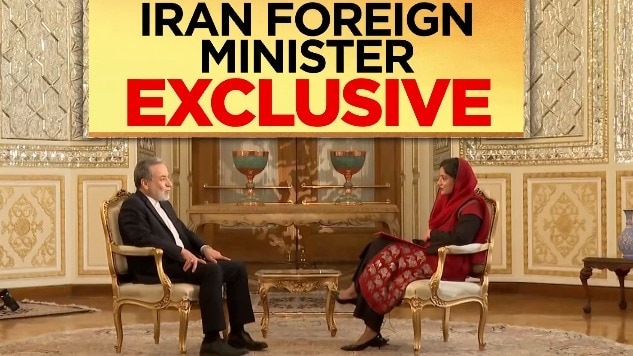
In a rare and explosive exclusive, Iran's Foreign Minister Abbas Araghchi sat down with India Today's Geeta Mohan in Tehran, hours before boarding a flight to Geneva for what could be the most consequential diplomatic talks of the decade. Calm, measured, but unflinching, Araghchi pulled no punches.
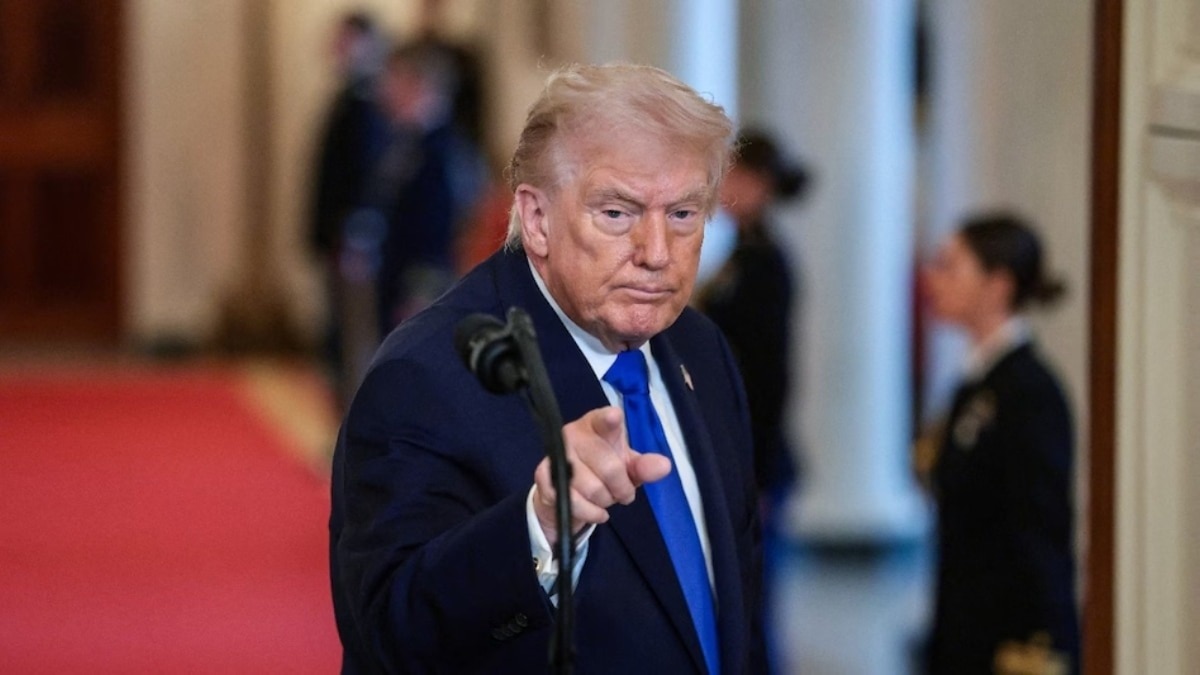
From firing back at President Donald Trump, accusing him of being a "victim of fake news" over claims of Iran developing long-range missiles capable of reaching American soil, to issuing a stark warning that US military bases across the Middle East would become "legitimate targets" if Washington chose war, the Iranian Foreign Minister made clear that Tehran is not blinking.
Geeta Mohan: India Today is right where the news is, and we are with the person who's making that news in the Ministry of Foreign Affairs of Iran, sitting here in Tehran with the Foreign Minister of Iran, Abbas Araghchi. Thank you so much, sir, for joining us and giving us the opportunity to explain what's happening in this part of the world and how it impacts Iran. Let's begin with President Trump's State of the Union address — the longest one — but he's put Iran on notice. Is Iran prepared?
Abbas Araghchi: Well, first of all, thank you for having me. On your question, of course we are prepared. We are fully prepared for both options — war, God forbid, and peace. As you know, I'm going to Geneva this afternoon in order to have the third round of our talks with the US team. We have made some progress last time. We were able to find some sort of understanding, and I think based on those understandings we can build something in the form of an agreement, a deal. I think a fair, balanced, and equitable deal is achievable, and we can do it. Of course, our armed forces are prepared to do their job, and we know how to defend ourselves. This is what we did last time, and we have learned many lessons from the last war, so we are even more prepared. That means, by the way, that the aim is to prevent a war. When you are prepared for a war, you can prevent it; otherwise you are inviting it to your home. So we are fully prepared — not because we want war, but because we want to prevent it. I am a man of diplomacy; I have to talk about my own job, and I think the way we are going is the best possible way to resolve this problem. There is no military option for Iran's peaceful nuclear program. If there is any concern, any question, any ambiguity, we are ready to address it, we are ready to answer questions, we are ready to remove concerns — but we are not ready to give up our right to peaceful use of nuclear technology. This is what we demand. So I believe that tomorrow in Geneva there is every possibility to come to an agreed solution which is fair and balanced.
Geeta Mohan: And are you thinking there's going to be an agreement, or are you just hopeful there's going to be an agreement?
Abbas Araghchi: Well, I'm hopeful, of course. But I think it is achievable. Of course, it depends on the other side's determination. To be honest with you, we are not fully convinced that they have a real determination to do that. Why? Because we have a bitter experience from last time. We were negotiating last June when Israel attacked us, and then the US joined that attack. So that memory is still fresh for us. The wounds of that aggression are still alive in our minds. We cannot forget that once we were negotiating with the US and then they decided to attack us. This time we are obviously more careful, and we have concerns. But if there is a real, serious determination on their side to come to a conclusion, I believe it is achievable.
Geeta Mohan: Minister Araghchi, you are saying that you are hopeful and you see intent — not as much — but you're dealing with a US president who is unlike any other in the past. Look at the statement and please react: in his State of the Union address, he very clearly claimed that Iran is developing missiles that can reach America, and that the terms of negotiations include no enrichment at all. Where does the claim about the missiles really come from?
Abbas Araghchi: Well, President Trump has always complained about fake news. So I think he himself is now the victim of fake news, unfortunately. We are not developing long-range missiles. We have intentionally limited the range of our missiles to below 2,000 kilometers because we don't want them to be seen as a global threat. They are only to defend ourselves. Our missiles are defensive in nature — they are only to build deterrence and help us defend ourselves. Exactly as they did in last June's war. We didn't initiate that war; it was the Israelis and then the Americans. We only defended ourselves. For them it was an illegal act of aggression; for us it was a legitimate act of self-defense. And we did it through our missiles. So our missiles are our reliable means of defense, and we have no intention to extend their range. So that claim is not factual. The number of killings in Iran was also mentioned — another piece of fake news. We have already published the names of those victims of the recent terrorist operations in Iran.
Geeta Mohan: He said 32,000.
Abbas Araghchi: 3,100 — not 32,000. Yes, he mentioned 32,000. But the list includes only 3,117 victims, which is very unfortunate. We have published the names and said publicly that if anybody thinks the number is higher, please give us the evidence. Please add even one more name to this list. So far, no names have been added. The number 32,000 is absolutely wrong. I hope that we establish our understanding based on real facts. The fact is Iran is not developing nuclear weapons. We have always said, and I would like to reaffirm, that we have no intention to pursue nuclear weapons. We have no intention to develop long-range missiles. We do, of course, have the intention and determination to establish and practice our rights for the peaceful use of nuclear technology.
Geeta Mohan: But isn't enrichment a deal breaker? You're going into Geneva, you're saying you want it for peaceful purposes, but enrichment is a deal breaker, sir.
Abbas Araghchi: Well, I didn't hear the President say anything about enrichment in the State of the Union speech. Enrichment is, yes, a very serious question, and we have dealt with that in the past two rounds of our discussions. I believe there is still the possibility to conclude a deal. Of course, I'm not going to negotiate through this panel, but I believe a deal is possible.
Geeta Mohan: I'd like to be a fly on the wall, but I'm not, so you might as well tell us — what is fair and equitable to you? How do you see fair and equitable? What should Iran be allowed, and what should America get?
Abbas Araghchi: What we want is only our right — to practice our right. We are a committed member of the NPT, the Non-Proliferation Treaty, and we have accepted not to have nuclear weapons, but at the same time we have full rights to use nuclear technology for peaceful purposes, and we want to practice that right. If there is any question, as I said, if there is any concern, we are ready to address it. We can build confidence in our nuclear program. In return, we expect sanctions to be terminated. So this is a fair deal: that we build confidence, we make sure that our program is peaceful and would remain peaceful forever, and at the same time sanctions are lifted and our right for peaceful use of nuclear technology is respected.
Geeta Mohan: What do you think is the motivation that brings Trump to a position where he is so anti-Iran? Where does this come from? Does it stem from Israel, the ally?
Abbas Araghchi: Well, it's a long story, I have to say. Everything began with the Islamic Revolution in Iran. I think Americans failed to understand why it happened, so they started hostility against it. In the past 47 years we have been the subject, or the victim, of their hostility. They have tried everything — they tried coups several times, they helped Saddam Hussein impose an eight-year war against us, then another war last year, all kinds of sanctions, maximum pressure policy — and they failed. All of them failed. Why? Because they have no real information about Iran and the Iranian people, and they are fed with misinformation, mostly by Israeli lobbies. I believe the only solution is to talk with the Iranian people with the language of respect. If they try that language, they will see the result — we would also speak with them the same way. But if they want to use pressure, the language of force, then the result is as we see. So let's hope that we can change approaches and come to a better way of dealing with each other.
Geeta Mohan: I know you have a huge responsibility on your shoulders — that of peace for the entire region and the world today — but if talks fail in Geneva there are military options, and the Supreme Leader is also one of the targets. That's absolutely clear in the messaging from Washington.
Abbas Araghchi: Well, military option, yes. They have built a huge military presence around us. If the idea is to threaten us so we capitulate, that is not going to happen — that is for sure. We proved it last time in the war when Israel attacked us. Perhaps you remember that on the third day of the war there was a tweet about unconditional surrender. But it didn't happen. After 12 days they asked for unconditional ceasefire, and we accepted because it was unconditional. If you repeat a failed experience you won't get a better result — especially since we are more prepared than the previous time, as I said. There would be no victory for anybody. It would be a devastating war, and since American bases are scattered in different places in the region, unfortunately perhaps the whole region would be engaged and involved. It is a very terrible scenario; I don't even want to talk about it.
Geeta Mohan: I was just coming to that — you're talking about Qatar, Saudi, UAE, there are bases there, but they have actually come out and said they will not allow their land, air, or water to be used. Nobody wants a war here. But it does seem like President Trump is not looking at it through the prism of their allies in the Middle East, but mostly through the prism of Netanyahu and Israel.
Abbas Araghchi: I appreciate the positions taken by all the countries of the region — our Arab friends and others — who have expressed very clearly that they are against war and don't want it to happen. Yes, there are American bases in the territory of some of them. They have made clear that they won't let their territory, waters, or airspace be used against Iran. To some extent, I don't know how much that can be controlled. We are grateful for their positions, and I hope that remains the case. But if, God forbid, the US decides to attack us, then their bases in the region would be legitimate targets — they are US bases. We consider them as US bases, not the territory of our neighbors or anyone else in the country. Like last time, when we had no choice but to attack the American base in Qatar — I immediately called my dear brother, the Foreign Minister of Qatar, even before the attack, to inform him. I told him: please know that this is not an attack against Qatar; it is an attack against the US base which is unfortunately in Qatar.
Geeta Mohan: So you informed them in advance?
Abbas Araghchi: We informed them in advance. And later we explained and tried to make sure it was understood that this was not an attack against our brotherly country of Qatar. But there is only one entity in this region who wants war, and that is Israel. It's a fact that Israel is trying to drag the United States into war with Iran. They cannot do it by themselves — they tried and they failed, and they asked the US to help them. I believe this is an Israeli plot to drag the United States into war in this region.
Geeta Mohan: Do you make a distinction between Israel and Netanyahu?
Abbas Araghchi: For the time being, no. He is the Prime Minister of Israel. He is the man who decides for Israel. So this is a disastrous plan by the Israelis. They perhaps want to establish their hegemony over the region, which is not going to happen. But we are seeing many indications that it is they who are trying to drag President Trump into war with Iran, which would be very unfortunate and against American interests.
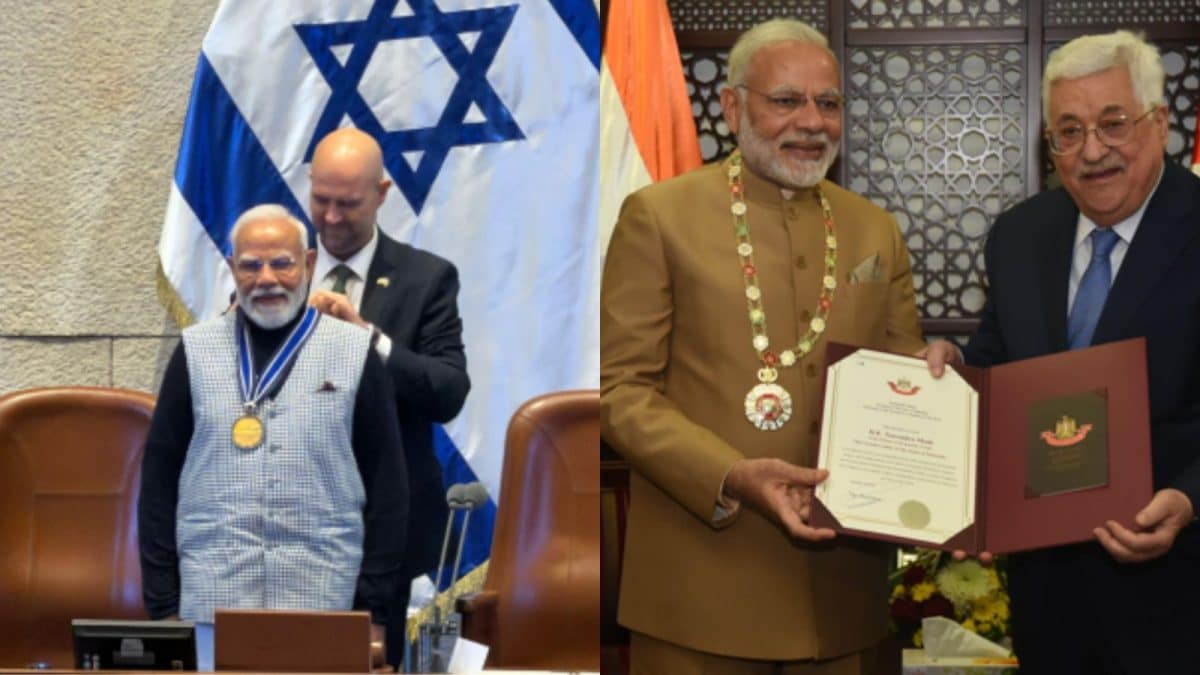
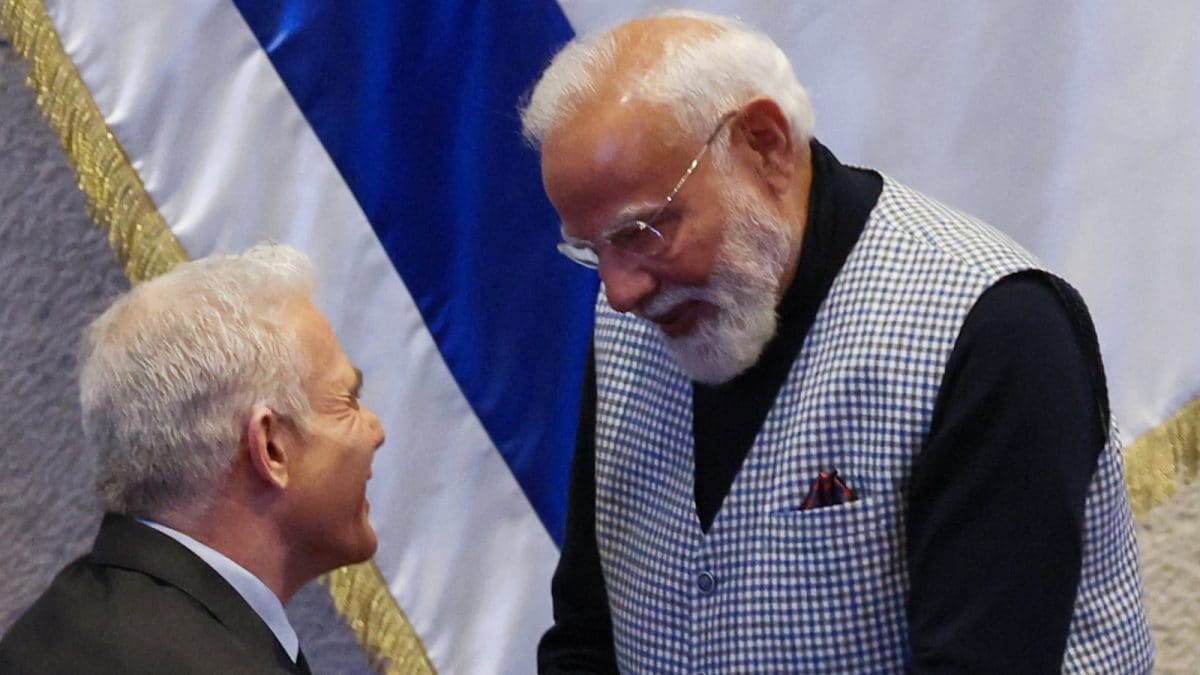
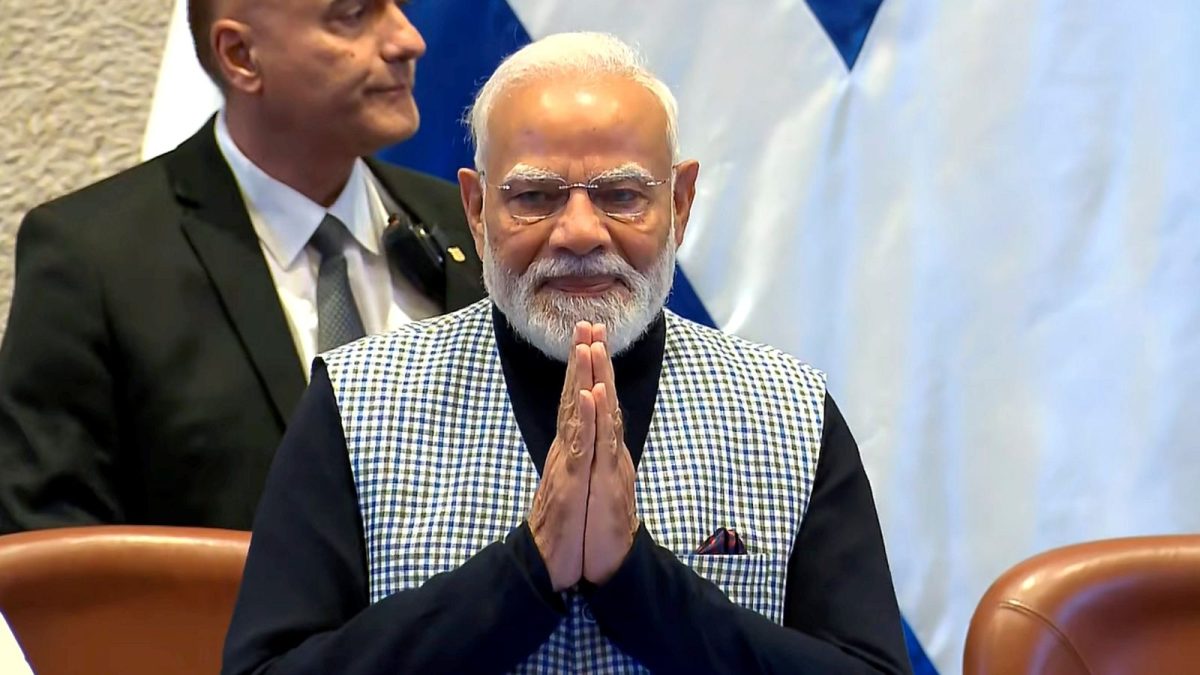
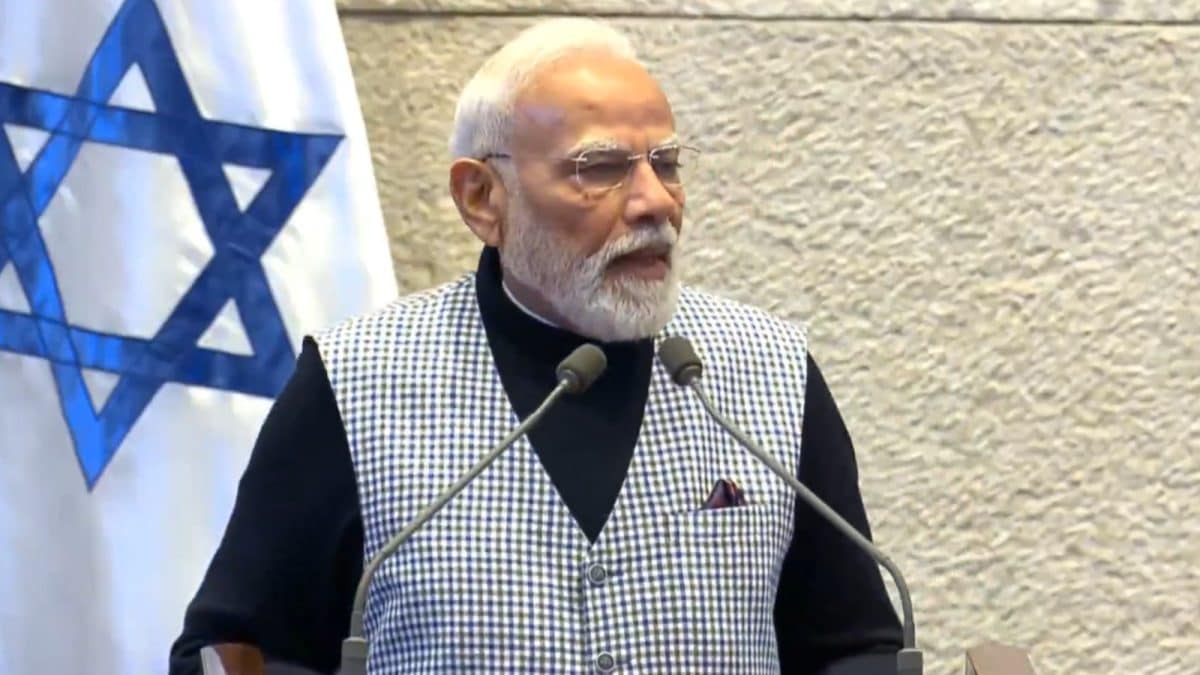
Geeta Mohan: Respectfully, sir, our Prime Minister is in Israel. How does Iran read how India balances its ties with Israel as well as with Iran, which is a critical partner?
Abbas Araghchi: Well, to be honest with you, it is very unfortunate. Israel is the one who has destroyed all of Gaza. 75,000 people have been killed — and this is not a claim, it is a fact confirmed by almost all international organizations dealing with the question in Gaza. It is a genocide. So obviously we don't see it as appropriate to deal with a genocidal regime. Of course, it is up to our friends in India to decide for themselves. But I hope that while Prime Minister Modi is there, he can also address the question of Palestinians and their right to self-determination, and maybe remind the world that war should not be the solution.
Geeta Mohan: Well, of course, I'm sure that he will do that.
Abbas Araghchi: We have always had a very good relationship with India. India is a friend to Iran and our relationship is historically deep. We have always enjoyed good bilateral economic, social, cultural, and political relations, and we want it to continue as such. I have a good rapport with my colleague Minister Jaishankar. We always exchange views and have very good personal relations. I'm confident that Iran and India can continue their good, friendly relations, and I hope that India plays a positive and constructive role in establishing peace and stability in our region and in preventing further crimes and killings by Israelis against Palestinians.
Geeta Mohan: Minister Araghchi, there is also what you could call an accusation — or a reality — of Iran's support for Hezbollah, the Houthis, Iraqi militias, and Hamas. Do you consider them terrorists or freedom fighters?
Abbas Araghchi: We consider them as groups who are fighting for a just cause. Their lands are under occupation and they have every right to fight against the occupiers. They are fighting for a just cause and we support them. This is not an accusation; it is a reality. They are not our proxies, for sure. They are independent groups, organizations, or movements that we support because they are fighting for the right things, for a just cause. They are independent groups — they decide by themselves and act by themselves. As Hamas did on the 7th of October; they didn't even consult with us.
Geeta Mohan: What's your position on that? Because that changed the entire dynamics of the region. Today we are seeing more deaths merely because of that attack. What is Iran's position on October 7?
Abbas Araghchi: Well, you have to consider the root causes of that. We have a bigger reality — an entire nation of Palestinians under occupation for more than 80 years, with killings and the destruction of their homes and cities, with refugees all around the world in neighboring countries. They have not stopped fighting for their rights, for their land. So you have to consider the root causes and then decide whether that single act was good or bad. The fact is that Palestinians have every right to their own homeland and to enjoy the right of self-determination. Unless they are given that right, this conflict will continue. This is a fact. Just look at the past 80 years — there have been more than 150, maybe 200, different plans to resolve this problem, and none of them worked because all of them lacked the element of justice for Palestinians. So unless there is justice for the Palestinian people, there will be no peace.
Geeta Mohan: Is there disappointment in the international community and the Arab world in how they have fought — or not fought — for the cause of Palestine?
Abbas Araghchi: Of course, it is disappointing because the reality is what we see on the ground. I hope that the international community is now paying attention. More than 170 countries have already recognized the state of Palestine, but this is not enough. Because when you ask — okay, you've recognized the state of Palestine, but where is this state? Only on paper, not on the ground, not for the people. So unless these realities are changed, we cannot expect peace. Even if you suppress Palestinians on a daily basis, if you kill them on a daily basis, at the end there is no peace — because peace will come only if justice is established.
Geeta Mohan: Ambassador Araghchi, I have to ask you about the domestic front as well. You spoke about 32,000 people — countering that by saying a little over 3,000 have been killed — in the protests. But the protests are important. How is the administration looking at the protests themselves? Is there a need for reform? Should there be reform?
Abbas Araghchi: I didn't say that more than 3,000 people were killed in protests. Those were killed in a terrorist operation — let me explain. Yes, we had protests. From December 28 to January 7, for ten days, we had legal protests in the streets, gatherings, and demonstrations. And they were very well tolerated, because it is the right of the people to express their protests in the streets — that is mentioned in our constitution, it is one of its principles. The government was even engaged with the leaders of those protests. They were invited to the cabinet; I was there myself. There was a dialogue about how to resolve the problem and address their complaints, and nobody was killed in those ten days. But on January 8, we faced a completely new phenomenon. Some elements came into the protests among the demonstrators with guns and started shooting at our police forces. When police forces are shot at and killed, of course they have to react. We then found out that instructions were coming from outside. It was a very well-planned...
Geeta Mohan: Outside where?
Abbas Araghchi: From Israel. A very well-planned attempt to perhaps conduct something like a coup in Iran. Hundreds of armed elements came into the streets all at once, in most Iranian cities, acting in a similar way — like Daesh terrorist groups. They beheaded some police officers, burned some of them alive, and then started shooting at people blindly. It was very strange for us that they were killing even the protesters. Why? Because President Trump had said that if there are killings, he would come to rescue. So the purpose was to increase the number of deaths to drag the United States into this situation. We have recordings of instructions coming from outside through social networks saying: shoot at police forces; if you don't find them, shoot at ordinary people; if not, shoot at the boys and girls in front of you who are demonstrating. The only purpose was to increase the number of deaths. On January 8, 9, and 10 we faced this phenomenon, and we had no choice but to crush it. A little over 3,100 have been killed — 2,500 of them listed by us as martyrs, those killed by these terrorist groups. We have proof, we have evidence...
Geeta Mohan: Is that the kind of penetration Israel has within Iran?
Abbas Araghchi: Yes, it was a kind of penetration. There were terrorist elements. You have seen stories even in India where terrorist groups penetrated, killed ordinary people, or did something wrong, and your police forces had no choice but to confront them. That is exactly what happened in Iran. So we had ten days of peaceful demonstrations and then three days of terrorist operations. For us, those three days are a continuation of the twelve days in last June. It was a continuation of the war imposed by Israel on us.
Geeta Mohan: But you have lost a lot of top leadership, sir — top leaders have been assassinated by Israeli forces. These are no longer just plots; they were carried out. How do you look at the vulnerability of your own security system?
Abbas Araghchi: It's a fact that we have to accept we had that weak point. We have now overcome it. As I said, we learned many lessons from the twelve-day war — that was one of our weak points, yes. But the question is, all those high commanders were immediately replaced, and we were able to start defending ourselves from the same day. The same night that Israelis attacked us, we started attacking them with missiles, and every day that passed, our missiles became more precise and more accurate. This is why on day twelve they asked for a ceasefire — unconditional ceasefire. I was called by the Americans, who told me that Israel would stop and asked us to please stop as well. We said: if it is unconditional, okay; otherwise we continue our self-defense. Back to our domestic issue — we have to understand that it was a terrorist operation, and I'm sure that when India faces a similar terrorist operation, they would do exactly the same.
Geeta Mohan: But what about reforms? Is the regime considering reforms at all — something that might get you out of international isolation on many counts, other than uranium and nuclear issues? Will reforms not help?
Abbas Araghchi: Well, reform — you have to say what you exactly mean by reform. President Pezeshkian is himself a reformist, based on the different categories of politicians in Iran. He has done a good job so far. But the main problem is not coming from inside. Reform is always needed, of course — every system needs to be reformed, to be corrected; that is obvious. But our problems are mostly coming from outside, from the hostilities of the United States, Israel, and others. Our policy is to confront those hostilities from outside and to defend ourselves and protect our people first.
Geeta Mohan: You started with fake news, and I know you're running out of time and have to go to Geneva for the big talks, but just a few more questions before I let you go, sir. We also discussed misinformation and disinformation campaigns. A lot of international media put out stories about protesters being executed — public executions — and there's also a lot of information circulating about the Supreme Leader, his health, his whereabouts. Will you break that down for us and tell our viewers exactly what the situation is?
Abbas Araghchi: If there are public executions, they should be reported by media or through the internet — nowadays nothing can be hidden. We have no plan to execute anyone for the time being, because the courts are still ongoing. I don't know what the judgments of the courts will be at the end. But so far we have not executed anybody and there is no such plan right now. The Supreme Leader appears on TV and in public gatherings very often, and I think everybody has seen him and listened to his speeches. He is absolutely fine and healthy.
Geeta Mohan: Is there a succession plan for the Supreme Leader, and will there be a day when there is a separation between the clergy and the civilian dispensation?
Abbas Araghchi: Well, we have a mechanism in our constitution. There is an Assembly of Experts that, whenever needed, will elect a new Supreme Leader for the country — exactly as happened after the passing of the late Ayatollah Khomeini. In less than 24 hours they elected a new leader. That would happen whenever needed, so we have no problem with that. I have seen in US media and others that there is talk about assassinating the leader and such things. But this is a system where everybody would be replaced through a very well-established mechanism within the system itself. Nothing would go wrong. Our system is not dependent on individuals — it is a system supported by the people. Just a few days ago, on the 47th anniversary of our revolution, a huge number of people came to the streets in our cities in support of the Islamic Republic of Iran. The number was even bigger than last year, because this year people felt that there are threats, so they came out to play their role. So I am not worried at all. Just as top commanders were immediately replaced in the middle of the war and nothing fell apart, and we were able to continue our self-defense, I'm sure that if anything like that were repeated, the system would carry on without a problem.
Geeta Mohan: Finally, before I let you go — I cannot not ask you about your friends and allies. India, a friend; Russia and China, more than friends, they are allies. In the event of a war, in the event of a troubled region, how do you see the roles Russia and China would play?
Abbas Araghchi: When it comes to defending ourselves, we know how to defend ourselves by ourselves. We have many friends and many partners. Russia and China are our strategic partners. But in the case of war, we don't need anybody to defend us. We can do it by ourselves.
Geeta Mohan: Are you a little disappointed that India has not included Chabahar as a project in its budget this year?
Abbas Araghchi: Well, I think it's a disappointment for both Iran and India. Chabahar, as Prime Minister Modi once said, is a golden gate that connects the Indian Ocean area to Central Asia, the Caucasus, and then to Europe — and vice versa. It is a very strategic port. If fully developed, it can play a very important role in connecting India through Iran to Central Asia, to the Caucasus, and then to Europe. That would be the best transit route, I think. I hope that one day we can witness the full development of this port.
Geeta Mohan: Alright. Finally, any message to President Trump as you head out to Geneva?
Abbas Araghchi: Well, I'm going to meet his team tomorrow in Geneva, so no messages needed.
Geeta Mohan: No messages needed — only that you need all the best wishes and good luck for the meeting you're going to hold in Geneva with your American counterparts. That's going to be a very important one — one that will hold peace not just in the region but in the world today. Thank you so much for this.
Abbas Araghchi: I hope so. I hope so. Thank you indeed. Thank you for having me today.
- Ends
Published By:
indiatodayglobal
Published On:
Feb 26, 2026