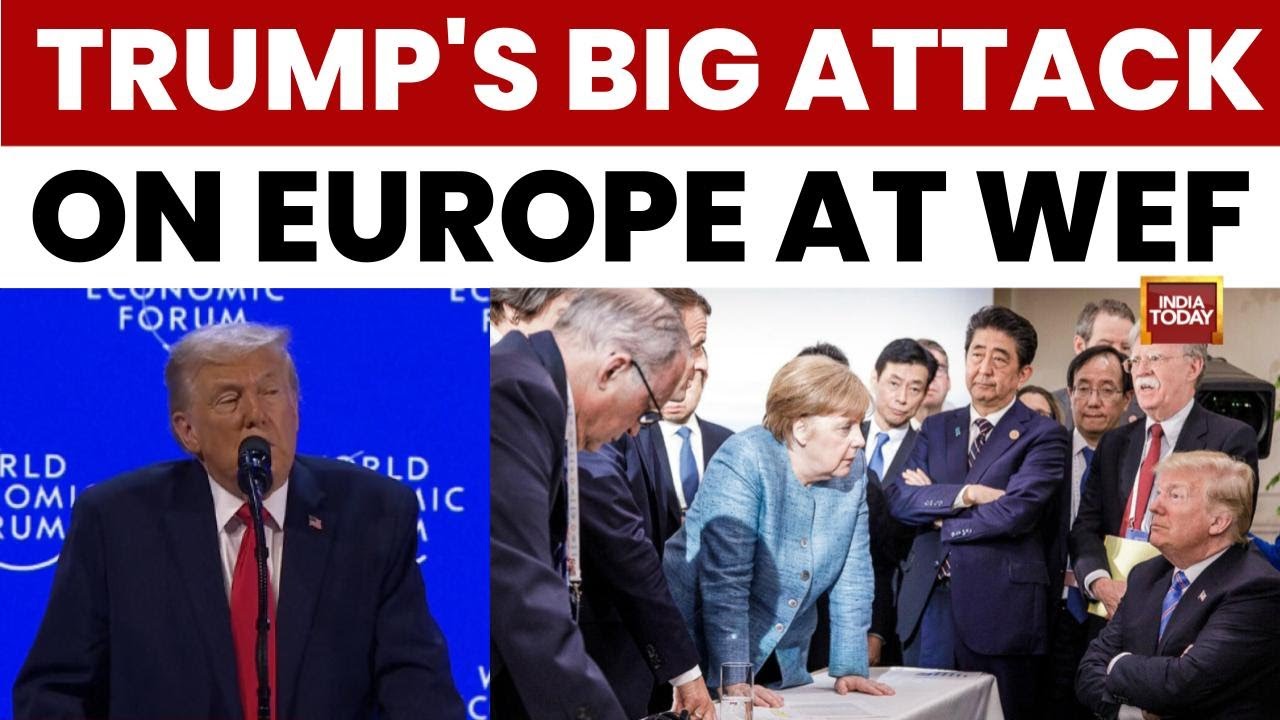
2 hours ago
Key events 26s ago Only US can secure Greenland, Trump insists as he lambasts 'ungrateful' Denmark 4m ago US 'takes great care' about the people of Europe, but they are 'destroying themselves' 7m ago Trump takes aim at 'green new scam' in Europe and 'losers' windmills 19m ago Europe 'not heading in right direction,' Trump says as 'certain places are not even recognisable' 28m ago Donald Trump is about to begin his Davos speech 54m ago German carmakers say EU has 'weakened itself' by decision to refer Mercosur to top court 1h ago Nato's situation is difficult, but focus needs to stay on Russia, Norwegian defence minister says 1h ago Trump arrives in Davos 1h ago European parliament's vote on Mercosur could significantly delay deal's implementation - snap analysis 2h ago European parliament refers freshly-signed Mercosur deal to bloc's top court for legal check 2h ago Danish PM Frederiksen to visit London on Thursday, UK Starmer says 2h ago Apps identifying US products gain popularity in Denmark as consumers want to express their frustration with Greenland threats 2h ago Trump lands in Zurich en route to Davos after delayed US departure 2h ago Merz's planned meeting with Trump cancelled over US president's travel delays - reports 3h ago EU continues talks on trade with US as 'it's time for engagement, not escalation' 3h ago US envoy Witkoff to meet Russia's Putin for talks on Ukraine with focus on 'land deals' 3h ago EU's von der Leyen will not meet Trump in Davos, EU confirms 3h ago Trump approaches Zurich as he continues delayed trip to Davos 3h ago Power cut affects Danish island of Bornholm in Baltic Sea 3h ago 'Time of flattery has ended,' former Danish PM and Nato sec gen says, but hopes for de-escalation with US 3h ago Poland's Nawrocki says hopes Greenland will be resolved diplomatically, stresses importance of US ties 4h ago 'There are curve balls flying in different ... directions,' but we try to solve them, 'Trump whisperer' Stubb says 4h ago 'Main issue is not Greenland, it's Ukraine,' Nato's Rutte says 4h ago Nato's Rutte pushes back on Trump's doubts if Nato would come to help US if needed 4h ago 'I'm working behind the scenes,' Nato's Rutte says as he declines to comment on Greenland 4h ago EU parliament to discuss EU-US trade after of expected decision to freeze implementation of trade deal 4h ago Alaskan Inuits express unity with Greenlandic relatives over Trump threats 4h ago 'Future of Greenland is only for Greenlanders to decide,' EU's von der Leyen reiterates 5h ago Morning opening: Brace, brace Show key events only Please turn on JavaScript to use this feature
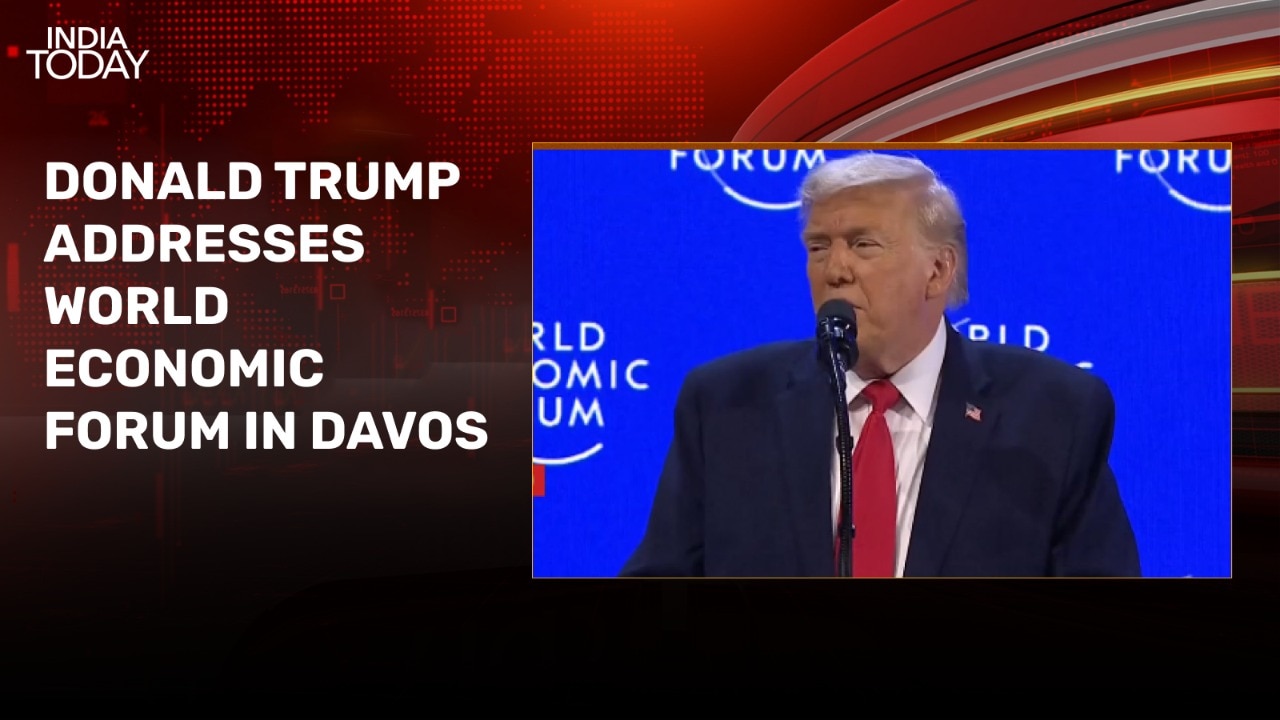
Trump says that his thinking on Greenland is not new as “it’s been our policy for hundreds of years to prevent outside threats from entering our hemisphere.”
He says “there is no sign of Denmark” in Greenland, as he criticises them for not investing enough.
Curiously, he says he “says that with great respect for Denmark, whose people I love, whose leaders are very good.”
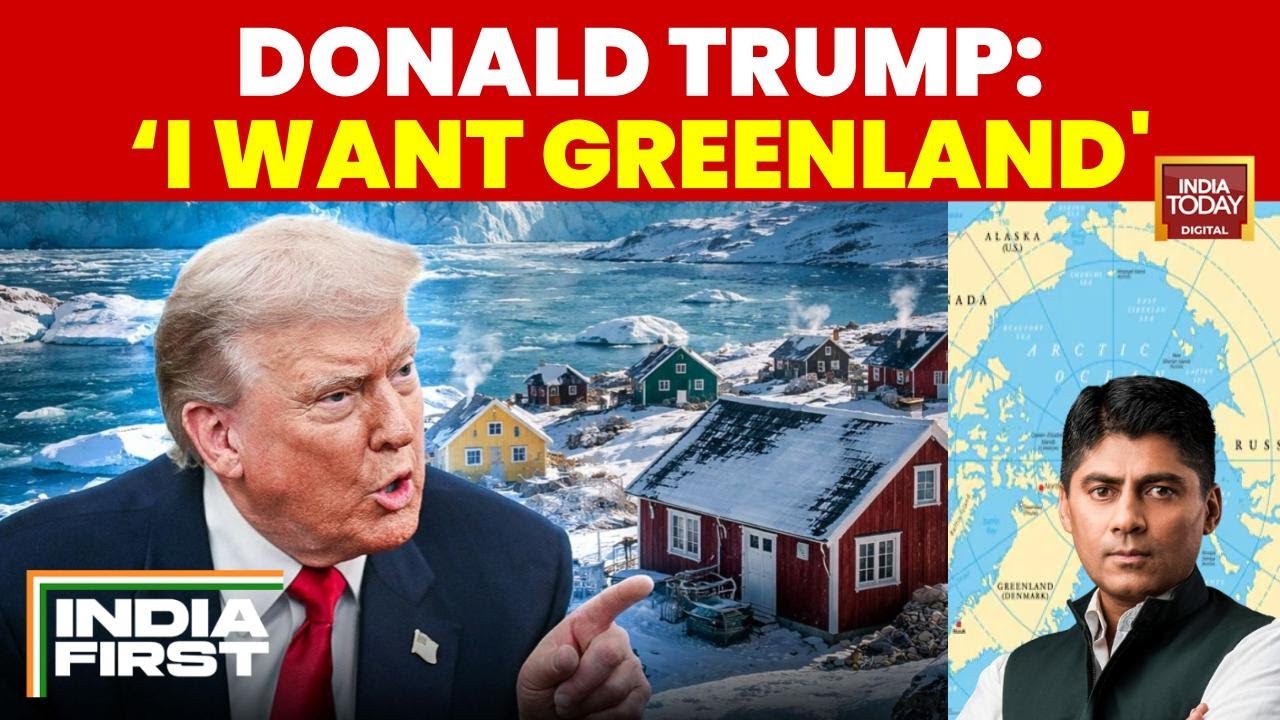
Only US can secure Greenland, Trump insists as he lambasts 'ungrateful' Denmark
Trump then turns to Greenland, teasing the audience that he wasn’t planning to talk about it, but hey.
He says he has “tremendous respect” for the people of Greenland and Denmark – although he says Greenland “is a piece of ice” and it’s difficult to call it land – but he insists that no one else than the US can secure Greenland.
He then takes a further swipe at Denmark, saying they “fell to Germany after just six hours of fighting and were totally unable to defend either itself or Greenland.”
He says:
“After the war, we gave Greenland back to Denmark. How stupid were we to do that? But we did it. But we gave it back. But how ungrateful are they now?”
He says as a result the US and the world “face much greater risks than they did before,” partially because of the rise of nuclear weapons.
He says Greenland is a “key strategic location” between the US, Russia and China, “right smack in the middle” between the three, and the US needs it as its “core national security interest.”
US 'takes great care' about the people of Europe, but they are 'destroying themselves'
Trump says the US “takes great care” about the people Europe, mentioning his Scottish and German heritage within family, and says “we believe deeply in bonds we share with Europe as a civilisation.”
But, BUT, he says:
“That’s why issues like energy, trade, immigration and economic growth must be central concerns to anyone who wants to see a strong and united west, because Europe and those countries have to do their thing.
They have to get out of the culture that they’ve created over the last ten years.
It’s horrible what they’re doing to themselves. They’re destroying themselves. … We want strong allies, not seriously weakened ones.”
Trump takes aim at 'green new scam' in Europe and 'losers' windmills
Talking about green energy, Trump takes another swipe on Europe as he says “the US avoided the catastrophic energy collapse which befell every European nation that pursued the ‘green new scam’”, which he blames on “the radical left”.
He says Germany is a prime example of how it went wrong, generating 22% less energy than it did in 2017 (he says it’s not the current chancellor Friedrich Merz’s fault, though and praises him for moves to reverse it).
He also points to the UK, as he laments “they don’t let anyone drill” in the North Sea, “one of the greatest reserves anywhere in the world.”
He says he wants Europe to do great, and the UK to do great, though.
He also talks about windmills:
“There are windmills all over Europe. There are windmills all over the place and they are losers.”
He says “stupid people” buy them.

Graeme Wearden
in Davos
Modesty is not high on the agenda for this speech.
Citing the new “100% expensing” rules brought in to support company investment, Trump declares “a miracle is taking place” in the US economy, which “no-one thought it would ever be done by any country”.
He adde that his first term as president was the “most successful term ever” from a financial perspective.
Trump now talks about his trade deals, including with the EU, Japan and South Korea, stressing they are “partners.”
He repeats what seems to be the key line of his narrative about the central role of the US in global trade.
“These agreements raise growth and cause stock markets to boom – not only in the US, but virtually every country that came to make a deal – because, as you’ve learned, when the United States goes up, you follow.”
Trump is now back talking about the US, and how he sees his track record, including his determination to lower taxes, cut bureaucracy, and says experts were wrong in their predictions about what would be consequences of his policy.
Europe 'not heading in right direction,' Trump says as 'certain places are not even recognisable'
We didn’t have to wait long for a first swipe at Europe.
Trump says he wants to share his recipe for the US success for others to follow, as he says “certain places in Europe are not even recognisable.”
“We can argue about it, but there’s no argument. Friends come back from different places – I don’t want to insult anybody – and say, I don’t recognise it. And that’s not in a positive way, that’s in a very negative way.
And I love Europe and I want to see Europe go good, but it’s not heading in the right direction.”
Trump opens with a zinger that it’s good to be back in Davos to “address so many respected business leaders, so many friends, a few enemies.”
He gets a laugh from the audience.
He then opens with a long list of what he claims to be numerous successes of his US presidency, one year on – from the economy and productivity to border security.
You know the drill: the US was “a dead country” under the Democrats, and it’s now “the hottest country” anywhere, “the economic engine of the planet.”
“The USA is the economic engine on the planet. And when America booms, the entire world booms. It’s been the history.”

Jakub Krupa
What to watch out for? God knows what to expect.
But you can imagine Trump will want to make his views on Greenland clear, including any potential impact on Nato as a knock-on effect, and he can also be expected to touch upon the related issues, such as the US trade and wider relationship with Europe.
Be in no doubt about the seriousness of this moment: most political Europe will be on very high alert for his every word on these issues.
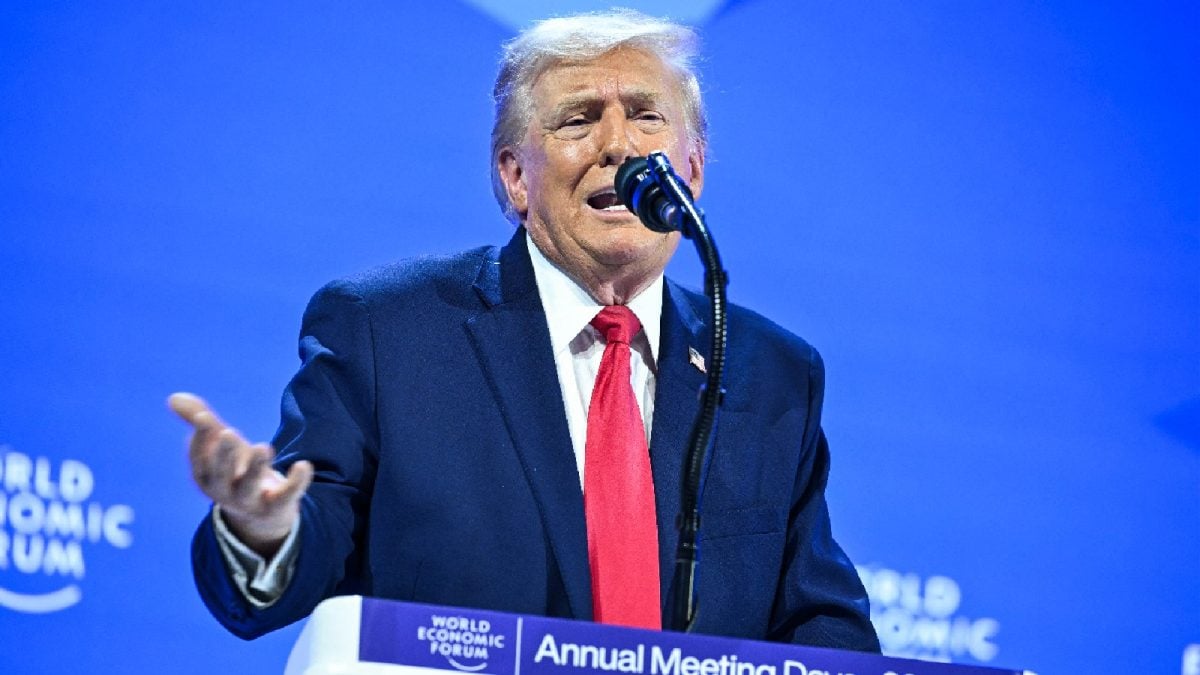
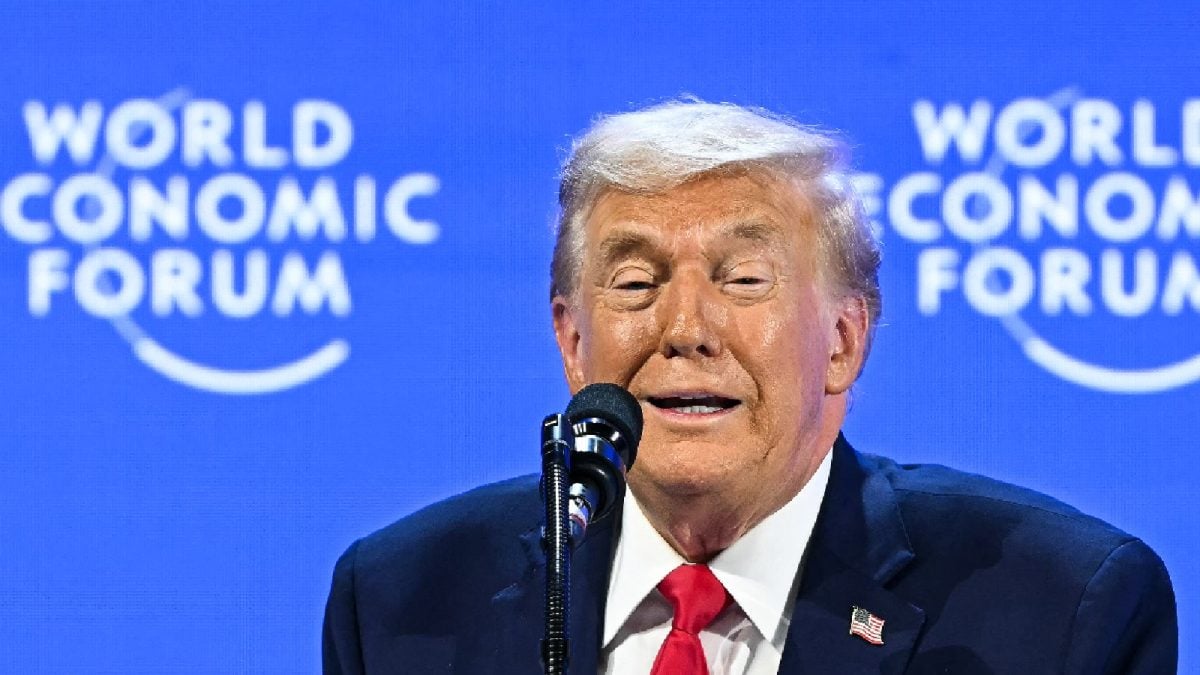
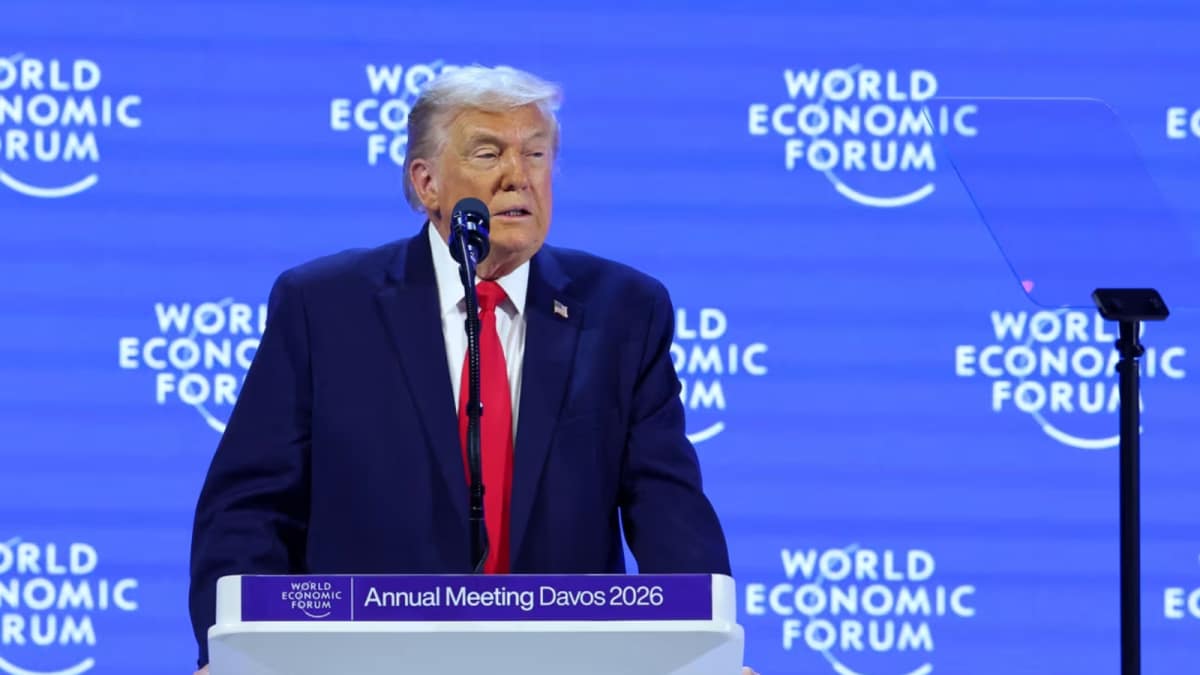
Donald Trump is about to begin his Davos speech
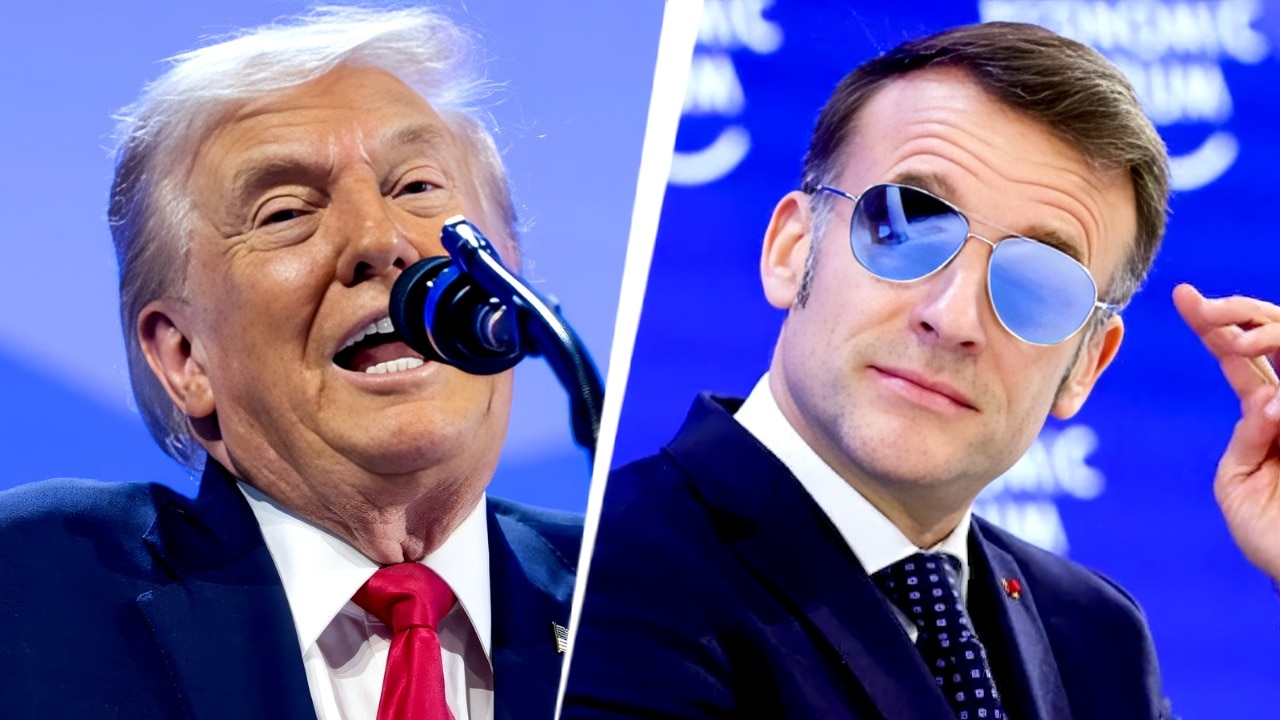
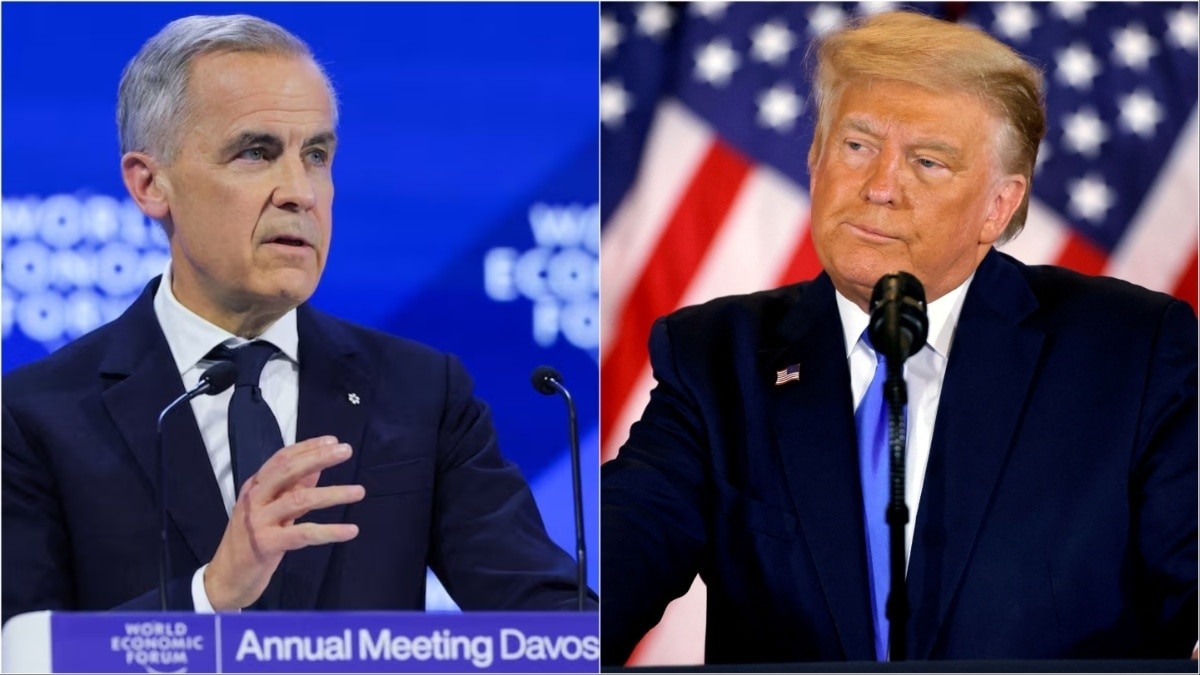
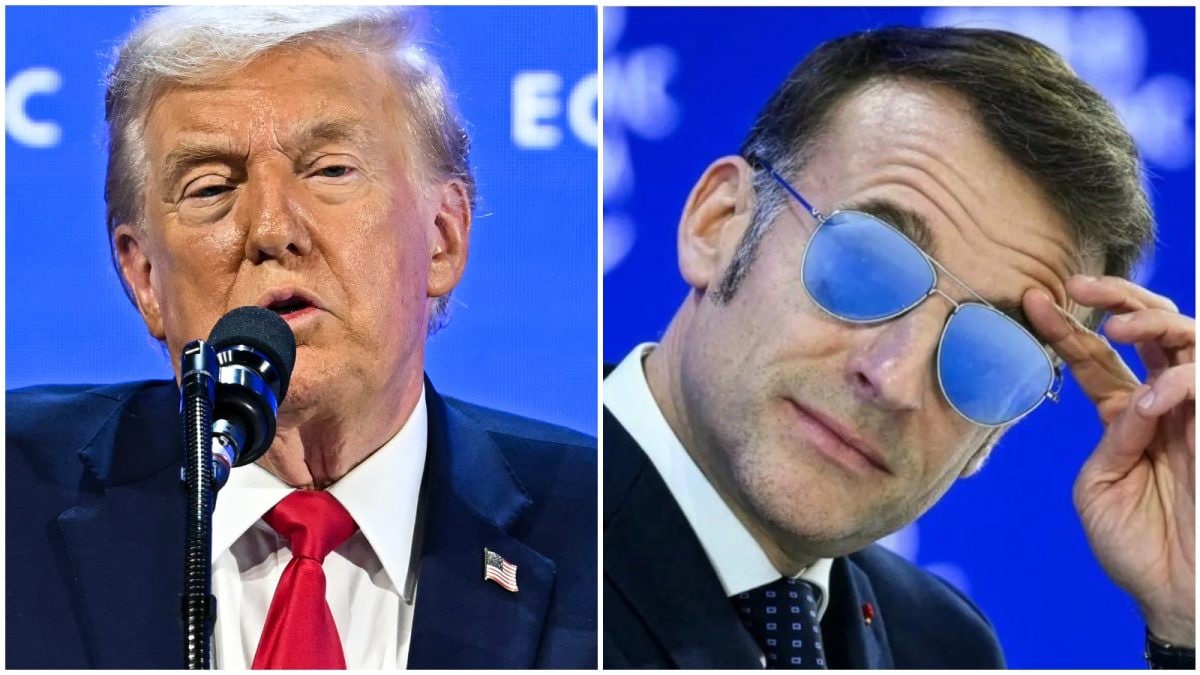
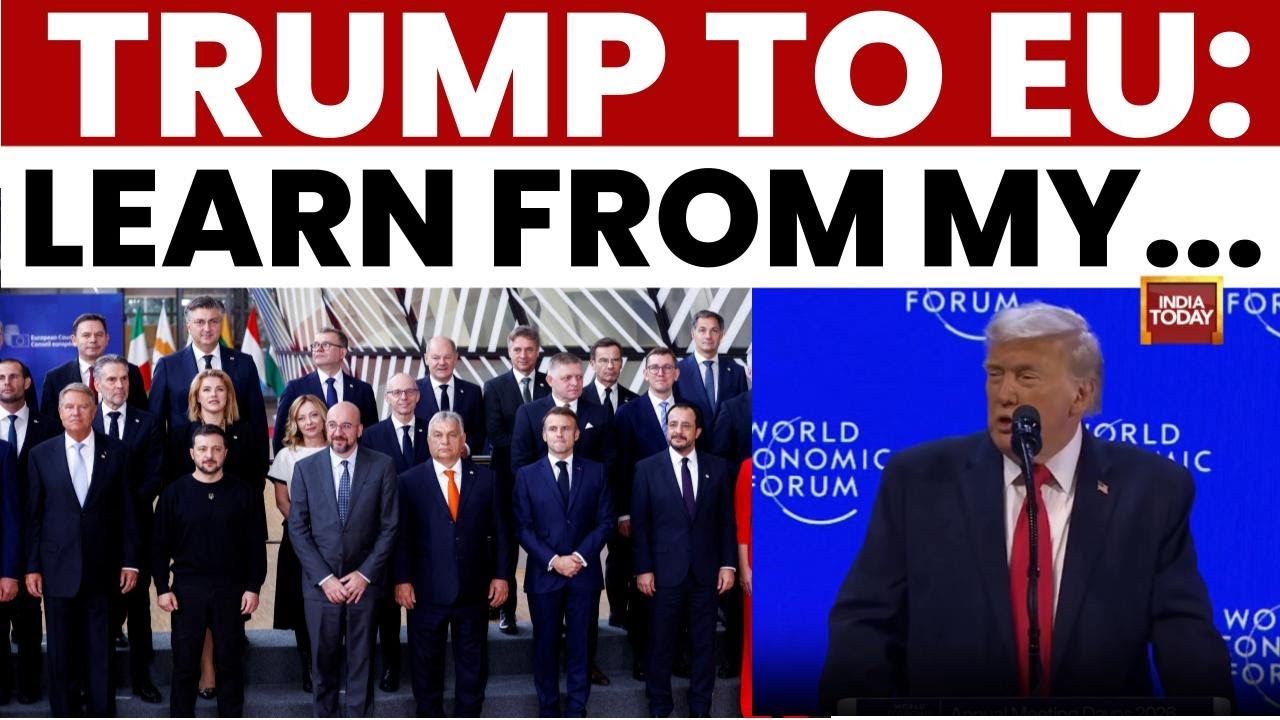
US president Donald Trump is about to speak in Davos.
I will bring you the key European lines here on Greenland, Nato, and European security here on Europe live.
For more business-focused coverage, head to our business blog led by Graeme Wearden in Davos here:
You can also simply watch it along here:
German carmakers say EU has 'weakened itself' by decision to refer Mercosur to top court

Lisa O’Carroll
in Brussels
Meanwhile, we are getting more reactions to the European parliament’s decision to send the Mercosur trade deal to the EU’s top courts for another legal check.
The German car industry has said the EU has “weakened itself” after MEPs voted, by a margin of 10, to refer the Mercosur trade deal with South American countries to the European court of justice.
The industry was one of the sectors, outside farming, that were looking forward to the Latin American market opening with the promise of sales there countering problems back in the EU where Chinese manufacturers are gaining ground.
The resolution adopted by MEPs “could now significantly delay the entry into force of the agreement, possibly even by years,” said VDA president Hildegard Müller.
She added:
“There is a real risk that the Mercosur states will lose patience with the EU in this case, jeopardising the agreement as a whole.
Despite the Parliament’s decision, a ruling by the European Commission on the provisional application of the agreement is both possible and necessary. The Commission is therefore urged to quickly clarify its position on the provisional application of the agreement.”
Officials at the European Commission have already indicated that they will not be making any “rapid decisions” on the provisional application in the current political climate (13:39).
Nato's situation is difficult, but focus needs to stay on Russia, Norwegian defence minister says
Echoing earlier comments from Nato’s secretary general (11:14), Norway’s defence minister Tore O. Sandvik said that while the situation in Nato was difficult due to the crisis over Greenland, western allies must remember that Russia remains their main common adversary, Reuters reported.
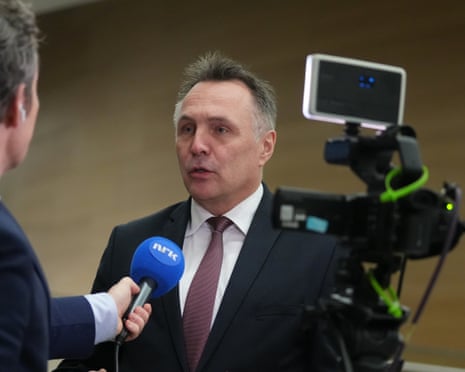
“These are demanding times. The situation in Nato is difficult,” Sandvik told a meeting with foreign correspondents in Oslo.
“The dimensional threat for the west, for Nato, (for) all members of Nato, still is Russia,” he said.
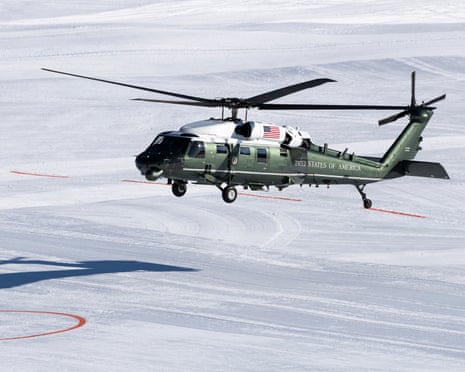
Trump arrives in Davos
US president Donald Trump has just arrived in Davos.
Can he just about make it for his original slot on the main stage in just under half an hour?
European parliament's vote on Mercosur could significantly delay deal's implementation - snap analysis
Lisa O’Carroll
in Brussels
German chancellor Friedrich Merz has denounced as “regrettable” the decision by MEPs to refer the Mercosur trade deal signed on Saturday in Paraguay to the European court of justice.
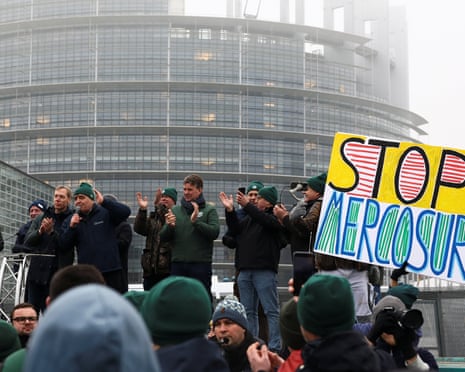
The vote in parliament was passed by just 10 votes but could delay the implementation of the deal by years.
“The European parliament’s decision on the Mercosur Agreement is regrettable. It misjudges the geopolitical situation. We are convinced of the agreement’s legality. No more delays. The agreement must now be applied provisionally,” Merz said.
Bernd Lange, chair of the European parliament’s influential trade committee blasted MEPs who voted for the legal challenge as a cop out.
MEPs should instead have gone down the routine route of voting for or against a deal as they are doing so, for example with the US-EU tariff deal, he indicated.
“Absolutely irresponsible. This is an own goal. Those against #EU #Mercosur should vote against in consent procedure instead of using delaying tactics under the guise of legal review. Very harmful for our economic interests and standing. Team Europe putting itself offside,” he posted on social media.
Technically, the deal also needs ratification in each of the Mercosur countries before it enters into force, a process that could also take months.
This gives the Commission breathing space. And with the vote 344 in favour of legal challenge, 324 against and 11 abstentions, the gap to be closed in the parliament is small.
Officials in Brussels have said, however, that the deal could still be implemented provisionally by the European Commission which has sole competency over trade and the Mercosur deal was accepted by EU leaders.
However, given the huge political backlash this would inevitably trigger, this is highly unlikely.
“I do not think there will be any rapid decision [on this]”, said one senior official with the ramifications of the European parliament decision now certain to be put on the agenda of the European Council summit on Thursday night.
The European parliament said in a statement that “the interim trade agreement will now be reviewed by the ECJ” but the parlimant “will continue its examination of the texts, while awaiting the opinion of the EU Court”.
“Only then, parliament will be able to vote to grant consent (or not) to the Agreement.”
European parliament refers freshly-signed Mercosur deal to bloc's top court for legal check
Meanwhile, the European parliament voted on Wednesday to refer a freshly signed trade deal with South American bloc Mercosur to the EU’s top court, casting a veil of legal uncertainty over the accord, AFP reported.
In a close ballot, lawmakers in Strasbourg voted 334 to 324 in favour of asking the Court of Justice of the European Union (CJEU) to determine whether the highly polarising deal, which sparked protests on the sidelines of this week’s sitting, is compatible with the bloc’s policy.
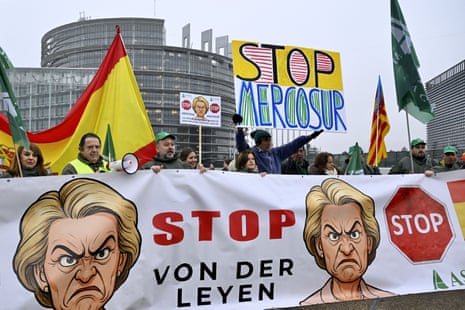
The European Commission said it “regretted” the decision, and insisted “the questions raised in the motion by the parliament are not justified.”