1 hour ago
Last Updated:December 01, 2025, 09:10 IST
Musk believes automation will reach a point where work becomes optional, money loses relevance, and societies enter what he calls an 'age of abundance' powered by AI and robots.

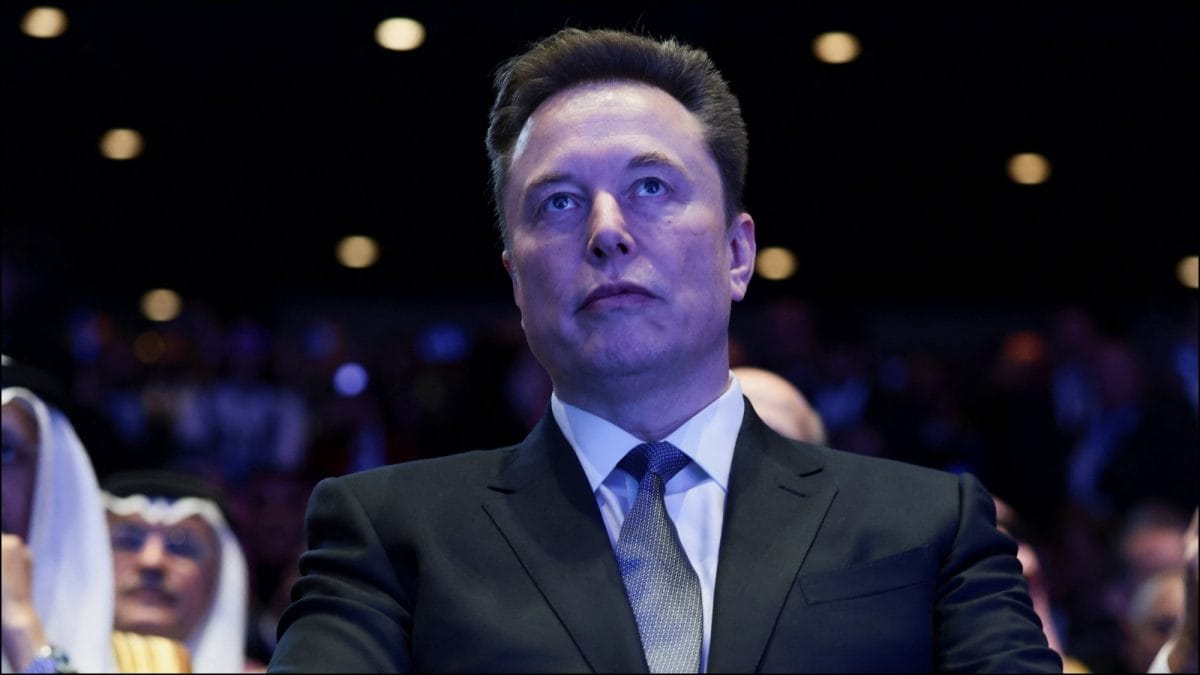
Tech mogul Elon Musk at the US-Saudi Investment Forum. (Reuters Image)
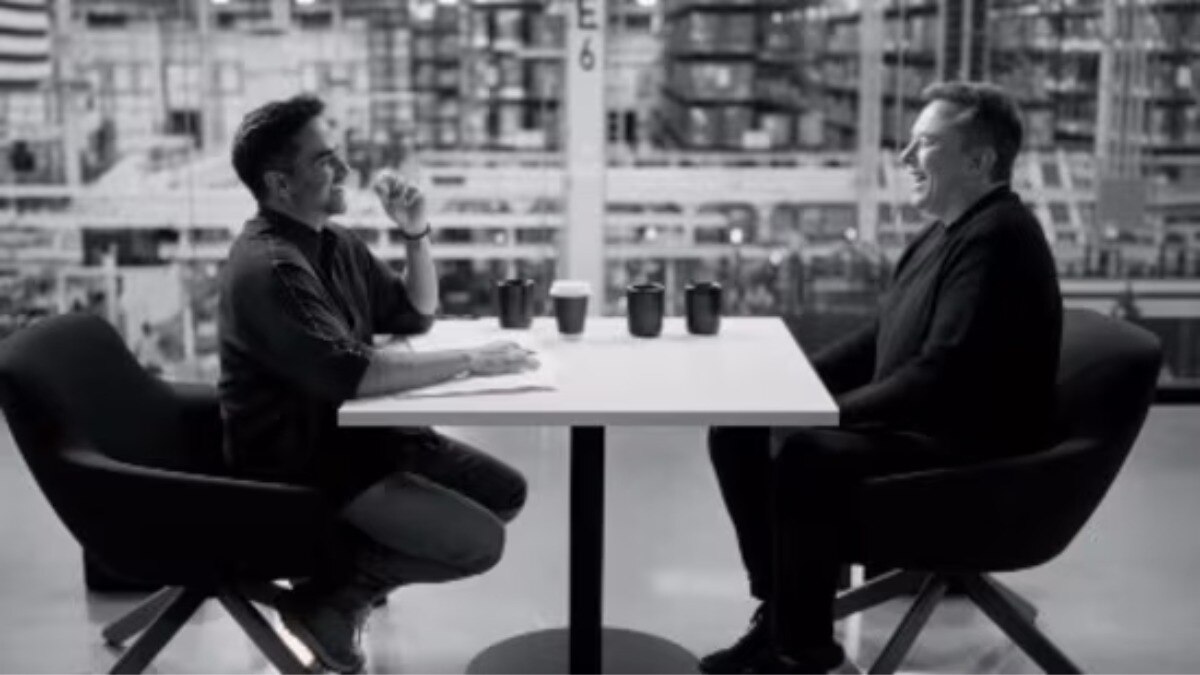
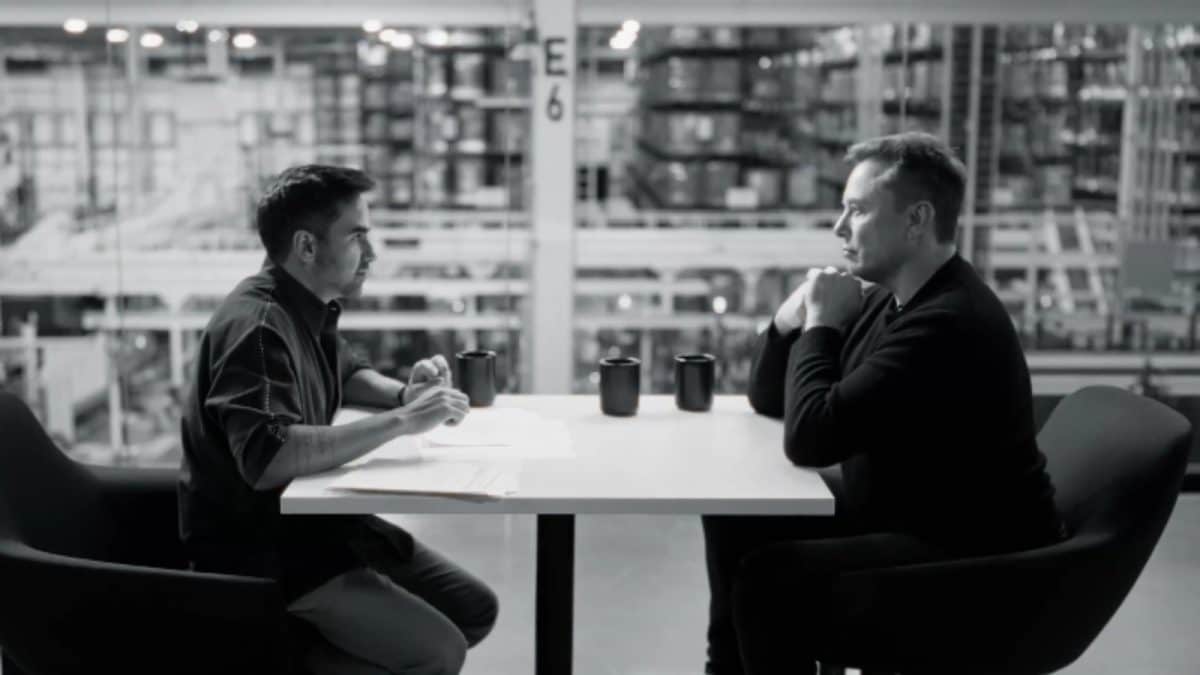
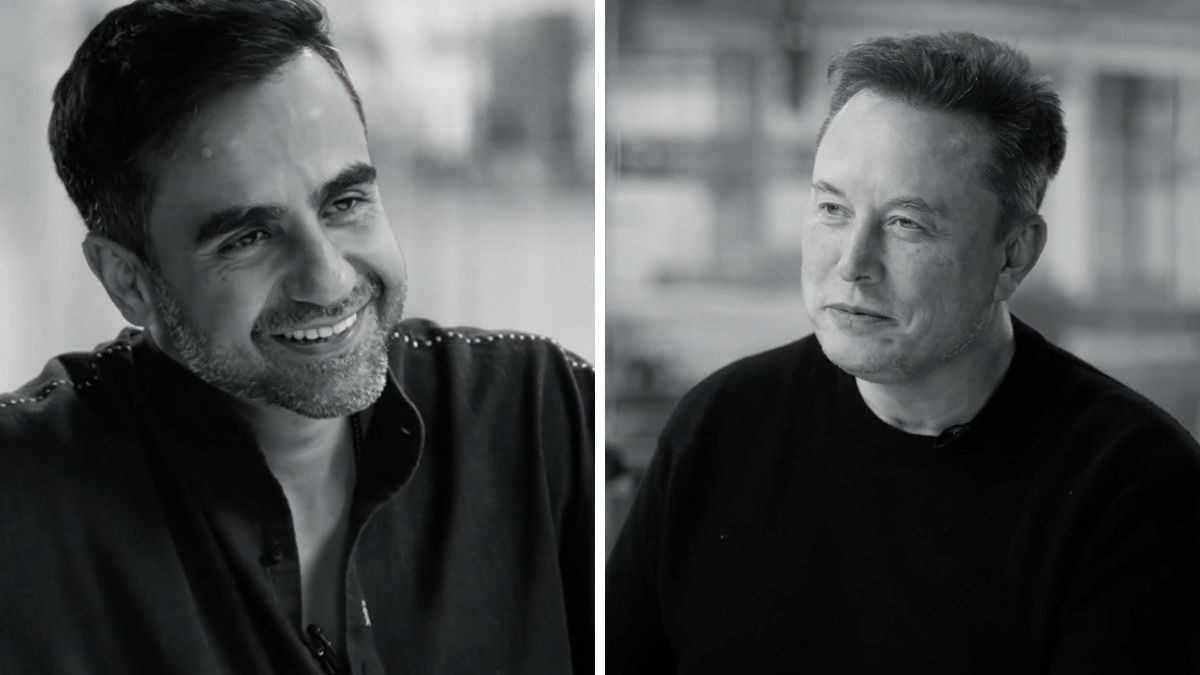
Across multiple forums, Tesla and SpaceX chief Elon Musk has articulated a single, striking belief: that artificial intelligence and robotics will evolve so rapidly that people will no longer need to work for a living. On Zerodha co-founder Nikhil Kamath’s “People by WTF" podcast, Musk said, “Maybe… I say in less than 20 years, working will be optional. Working at all will be optional. (It will be) like a hobby, pretty much." He added that the shift could come even sooner, saying “Even as little as… 10 or 15 years."
Explaining his analogy further, he said work would become optional “in the same way that you can grow your own vegetables in your garden, or you could go to the store and buy vegetables." According to him, AI and robotics would not only remove the necessity of labour but offer a future where “if you can think of it, you can have it."
This was not a one-off remark. Two weeks earlier, at the US–Saudi Arabia Investment Forum, he reiterated that work would become “optional" as AI and robots take over the bulk of production and services. There, he also claimed that money itself would become “irrelevant" as automation eliminates scarcity. As he put it, “AI and humanoid robots will actually eliminate poverty."
Musk has made similar statements through posts on X, interviews, and discussions with political leaders. Responding in October to a post suggesting that Amazon could replace hundreds of thousands of warehouse workers with machines, he wrote that “AI and robots will replace all jobs," calling work a voluntary pursuit comparable to growing vegetables for pleasure.
In a March 2025 interview with Ted Cruz and Ben Ferguson, he predicted that AI would soon be “smarter than the smartest human", billions of humanoid robots would populate the world, and “90 per cent of all driving would be autonomous." He said goods and services would become “close to free," shifting the central challenge from survival to purpose.
At VivaTech 2024 in Paris, Musk estimated an “80 per cent chance" that such a future arrives, adding that the world was heading into “an age of abundance" shaped by automation.
Why Musk Believes AI And Robotics Will Replace All Jobs
Musk’s belief rests on one core idea: that AI and robotics will eventually outperform humans across almost every domain of work, from manufacturing to transport to creative problem-solving. On the podcast with Kamath, he said he was confident that “if AI and robotics continue to advance, working will be optional and people will have any goods and services that they want."
In his view, the combination of advanced AI systems like his own xAI model Grok, along with humanoid robots such as Tesla’s Optimus prototypes, will result in machines capable of handling physical tasks, intellectual tasks, and emotional labour. Musk argues that these technologies will scale to a degree where machines can autonomously produce everything needed for human well-being.
He has also predicted that at a certain stage, AI will “run out of things to do to make humans happy", saying there is a limit to the tasks humans need completed. Beyond that limit, he said, AI would begin doing things primarily for its own systems and robotics networks because human needs would already be fully satisfied.
In essence, Musk does not see automation as replacing one job category at a time; he sees it transforming the nature of production itself.
How His ‘Universal High Income’ Idea Fits Into This Vision
Musk’s predictions build on an idea he introduced in a 2023 discussion with then UK Prime Minister Rishi Sunak. Rejecting the traditional concept of Universal Basic Income, he proposed what he called “universal high income." As he put it then, “We won’t have universal basic income. We’ll have universal high income. Everyone will have access to this magic genie… There will be no shortage of goods and services. It will be an age of abundance."
This vision imagines a world in which AI-generated production is so efficient that scarcity disappears. Goods become cheap, services become automated, and human labour ceases to be the basis of economic allocation. In his recent comments, Musk developed this further by suggesting that in such a world, “you no longer need money as a database for labour allocation", predicting that the relevance of money would decline sharply. He added that “power generation" could become the effective currency in a hyper-automated world.
The underlying logic is that if machines produce everything, then income no longer needs to come from wages. Prosperity would come from technology itself rather than redistribution or government stipends.
Is The World Really Moving Toward Large-Scale Automation?
Beyond Musk’s optimism, global trends show that the world is indeed moving toward more automation, though at varying speeds. Amazon has been rolling out warehouse robots at a scale that triggered the viral post Musk replied to. Major companies such as TCS and Accenture have announced layoffs or hiring slowdowns, citing efficiency gains from automation and generative AI. The industries he often speaks about — manufacturing, logistics, retail, transport, and food service — are already piloting humanoid robots and machine-led workflows.
According to the World Economic Forum’s Future of Jobs Report 2023, around 23 per cent of all jobs globally are expected to change by 2027, with 69 million new roles created but 83 million displaced. The Labour Organisation has warned that advanced economies may face technological unemployment in clerical and routine service sectors, while lower-income countries risk widening digital gaps.
A McKinsey Global Institute report from 2023 estimated that up to 30 per cent of work hours in the United States could be automated by 2030. The IMF projected in 2024 that nearly 40 per cent of jobs worldwide were “exposed" to AI-linked automation.
These shifts do not guarantee Musk’s world without work, but they show that his prediction is rooted in visible trends: expanding automation, rising machine capability, and accelerating deployment of AI across economies.
Why Musk’s Prediction Doesn’t Fit India’s Economic And Cultural Reality
While Musk’s ideas have sparked global debate, India’s economic and social context makes a work-optional future difficult to imagine. In India, work is tied to identity, stability, and family responsibility. Employment, especially government employment, has long been associated with adulthood, security, and respect.
Many Indian households rely on a single earning member who supports extended families, education costs, and medical expenses. Free time is often viewed with suspicion, and work is culturally intertwined with dignity and reliability. Opting out of labour is not just impractical for most Indians; it is socially unimaginable.
Economically, India’s dependence on affordable human labour further complicates the picture. Large portions of the population work in informal sectors where daily wages determine daily meals. Even in urban India, from retail to delivery to small manufacturing, labour remains cheaper than automation. India’s welfare ecosystem is expanding but has not reached the robustness required to sustain a population disengaged from work.
Musk’s vision, shaped by highly automated industries and well-funded tech ecosystems, does not account for the vast population living outside India’s metros, across smaller cities and rural regions where lives are built around physical labour and daily earnings.
What A ‘Semi-Optional’ Future Might Look Like For India
India will not transition directly into a world where work disappears. However, elements of Musk’s vision could slowly take hold. As AI takes over repetitive and routine tasks, some sectors may see lighter workloads and more flexible schedules. Hybrid work, freelancing, and AI-assisted roles may expand, giving people greater autonomy over how they work.
But until India’s welfare systems deepen, automation becomes more economically viable, and cultural expectations shift, optional work will remain largely theoretical. India’s trajectory is more likely to evolve toward a mixed model: work becoming less tied to survival, more shaped by individual choice, and increasingly supported by technology, but not disappearing altogether.

Karishma Jain, Chief Sub Editor at News18.com, writes and edits opinion pieces on a variety of subjects, including Indian politics and policy, culture and the arts, technology and social change. Follow her @kar...Read More
Karishma Jain, Chief Sub Editor at News18.com, writes and edits opinion pieces on a variety of subjects, including Indian politics and policy, culture and the arts, technology and social change. Follow her @kar...
Read More
First Published:
December 01, 2025, 09:10 IST
News explainers Decoding Elon Musk’s Bold Prediction: Why He Says Work Will Be ‘Optional’ In Next 10-20 Years
Disclaimer: Comments reflect users’ views, not News18’s. Please keep discussions respectful and constructive. Abusive, defamatory, or illegal comments will be removed. News18 may disable any comment at its discretion. By posting, you agree to our Terms of Use and Privacy Policy.
Read More