 19 minutes ago
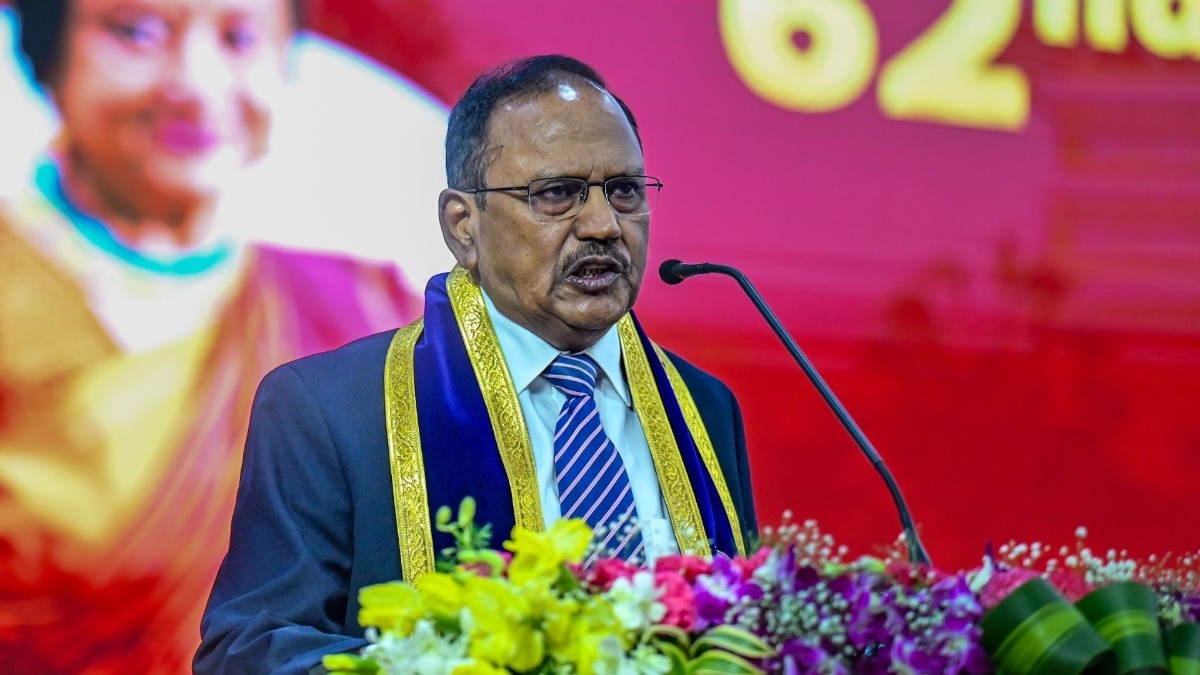
In an exclusive conversation with India Today Global's Geeta Mohan, Ontario's Economic Development Minister Victor Anthony Fedeli discusses emerging defence opportunities between India and Canada. From joint manufacturing and technology partnerships to India's Make in India initiative, he outlines how both sides can deepen defence cooperation.
As India and Canada work to rebuild ties after a prolonged diplomatic fallout, economic cooperation is emerging as a key driver of the reset. With Prime Minister Narendra Modi scheduled to visit Canada in December, trade, investment and new areas of collaboration are back in focus. Ontario, which has maintained its business engagement with India despite the political tensions, is looking to deepen that partnership. In an exclusive interview with India Today Global's Geeta Mohan, Ontario's Minister of Economic Development, Job Creation and Trade, Victor Anthony Fedeli, discusses the 88 per cent growth in Ontario-India trade since 2018, opportunities in defence and artificial intelligence, and why US President Donald Trump's tariff policies are pushing countries to diversify their trade partnerships.
INDIA-CANADA TRADE AND THE TRUMP FACTOR
Highlighting the growth in economic engagement, Fedeli said Ontario's non-US trade had increased by 75 per cent since 2018, while its trade with India had risen by 88 per cent during the same period. Ontario's non-US trade alone recorded a 17.5 per cent increase this year, he said.
Fedeli attributed the growing interest in India and other international markets partly to what he described as the "Trump accelerator".
He said the uncertainty surrounding US trade policies had encouraged countries to strengthen partnerships with one another and explore new markets.
"All around the world we are now running into each other's arms, because we have issues south of the border," he said.
Fedeli described the treatment of Canada by the United States as harsh and surprising, particularly given the decades of normal free trade between the two countries. He said the situation had been painful for Canadian citizens and difficult to understand.
Ontario conducts around $500 billion in two-way trade annually, with approximately 80 per cent of its trade taking place with the United States. The remaining 20 per cent is spread across the rest of the world, Fedeli said.
He highlighted Ontario's economic importance to American states, saying the province was the largest customer for 11 US states and the second-largest customer for another 15.
He also said Ontario bought more cars from the United States than the country sold anywhere else in the world combined.
$70 BILLION INDIA-CANADA TRADE TARGET
Asked whether the target of increasing bilateral trade between India and Canada to $70 billion by 2030 was achievable, Fedeli said it was practical if both sides wanted to achieve it.
He identified technology, life sciences and advanced manufacturing as existing areas of cooperation, while artificial intelligence and defence were emerging sectors that could contribute to the target.
On the proposed Comprehensive Economic Partnership Agreement (CEPA), which was in its final stages, Fedeli said he could not comment on the timing of its finalisation or whether it would be signed during Prime Minister Narendra Modi's visit to Canada.
He said the provincial government provided guidance to the federal government on trade negotiations, describing the relationship with the line: "The federal government has the pen and sometimes we supply the ink."
Fedeli added that Ontario's focus was on attracting businesses to the province and strengthening commercial engagement with India.
DEFENCE COOPERATION AND JOINT VENTURES
Fedeli said his latest visit marked the first time Ontario had discussed defence with Indian companies interested in selling defence products in Canada, as well as Canadian companies looking to export defence products to India.
He drew a parallel between India's Make in India programme and Ontario's Buy Ontario initiative, alongside the Canadian government's Buy Canadian designation.
He said companies looking to sell products to the Canadian federal government would be expected to ensure that a significant percentage of those products were made in Canada.
Ontario, he added, wanted businesses considering manufacturing in Canada to choose the province.
On the possibility of joint production and technology cooperation, Fedeli said there could be opportunities for both sides. Indian companies could partially assemble products before completing the assembly in Canada or establish facilities there. Similarly, Canadian companies could explore opportunities in India.
He said such cooperation would promote more joint ventures and ensure that trade remained mutually beneficial.
Ontario has recently launched its defence industrial strategy and expects to add more than 40,000 employees over the next few years, Fedeli said.
He stressed that the provincial government was focused on creating jobs and facilitating the movement of physical products, while bilateral and geopolitical agreements remained the responsibility of federal governments.
DIPLOMATIC STRAINS DID NOT STOP BUSINESS
Reflecting on the period of strained India-Canada relations, including the recall of high commissioners, Fedeli admitted that maintaining engagement had become more difficult.
However, he said Ontario had never allowed diplomatic tensions to come in the way of business.
He revealed that during this period, he continued travelling to India but had to use his private citizen passport instead of his government passport.
"We will let our federal politicians satisfy the geopolitical issues, but let's just get down to business," he said.
Fedeli said Ontario continued to attract Indian technology companies looking for a foothold in North America. He described the province as a safe, reliable, dependable and predictable destination for businesses.
He said Ontario, with a population of 16 million, attracted $35 billion in investment last year from 750 companies, which also hired 64,000 people.
Fedeli also said he had noticed a difference in the reception extended to Canada and Ontario during his latest visit to India.
He credited Canadian Prime Minister Mark Carney and Ontario Premier Doug Ford, whom some people call "Captain Canada", with helping open doors for stronger engagement.
CARNEY VS TRUDEAU: A DIFFERENT MOMENT FOR CANADA
Asked about the difference between former Canadian Prime Minister Justin Trudeau's approach to India and that of current Prime Minister Mark Carney, Fedeli said Canada was experiencing a moment of renewed international prominence.
He said Canada's standing on the global stage had changed, with countries outside the United States increasingly looking to engage with Ottawa.
"Anywhere you go around the world outside of the United States, you will hear: This is Canada's moment," Fedeli said.
Pointing to the response he received during his India visit, Fedeli said there was greater openness towards Canada and a growing interest in being part of the India-Canada partnership.
He also credited the leadership of Mark Carney and Ontario Premier Doug Ford for helping strengthen Canada's international engagement. Referring to Ford, whom some call "Captain Canada", Fedeli said the combination of the two leaders was helping open doors for Canadian businesses.
URANIUM DEAL AND ENERGY COOPERATION
Asked about the $2.6 billion Canadian-dollar uranium supply agreement between Cameco and India's Department of Atomic Energy, Fedeli described the deal as important for Canada.
He clarified that energy exports were primarily a federal matter, as Ontario did not export energy.
However, he said the uranium agreement was significant because it created economic transactions while also strengthening ties between the two countries through the exchange of an important asset.
INDIAN STARTUPS AND ONTARIO'S AI ECOSYSTEM
Fedeli also spoke about his meetings with 24 Indian technology startups, many of which were exploring expansion into North America.
He said several companies viewed Ontario as a potential destination for establishing their North American presence and becoming part of its artificial intelligence ecosystem.
According to Fedeli, 17,000 AI employees were hired in Ontario last year alone, making the province an attractive destination for technology companies.
He also praised India's progress in training and developing talent, saying he had witnessed a significant transformation in the country since his first visit.
"What India has done in terms of training to get them to that point is very, very impressive," he said.
He added that India should be enormously proud of what was being built in the country.
INDIAN DIASPORA AND STUDENT CONCERNS
On concerns surrounding anti-India incidents and extremism in Canada, Fedeli maintained that geopolitical issues were for the federal governments to address.
He reiterated that Ontario's approach remained focused on business-to-business engagement.
He also said Indian students' concerns over study and work opportunities largely fell under federal jurisdiction, with individuals approaching their federal members of parliament on such matters.
Fedeli said the provincial government concentrated on attracting businesses, strengthening employment opportunities and improving public services. He cited the hiring of 100,000 nurses and the construction of 50 hospitals as examples of the province's ongoing work.
Towards the end of the interview, Fedeli also spoke about his visits to India and his fondness for Indian food. He said butter chicken remained a favourite and added that he liked putting hot pepper and spice on everything.
- Ends