1 month ago
The attacks came as the United States refrained from launching air strikes on Iran for the first time in nearly two weeks. Washington offered no immediate explanation for the pause after 13 consecutive nights of escalating strikes against Iranian targets.
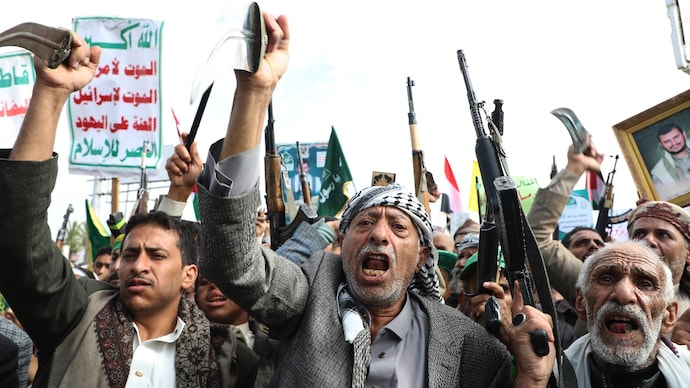
Houthi supporters chant slogans during a weekly anti-Israel rally in Sanaa. (AP photo)

New Delhi,UPDATED: Jul 25, 2026 21:24 IST
Iran-aligned Houthi militants attacked Saudi oil installations at two Red Sea ports on Saturday, raising fears that the conflict involving Iran, the US and Israel could widen to another major shipping route and reignite Yemen’s long-running civil war.
The attacks came as the United States refrained from launching air strikes on Iran for the first time in nearly two weeks. Washington offered no immediate explanation for the pause after 13 consecutive nights of escalating strikes against Iranian targets.
Iranian Health Ministry spokesperson Hossein Kermanpour said the country had experienced a relatively quiet night, while there were also no immediate reports of Iranian attacks on its Gulf neighbours on Saturday.
The relative calm in Iran, however, was overshadowed by the Houthi attacks on Saudi Arabia.
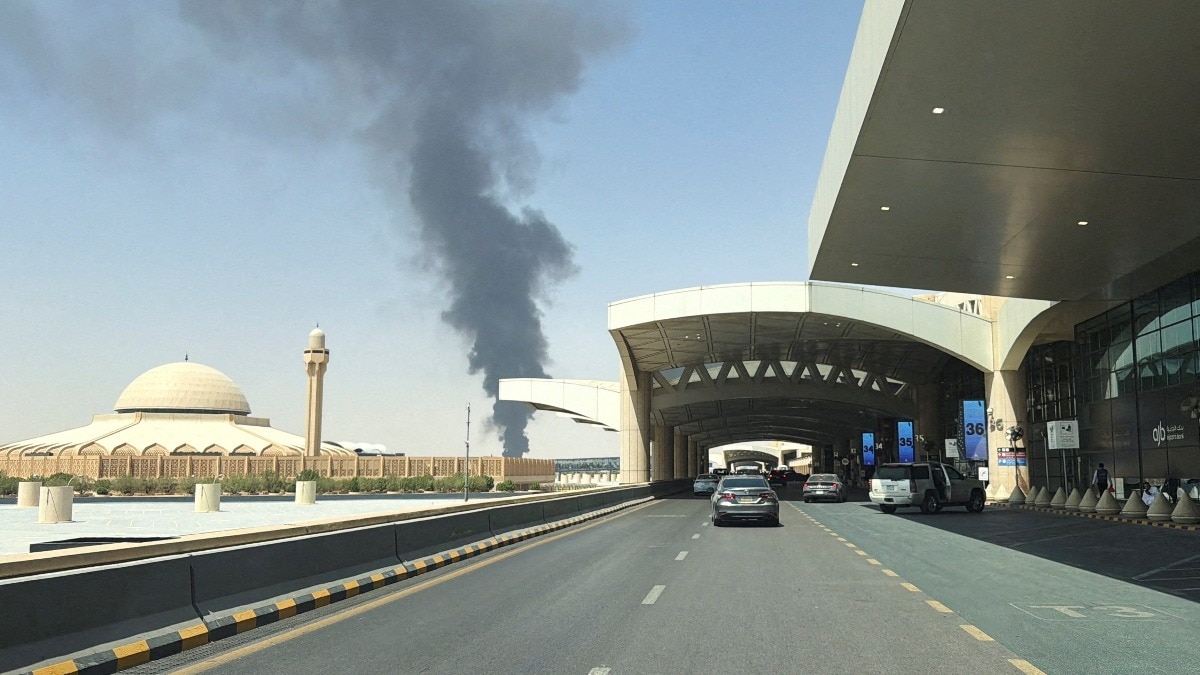
Houthi military spokesperson Yahya Saree said the group had successfully targeted facilities belonging to Saudi state oil giant Aramco in Jizan and Yanbu. Videos verified by Reuters showed a large column of smoke rising from the direction of an Aramco refinery in Jizan.
Two Asia-based trading sources said they had received information about possible damage to fuel and oil storage facilities in Jizan. Aramco did not immediately respond to requests for comment.
In Yanbu, two ballistic missiles targeting oil facilities were intercepted by a US-made Patriot air defence system operated by Greek military personnel in Saudi Arabia under an agreement with Riyadh, according to Greek security sources.
The attacks are significant because Yanbu is Saudi Arabia’s main Red Sea oil port and a crucial alternative route for exporting crude as Iran’s blockade of the Strait of Hormuz disrupts shipping. Jizan, meanwhile, is home to a refinery capable of processing around 400,000 barrels of oil per day.
The escalation also threatens to pull Yemen back into a wider conflict.
Saudi-backed forces belonging to Yemen’s internationally recognised government struck Houthi missile and drone launch sites and weapons depots in the Marib and al-Jawf provinces, Yemeni officials said. The Saudi-led coalition also said it had carried out strikes on Houthi military positions in the Red Sea port of Hodeidah on Friday.
Officials said both sides were mobilising forces along Yemen’s front lines, raising fears that the country’s fragile ceasefire could unravel completely.
Saudi Arabia has led an Arab coalition against the Houthis since the Iran-aligned group seized Yemen’s capital, Sanaa, more than a decade ago. The conflict killed hundreds of thousands of people through fighting, famine and disease before a ceasefire in 2022 brought relative calm.
That truce has now effectively collapsed, with the Houthis joining the wider conflict involving their Iranian allies.
Over the past week, the Houthis have declared a naval blockade targeting Saudi Arabia. Their leader, Abdul Malik al-Houthi, has warned that Saudi oil facilities could be targeted.
The threat has added to pressure on global energy markets, with Brent crude rising above $100 a barrel in recent days for the first time since May.
US President Donald Trump on Friday threatened “major military punishment” against both Iran and the Houthis after the group attacked two Saudi tankers in the Red Sea.
The wider conflict escalated after an interim agreement aimed at ending hostilities collapsed two weeks ago. US forces subsequently launched strikes on targets in southern Iran in response to Iranian disruption of shipping through the Strait of Hormuz.
Trump has in recent days threatened to expand the US target list to include Iranian energy infrastructure and bridges. He has also floated the possibility of deploying ground forces to seize Kharg Island, a major Iranian oil hub, and striking a deeply buried nuclear-linked facility known as Pickaxe Mountain.
Yet on Friday, Trump indicated that no decision had been taken on launching another major round of strikes.
“We are talking to them,” he told reporters at the White House, saying Iran appeared to be taking negotiations more seriously than before.
For now, the pause in US strikes may have offered Iran a brief respite. But the Houthi attacks on Saudi oil infrastructure suggest the conflict is already spilling beyond Iran’s borders, and potentially towards another critical artery of global energy trade.
- Ends
Published By:
Aprameya Rao
Published On:
Jul 25, 2026 21:24 IST